

The established powers naturally dominate attention when discussion turns toward the 2026 World Series. Yet baseball rarely allows the postseason picture to develop exactly as expected, particularly across a long regular season.
Several teams outside the leading group have enough underlying quality to complicate that picture. Some possess pitching capable of carrying a postseason series. Others have balanced rosters or favorable divisional opportunities.
Across both leagues, five teams stand out as potential challengers capable of disrupting expectations this season.
The National League's Blockbuster Battle Begins
The National League leaves little room for comfortable assumptions. Several established contenders dominate the championship conversation; however, another group sits close enough to make individual series increasingly significant.
That congestion creates opportunity when examining World Series odds. A team doesn’t necessarily need to begin among the shortest-priced contenders to become relevant by October.
Form can change quickly across 162 games. Injuries, pitching development and deadline moves can reshape the hierarchy considerably.
In light of this, Chicago, San Diego and Arizona are particularly intriguing. Each faces significant competition, yet each has a plausible path to becoming more dangerous than preseason expectations suggested.
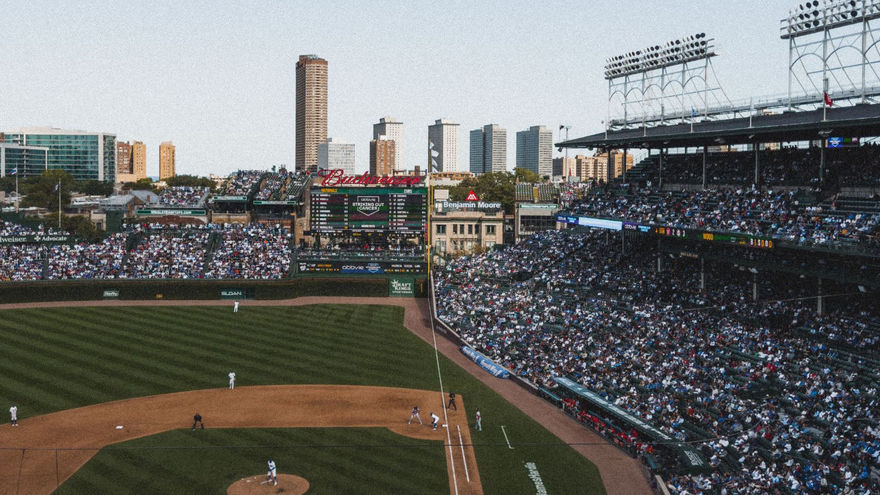
Cubs Chase October Relevance Again
Chicago has reason to believe its postseason ambitions can extend beyond simply qualifying. The Cubs have assembled a roster with enough depth to compete in multiple ways rather than relying overwhelmingly on a single strength.
Pitching remains central to that outlook. Rotation depth gives Chicago options across a long schedule, while a capable bullpen can help protect narrow advantages when starters leave games earlier than expected.
The lineup offers balance rather than complete dependence on a single production source. That matters against stronger pitching, particularly when opponents can approach prominent threats more carefully during a short series.
The challenge is separating from a crowded National League. However, Chicago has performed well against stronger opposition, giving the Cubs useful evidence that they can compete with leading teams.
The final weeks will show whether they can maintain that level as October approaches. If the teams’ pitching remains dependable while the offense produces consistently throughout the order, the Cubs could become increasingly difficult to dismiss.
Padres Still Have Another Level
San Diego has spent several seasons carrying significant expectations, but translating talent into a sustained October run is a different challenge. That tension remains part of the Padres' 2026 story.
Their potential rests partly on whether the pitching staff can provide enough consistency across six months. Strong individual performances matter, although reliable depth becomes increasingly important once injuries and workload pressures accumulate.
Offensively, San Diego has enough quality to trouble strong opponents. The bigger question is whether the Padres can sustain that production against tougher competition instead of depending on occasional explosive performances.
Divisional competition makes that consistency essential. Games against direct rivals carry consequences for positioning and can reveal how San Diego compares with the National League's strongest teams. Another postseason appearance would hardly qualify as shocking. A deeper October breakthrough still might.
Diamondbacks Remain Comfortable Being Overlooked
Arizona has already demonstrated how quickly postseason expectations can change once a team reaches October. That history makes the Diamondbacks difficult to disregard, even when other National League contenders attract greater attention.
Greater stability can help over a demanding season. Arizona’s improved bullpen and developing pitching staff have given the Diamondbacks more ways to remain competitive when the offense fluctuates.
Situational hitting matters for a team that may regularly encounter close games. Advancing runners and converting limited scoring opportunities can become particularly valuable against the stronger pitching staffs waiting in postseason contention.
Arizona's path is hardly straightforward. Its division provides little margin for extended struggles, and several National League rivals appear deeper on paper. Still, the Diamondbacks have enough experience with unexpected October success to make another push feel plausible rather than fanciful.
The American League Race Remains Unsettled
The American League presents a different kind of uncertainty. Rather than one overwhelming favorite separating decisively from everyone else, several teams possess strengths capable of influencing the postseason race.
That creates space for movement. MLB articles point out that a strong month can dramatically alter divisional standings, while pitching injuries or prolonged offensive slumps can push established contenders backwards.
The result is a race with relatively little certainty beneath the leading teams. October positions may remain unsettled deep into the schedule.
Boston and Houston consequently deserve attention. Their routes differ considerably, but each has characteristics that could become more important as the season progresses.
Red Sox Have the Tools to Climb
Boston's ability to remain in contention will depend heavily on its pitching. Improvements there can change the shape of an entire season, particularly when stronger starting performances prevent the bullpen from absorbing excessive innings.
Greater lineup depth matters for similar reasons. The Red Sox need production that survives inevitable cold stretches rather than becoming dependent on a narrow section of the batting order.
The difficulty comes from their environment. The AL East rarely provides many forgiving stretches, meaning Boston must consistently navigate opponents carrying postseason ambitions of their own.
If the Red Sox can continue holding their own inside the AL East, their postseason case becomes easier to take seriously. Boston is already firmly in the race, and sustained pitching and lineup depth will be important if the Red Sox are to stay there through September.
Astros Still Carry October Potential
Houston, powered by star performances, remains difficult to overlook because its route to contention is familiar. The Astros have spent years playing meaningful October baseball, and that experience can matter when late-season games begin carrying greater pressure.
Pitching will shape how far they progress in 2026. Rotation stability is particularly important, while dependable relief work can keep close games manageable when offensive production becomes less predictable.
The lineup doesn’t need to overwhelm opponents every night. Consistent production across the order would give Houston enough support to complement a pitching staff capable of controlling stretches of games.
Competition in the American League leaves little margin for prolonged inconsistency. Still, Houston understands the demands of a postseason race. If the pitching holds together and the offense supplies enough timely production, the Astros could again become an uncomfortable opponent when October arrives.
October Rarely Follows the Script
None of these five teams enters the conversation without significant questions. That is precisely why their progress is worth following. Surprise contenders usually emerge because several uncertain pieces begin working at once.
The Cubs, Padres and Diamondbacks face a crowded National League path, while Boston and Houston navigate an unsettled American League.
Their regular seasons will determine whether potential becomes something more substantial. By October, at least one could look considerably more formidable than expectations suggested when the year began.