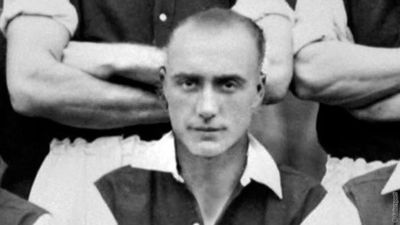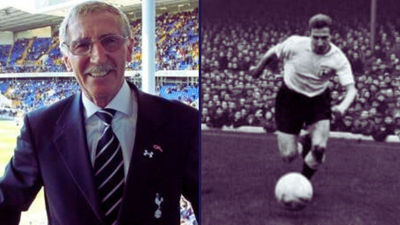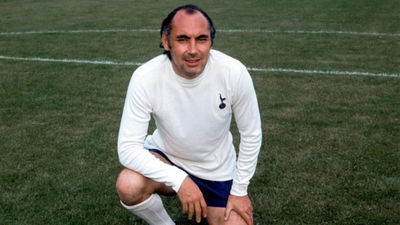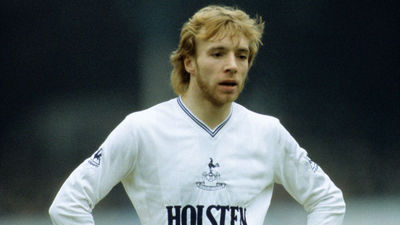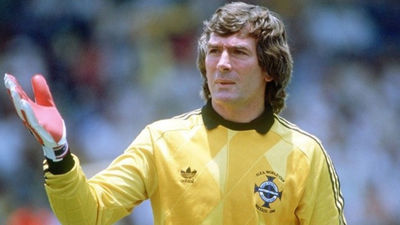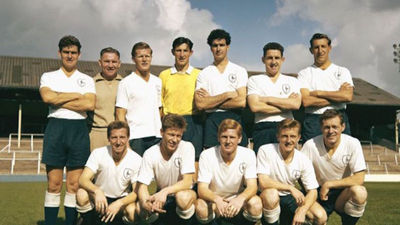

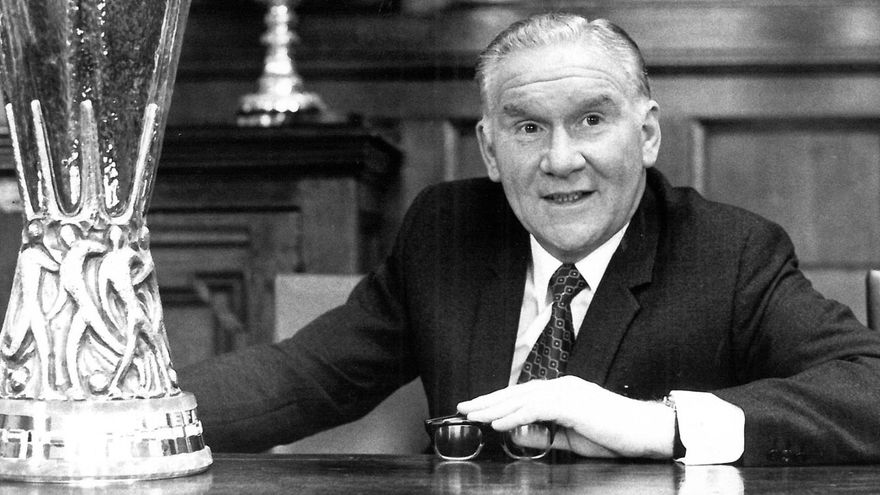
Bill Nicholson spent 17 years of his professional club football career at Tottenham Hotspur, where he was a part of the legendary side that won the 1950–51 league title. He managed to win the Second Division and FA Charity Shield as well with Spurs. This wasn't the end of it but rather the beginning of a legendary run of winning silverware with Tottenham.
Let us now look back at how Nicholson made history with Spurs, and how he left as an all-time great of the club with a magical 55-year partnership with the London side.
A new chapter
After retiring from Spurs in 1955, Nicholson took a Football Association (FA) coaching course and joined the coaching staff at Tottenham. He quickly progressed through the coaching staff ranks and eventually found himself as the first coach in the same year. Thus it was the beginning of a new chapter in a different role for the former English wing-half.
3 years later, assisted England manager Walter Winterbottom at the 1958 FIFA World Cup in Sweden. In October of the same year, Nicholson was called to the Tottenham boardroom and appointed club manager to succeed Jimmy Anderson.
This was a period when Spurs were sixth from the bottom of the First Division, with no indication of any major turnaround. That very afternoon, Nicholson took charge of Spurs in his first match against Everton. It ended in a then club-record 10-4 victory for the London side, marking the beginning of a new era. The legendary feat was eventually surpassed by their 13–2 FA Cup replay win over Crewe Alexandra in the 1959–60 season.
The golden era
Nicholson ultimately went on to make history with Tottenham, as they won the Football League championship and the FA Cup in the 1960–61 season, thus achieving the first "double" of the twentieth century. Spurs were nothing short of dominant during this period, scoring a sensational 115 goals in just 42 games. They followed this up by reclaiming the FA Cup again, and reaching till the semis of the 1961–62 European Cup. A semi-final loss against Benfica ultimately robbed them off a place in the finals.
The 1962–63 season saw Nicholson further establish his legendary status at Tottenham, as his side became the first British club to win a major European trophy by winning the European Cup Winners Cup. favourites Atlético Madrid were surprisingly thrashed 5-1 by Spurs in the final that took place on 15th May 1963.
4 years later, Tottenham won their FA Cup in seven years after beating Chelsea in the first-ever all-London final. This was followed by another period of dominance that saw them win the League Cup twice (1970–71 and 1972–73) and the UEFA Cup in 1971–72.
Departure
The 1970s marked an increase in player wages and hooliganism in football. Nicholson was quite taken aback by those developments, especially the hooliganism he witnessed at the 1974 UEFA Cup final that Spurs lost to Feyenoord. In addition to these factors, A poor start to the 1974–75 season was the final nail in the coffin. Nicholson ultimately decided to resign from his post, thus marking the end of an era. He cited being burned out and having nothing more to offer as the primary reason behind his decision.
However, he later went on to pick Danny Blanchflower as manager and Johnny Giles as player-coach to succeed him without the help of Spurs chairman Sidney Wale. This resulted in the club choosing to sever all ties with a £10,000 payoff and also refused Nicholson a testimonial. Nicholson had intended to stay with the club as an advisor, but those turn of effects spelled the end for him at Tottenham.
An eventual homecoming
When Keith Burkinshaw became Spurs manager in 1976, one of his first requests was for Nicholson to be brought back to White Hart Lane as a consultant. Thus, the club legend was back home. His knowledge and experience were vital for Spurs, with Nicholson recommending the likes of Gary Mabbutt, Graham Roberts, and Tony Galvin that later became successful players at the club.
Nicholson continued to work as a consultant until 1991, when he became the Club President. He will forever remain as one of the most influential and important individuals in the history of Tottenham Hotspur.
Also Read |