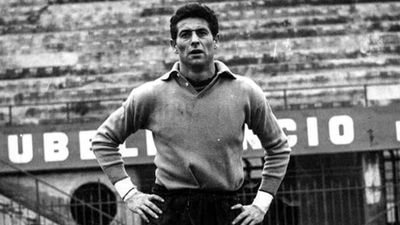

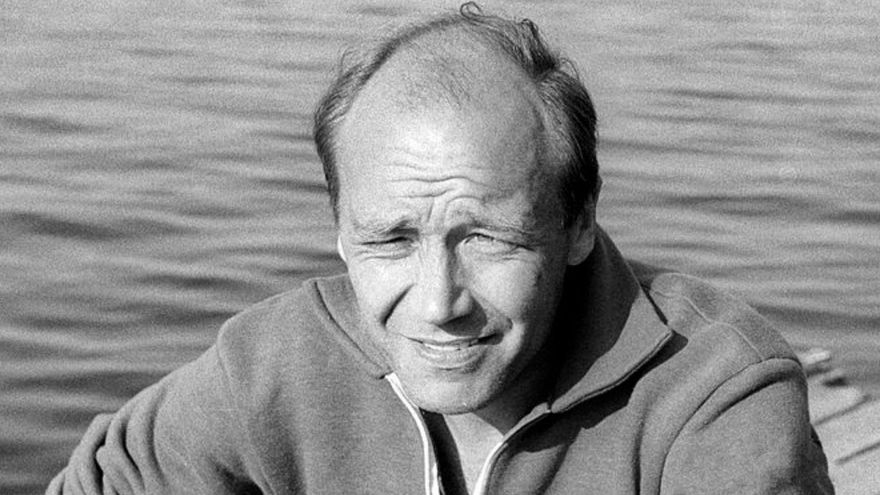
Gunnar Gren was a former Swedish footballer that was active during the 1940's and 1950's era. He had played for several clubs throughout his career, but is mostly remembered for his stints at Swedish side IFK Göteborg and AC Milan.
The former Swedish international was a creative forward who stood out for his technical skill, vision, tactical intelligence, and passing ability as a playmaker. Gren was also blessed with immense versatility, as he was capable of playing as an attacking midfielder, mezzala (offensive–minded central midfielder), or even a striker.
Let us now look back at the career of this legendary Swedish star.
Early life
Born on 31 October 1920 to parents Johan Olsson and Gerda Maria Olsson, Gunnar Gren was the son of a carpenter and grew up in Majorna, Gothenburg. From a very young age, he began to show his exciting potential in football. On 7tb October 1934, the Gothenburg Football Association President Carl 'Ceve' Linde held a juggling contest. Gren ended up winning the contest, earning a bronze plaque as his first sporting prize. He was simply on the rise, as Swedish magazine Göteborgs Sport Bladet wrote about 13-year-old Gren's skills and how he outshone some of the big boys in the national league.
The talented youngster continued his football journey by joining several Swedish clubs in the following years. These included the likes of Strix, Lindholmens, GAIK, before playing for Gårda.
Swedish football years
Gren began his professional football career with Swedish side Gårda in 1937. He made his Allsvenskan ( Swedish league) debut on 1st May 1938 against Malmö, which ended 0-0. He went on to make 54 appearances for the club, scoring 16 goals in the process.
\
4 years later, the Swedish youngster was signed by IFK Gothenburg. His first league match for IFK Göteborg was in August 1941, as Gren scored in their 6-1 win over his former club Gårda. Gren's last league game for Gothenburg was on 6th June 1949 versus Norrköping, which they lost 0–1.
It was with Gothenburg that Gren won the national championships in the 1941/42 season. The greatest individual feat came in 1946, when he won the first ever Guldbollen, given to the best male Swedish footballer of the year. He also later managed to become the league top scorer in 1947.
Gren left the club after 8 years in 1949, after scoring 79 goals in just 168 appearances.
The Italian journey and subsequent homecoming
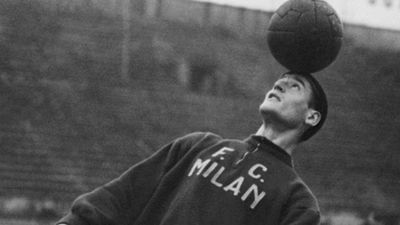
Gren earned his biggest career move in 1949, as he joined Italian giants AC Milan. His debut came on 11th September 1949,as Milan beat Sampdoria 3-1. It was at Milan where Gren became a part of the legendary Gre-No-Li trio with his Swedish teammates Gunnar Nordahl ('No') and Nils Liedholm ('Li'). He also earned the nickname of "Il Professore" at Milan, which is Italian for "the professor".
Gren's time at Milan saw him win the league title for the 1950/51 season as well. He made 133 appearances in Serie A and scored 38 goals. The Swede had also managed the club in 1952, before moving to Fiorentina.
In 1953, Gren moved to Fiorentina, where he made 55 appearances and scored five goals. This was followed by a move to Genoa, where he made 29 appearances and scored just two goals. His declining form and other factors made him eventually tired of Italy, which led to his return to Sweden.
Gren joined Swedish club Örgryte upon his return, where he had a very short stint. He later went on to play for Swedish sides GAIS and Oddevold, before becoming a full-time football manager.
An international superstar
Gren was an outstanding player for his nation as well, and he was a full international between 1940 and 1958. The former striker won 57 caps and scored 32 goals for the Sweden national team. He was a part of the Sweden golden generation that won gold at the 1948 Summer Olympics, as well as the team that finished second at the 1958 FIFA World Cup. A statue of him has been erected in his honor outside Gamla Ullevi stadium at Gothenburg, thus immortalizing one of the greatest ever player's Sweden has ever seen.