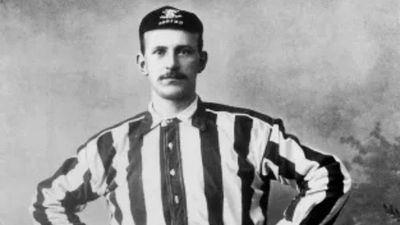

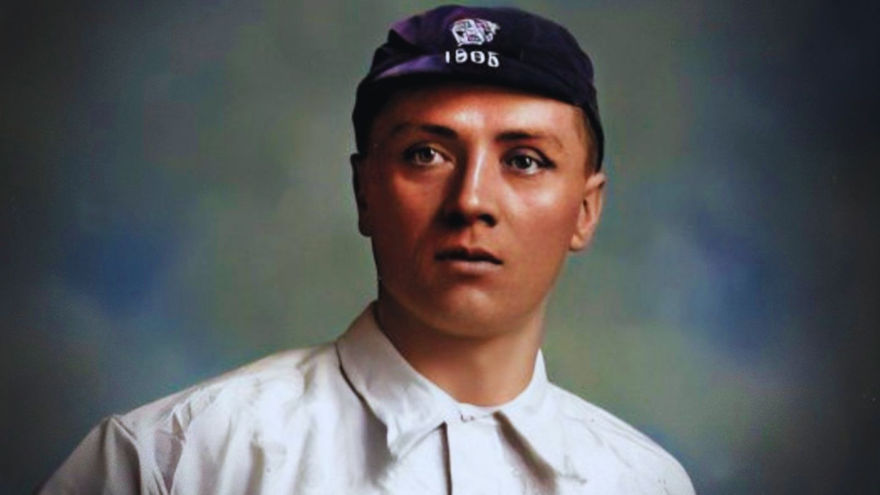
It was in June 1891 that English side Derby County merged with Derby Midland, and this was the same year that a certain Steve Bloomer joined the Derby first-team for the 1891–92 Football League campaign. The former English forward still decided to maintain his amateur status during this time, which allowed him to still play for the club's youth sides.
He eventually signed a professional contract for Derby County on Thursday 28 April 1892. Mr. Clarke, who was the Secretary of English club Burton Wanderers, had also tried to sign the talented Englishman at this time. After multiple attempts by Mr. Clarke, Bloomer finally decided to sign for the Wanderers. However, the Football Association soon ruled the contract to be invalid and reprimanded the Burton official.
Thus, Bloomer remained as a Derby player, which ended up being a major turning point in the club's history. Let us now look back at his unforgettable stint with the English side.
The catalyst that saw a star's birth
An administrative error by Derby secretary William Parker meant that club stars Ernest Hickinbottom, Jimmy McLachlan and Samuel Mills being ineligible for the opening game of the 1892–93 campaign against Stoke. This led to Bloomer being a surprise late addition to the starting eleven. He took this golden opportunity with both hands, as he played a major role in Derby's 3-1 win. It was the birth of a star, as Bloomer went on to finish the campaign with 11 goals in 28 appearances. The English forward was immensely fortunate as well to be mentored by Veteran striker and captain John Goodall, who was the top scorer of English Football's first ever league season. Goodall helped Bloomer to improve his game, helping to develop his ball control and positional skills.
Performance in succeeding season’s
Bloomer missed 7 games in the 1893–94 season, as he suffered a broken collarbone during a match. Despite this, he managed to return and score 19 goals from 27 appearances. The following 1894–95 campaign saw him only score 10 goals in 29 games, with a struggling Derby finishing in 15th place. This league standing also forced them to play a test match against Notts County to retain their First Division status. After initially trailing behind Notts Country 1-0, Derby made a heroic comeback through goals from Goodall and Bloomer to win the game 2-1.
The English forward opened the 1895–96 season by scoring both goals in a 2–0 win over Sunderland, which took place in the club’s new permanent home at the Baseball Ground. It was a campaign of resurgence for the club, as they finished the season in second-place behind Aston Villa and managed to reach the FA Cup semis.
Impact and legacy
During his time with Derby, he was the First Division top scorer on five occasions in 1896, 1897, 1899, 1901 and 1904. He managed to claim the position of club top scorer for an astonishing 14 consecutive seasons and scored 17 hat-tricks in the league.
One of Bloomer's greatest individual triumphs came during the 1896–97 season, in which he scored a sensational 31 goals in just 33 games, including 5 hat-tricks. His performance against Sheffield Wednesday in January 1899 was a highlight as well, with the Englishman scoring an unbelievable 6 goals in that match.
Bloomer's heroics were vital in helping Derby finish runners-up in the First Division in 1896 and further reach three FA Cup finals in 1898, 1899 and 1903.
It is undoubtedly heartbreaking that the player couldn't get his hands on any major silverware, but he is also became a testament to the fact that success need not be measured in titles.
Derby's legendary English forward left the club in 1906 to join Middlesbrough, after 15 years of excellence at Derby. The anthem "Steve Bloomer's Watchin'" is played at every Derby home game and there is a bust of him at the Pride Park Stadium. He will forever be remembered as long Derby County continues their journey in football.