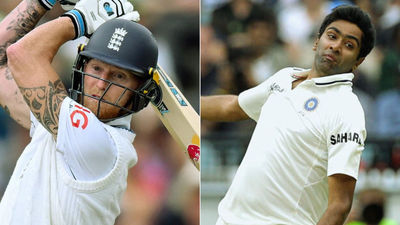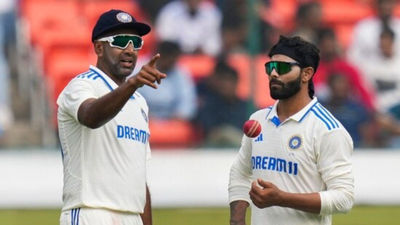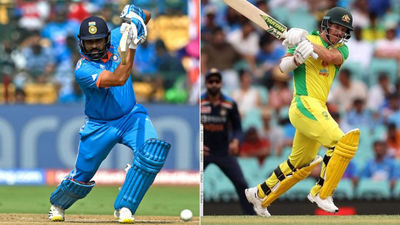

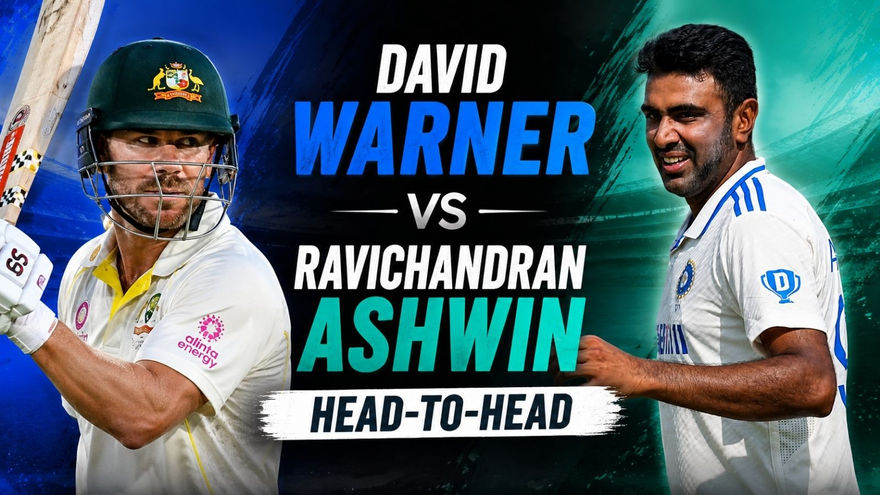
Few modern cricket matchups have been as intriguing as David Warner vs Ravichandran Ashwin. Warner's aggressive left-handed batting has repeatedly been tested by Ashwin's control, variations and ability to create pressure against left-handers.
Their rivalry has stretched across Test cricket, ODIs and the Indian Premier League. The contrast is clear: Warner looks to attack before a bowler can settle, while Ashwin relies on angles, changes of pace, drift and subtle variations to force mistakes.
Here is a detailed look at their head-to-head record, tactical battle and most memorable encounters.
David Warner vs Ravichandran Ashwin: Overall Head-to-Head Record
Format | Innings Faced | Runs Scored | Balls Faced | Dismissals | Strike Rate | Batting Average |
Test Matches | 30 | ~500 | ~750 | 11 | ~65.0 | ~45.0 |
IPL / T20s | 15+ | ~160 | ~120 | 5 | ~130.0 | ~32.0 |
ODIs | 8+ | ~90 | ~100 | 2 | ~90.0 | ~45.0 |
Total International & League | 53+ | ~750+ | ~970+ | 18 | ~77.0 | ~41.5 |
Note: The figures reflect the official international and competitive T20 fixtures covered by the original data and should be treated as approximate where marked.
Ashwin has taken 18 wickets against Warner across the listed competitions, including 11 in Tests. At the same time, Warner has scored consistently enough to prevent the rivalry from becoming a one-sided contest.
Test Cricket: Ashwin Holds the Edge
Test cricket produced the most sustained battles between Warner and Ashwin. The longer format gave Ashwin more opportunities to build pressure, change his angle and exploit conditions as a batter's innings developed.
Ashwin's Record Against Warner
Ashwin has dismissed Warner 11 times in Test cricket. The breakdown provided in the original data is:
Bowled: 2 times
LBW: 5 times
Caught: 4 times
Total dismissals: 11
His success was built less on one delivery than on a repeatable tactical plan.
How Ashwin Targeted Warner
Ashwin frequently operated from around the wicket against Warner. The angle allowed him to attack the left-hander while using the pitch, particularly rough areas, to create uncertainty outside the off stump.
His variations also played an important role. The carrom ball and sliders could change the expected trajectory and pace, making it difficult for Warner to commit fully to an attacking stroke.
The key elements of Ashwin's approach included:
Around-the-wicket angle: Created a challenging line for a left-handed opener.
Drift and variation: Made it harder for Warner to predict how the ball would behave.
Carrom ball and slider: Added uncertainty to Ashwin's stock delivery.
Pressure through consistency: Forced Warner to manufacture scoring opportunities rather than simply waiting for loose deliveries.
How Warner Countered Ashwin
Warner's response was typically aggressive. Rather than allowing Ashwin to dictate the tempo, he looked for scoring options that could disrupt the spinner's length.
His main counter-attacking methods included:
Sweeping: Warner used the sweep and reverse-sweep to challenge Ashwin's line and length.
Using his feet: He occasionally charged down the pitch and looked to hit over mid-on.
Early aggression: By attacking before Ashwin could build sustained pressure, Warner attempted to prevent the spinner from settling into a defensive rhythm.
IPL and T20 Battles
The David Warner vs Ravichandran Ashwin matchup also appeared regularly in T20 cricket. Warner represented franchises including Sunrisers Hyderabad and Delhi Capitals, while Ashwin played for teams such as Chennai Super Kings, Kings XI Punjab, Delhi Capitals and Rajasthan Royals.
Ashwin dismissed Warner five times in T20 encounters, but Warner still maintained an approximate strike rate of 130 in the listed matchup data. That balance captures the nature of their T20 rivalry: Ashwin could win the individual contest with a wicket, while Warner could still score quickly when he found the right opportunities.
Memorable Warner vs Ashwin Encounters
1. 2017 Bangalore Test
The second Test of the 2017 India-Australia series produced another important chapter in the rivalry.
Ashwin dismissed Warner LBW for 17 in Australia's second innings, using the around-the-wicket angle. The wicket came during a tense chase and helped trigger an Australian collapse as India secured a series-leveling victory.
2. Sydney Test, 2021
During the 2020-21 Border-Gavaskar Trophy, Warner fell to Ashwin for the 10th time in Test cricket.
Ashwin trapped the Australian opener LBW with a slider, once again highlighting how effectively his variations could challenge Warner's forward defensive and attacking options.
3. Sunrisers Hyderabad vs Kings XI Punjab, IPL 2019
Their IPL rivalry produced another notable moment in 2019.
Warner struck a quick 81 from 56 balls for Sunrisers Hyderabad and controlled much of the innings before Ashwin dismissed him in the 16th over. The wicket interrupted Hyderabad's momentum as they approached the final overs.
Frequently Asked Questions
How many times has Ashwin dismissed David Warner in Test cricket?
Ravichandran Ashwin has dismissed David Warner 11 times in Test cricket.
How many times has Ashwin dismissed Warner across all formats?
According to the head-to-head figures provided, Ashwin has dismissed Warner 18 times across international and competitive T20 cricket.
What is David Warner's batting average against R Ashwin in Tests?
Warner's batting average against Ashwin in the listed Test data is approximately 45.0. That indicates Ashwin's frequent dismissals did not prevent Warner from producing substantial scores when he successfully negotiated the matchup.
Which bowler has dismissed David Warner the most in Test cricket?
England fast bowler Stuart Broad has dismissed Warner the most in Test cricket, with 17 dismissals, followed by Ashwin with 11.
Final Verdict
David Warner vs Ravichandran Ashwin is a classic example of aggressive batting meeting strategic spin bowling. Ashwin has had the stronger individual record in Test cricket, dismissing Warner 11 times, while Warner's ability to score rapidly has kept the matchup competitive, particularly in limited-overs cricket.
Also Read |