

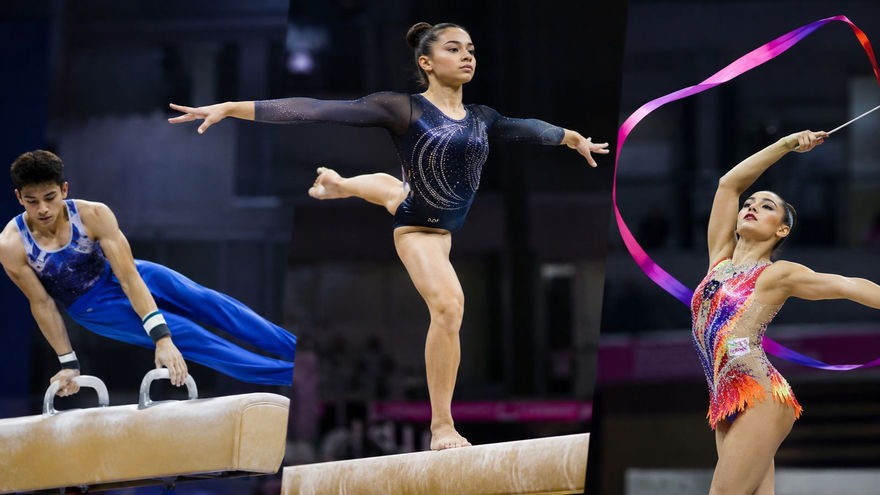
Gymnastics has long held a distinctive position in the sporting world. Combining strength, flexibility, balance, coordination and precision, it requires athletes to develop an exceptional range of physical and mental abilities. Unlike many sports that concentrate on a particular aspect of athletic performance, gymnastics challenges competitors to demonstrate control over almost every movement of their bodies.
From artistic gymnastics to rhythmic and trampoline disciplines, the sport demands years of dedicated practice. Behind every seemingly effortless routine lies a combination of physical conditioning, technical knowledge and mental preparation. This unique combination is one of the reasons gymnastics continues to be regarded as one of the most demanding sports in the world.
An Exceptional Combination of Physical Abilities
One of the defining characteristics of gymnastics is the variety of physical skills required. Athletes must develop considerable strength while maintaining the flexibility and mobility needed to perform complex movements.
Upper-body strength is particularly important in disciplines involving handstands, bars and rings. At the same time, strong core muscles help gymnasts maintain stability and control during rotations, transitions and landings.
Flexibility is another essential component. Many routines involve movements that require a significant range of motion, precise positioning and consistent body control. Developing these abilities takes time and carefully structured training.
Coordination brings everything together. Gymnasts must control multiple movements simultaneously, often while changing direction or position in mid-air. The ability to combine strength, flexibility and coordination makes the sport especially challenging.
Precision Matters as Much as Power
In gymnastics, performing a difficult movement is only part of the challenge. Athletes must also execute it with accuracy, consistency and control.
Even small differences in body positioning, timing or balance can affect the quality of a routine. Competitors are judged not only on the difficulty of their skills but also on how effectively they perform them.
This makes gymnastics particularly demanding from a technical perspective. Athletes spend countless hours refining individual movements before incorporating them into complete routines.
Repetition plays an important role in this process. Practising fundamental techniques helps develop consistency and allows gymnasts to perform increasingly complex skills with greater confidence.
The combination of technical precision and physical ability separates gymnastics from many other sporting disciplines.
The Mental Challenge Behind Every Routine
Although gymnastics is visually associated with impressive physical performances, its mental demands are equally significant.
Athletes must maintain concentration throughout routines that often involve several interconnected movements. Each element requires awareness of body position, timing and spatial orientation.
Confidence is another important factor. Performing technically demanding skills requires trust in preparation, consistent coaching and established movement patterns.
Gymnasts also need patience and resilience. Progress can be gradual, and mastering a new technique may require considerable time. Learning to respond constructively to setbacks is therefore an important part of athletic development.
Competitive environments introduce additional pressure. Athletes must perform prepared routines in front of judges and spectators while maintaining focus and composure.
These mental demands help explain why gymnastics requires much more than physical strength alone.
Years of Training Behind Every Performance
Elite gymnastics is built on long-term preparation. Athletes typically spend years developing fundamental abilities before progressing towards advanced competitive skills.
Training programmes combine conditioning, flexibility exercises, technical practice and routine development. Coaches carefully structure sessions to help athletes improve while managing the physical demands of the sport.
However, the foundations of gymnastics can begin much earlier through age-appropriate recreational activities.
For children, introductory programmes can focus on basic movement patterns, balance, coordination and body awareness. Well-designed kids gym training sessions provide opportunities to explore these abilities in a supervised environment without the pressure of elite competition.
These early experiences can help young participants discover an interest in gymnastics while developing physical skills that may support future participation in different sports.
Importantly, children's programmes should prioritise enjoyment, suitable progression and qualified instruction rather than rushing towards advanced techniques.
Why Gymnastics Benefits Athletes in Other Sports
The physical foundations developed through gymnastics can also be valuable beyond the discipline itself.
Balance, coordination, flexibility and body awareness are important in numerous sports. Footballers benefit from improved movement control, swimmers rely on body positioning, while athletes in disciplines such as diving and athletics need strength and spatial awareness.
Gymnastics introduces participants to a broad range of movement patterns, making it a useful foundation for general athletic development.
It can also help young athletes become more comfortable learning unfamiliar physical skills. This adaptability is particularly valuable during childhood, when exposure to different sporting activities can encourage a wider interest in physical activity.
While gymnastics is not essential for success in other sports, its combination of physical and technical challenges makes it a valuable addition to a varied sporting background.
A Sport That Continues to Inspire
Gymnastics remains popular because it combines athletic difficulty with a distinctive visual appeal. The balance between power and elegance, alongside the precision required for successful routines, makes every performance interesting to watch.
The sport also continues to evolve. New skills, changing competition formats and increasing technical expectations ensure that gymnasts must continually refine their abilities.
For spectators, this creates an opportunity to appreciate the dedication behind each performance. For aspiring athletes, gymnastics demonstrates what consistent practice, patience and determination can achieve.
Ultimately, gymnastics deserves its reputation as one of the world's most demanding sports because it challenges athletes on multiple levels simultaneously. It requires strength without sacrificing flexibility, power combined with control, and confidence supported by discipline.
Whether someone pursues gymnastics professionally or simply enjoys learning its fundamental movements, the sport offers a remarkable example of what the human body can achieve through dedication and structured training.


