
Australia occupies a distinctive place in world football. Long overshadowed at home by rugby and Australian rules football, the sport’s growth down under came from migrant communities, grassroots grit, and a stubborn appetite to belong on the biggest stages. From the Socceroos’ first World Cup in 1974 to a golden generation that broke into Europe’s elite, Australian men’s football has produced characters who combined physicality with genuine technical quality.
Evaluating the nation’s greatest players requires balancing raw talent, trophy cabinets, international influence and cultural impact. This list uses six weighted criteria—Peak Ability (30%), Career Achievements (25%), International Impact (15%), Longevity (10%), Individual Awards (10%), Influence on Football (10%)—to rank Australia’s top ten male footballers of all time.
10. Johnny Warren — Attacking Midfielder (1959–1974)
Johnny Warren is Australian football’s founding conscience. A creative midfielder and captain of the Socceroos at their first World Cup in 1974, Warren’s influence extended far beyond his playing days. He helped establish the national conversation around the sport and left an institutional legacy: the A-League Men’s player of the year award bears his name.
Key facts: captained Australia at the 1974 World Cup; NSW state titles with St George‑Budapest; MBE and Hall of Fame inductee.
9. Mile Jedinak — Defensive Midfielder (2001–2019)
A consummate leader and combative midfield shield, Mile Jedinak became the emotional and tactical anchor of the modern Socceroos. After domestic success he forged a respected European career and captained Australia to the 2015 AFC Asian Cup title. Jedinak’s reliability in major qualifiers and finals, plus his penalty‑box composure, make him a quintessential big‑game performer.
Key facts: 2015 AFC Asian Cup winner; Premier League leadership with Crystal Palace; FFT Asian International Footballer of the Year (2014).
8. Craig Johnston — Midfielder / Winger (1977–1988)
Craig Johnston’s club resume stands among the most impressive for any Australian. A key figure at Liverpool during their 1980s dominance, he won multiple league titles and a European Cup. Johnston’s influence also stretches into football culture: he later designed the revolutionary Adidas Predator boot. He never played senior internationals for Australia, which complicates comparisons, but his club achievements are unmatched.
Key facts: five English league titles, European Cup (1984), inventor of the Predator boot.
7. Brett Emerton — Right Midfielder / Right‑Back (1996–2014)
Emerton blended relentless engine and tactical discipline into a long, dependable career in Europe. A UEFA Cup winner with Feyenoord and a decade at Blackburn Rovers, he was a near‑automatic starter for the Socceroos across multiple World Cups. Emerton set the standard for modern, high‑intensity wide play from Australia.
Key facts: UEFA Cup (2002) with Feyenoord; 95 caps; Oceania Footballer of the Year (2002).
6. Mark Bresciano — Central / Attacking Midfielder (1995–2015)
Bresciano brought composure, late runs and technical intelligence to Serie A for over a decade. At clubs such as Parma and Palermo he proved tactically adept against elite defenses. Internationally, his crucial goal in the 2005 playoff vs Uruguay helped end Australia’s 32‑year World Cup drought.
Key facts: represented Australia in three World Cups; AFC Asian Cup (2015); long Serie A career.
5. Mark Bosnich — Goalkeeper (1989–2009)
At his peak Bosnich was one of the Premier League’s most spectacular shot‑stoppers. His reflexes and penalty‑saving pedigree attracted Manchester United after standout years at Aston Villa. Although off‑field issues and inconsistent longevity dent his career arc, Bosnich’s ceiling as a world‑class keeper earns him a top‑five place.
Key facts: Premier League winner (Manchester United); Oceania Footballer of the Year (1997); elite Aston Villa form.
4. Mark Viduka — Striker (1993–2009)
Powerful, mobile and surprisingly graceful, Mark Viduka combined brute strength with exquisite touch. He starred at Celtic and Leeds United, leading Leeds to the 2001 Champions League semi‑final and scoring prolifically in the Premier League. Viduka captained Australia at the 2006 World Cup and remains one of the nation’s most feared forwards in Europe.
Key facts: 92 Premier League goals; Croatian league titles; captained Socceroos at 2006 World Cup.
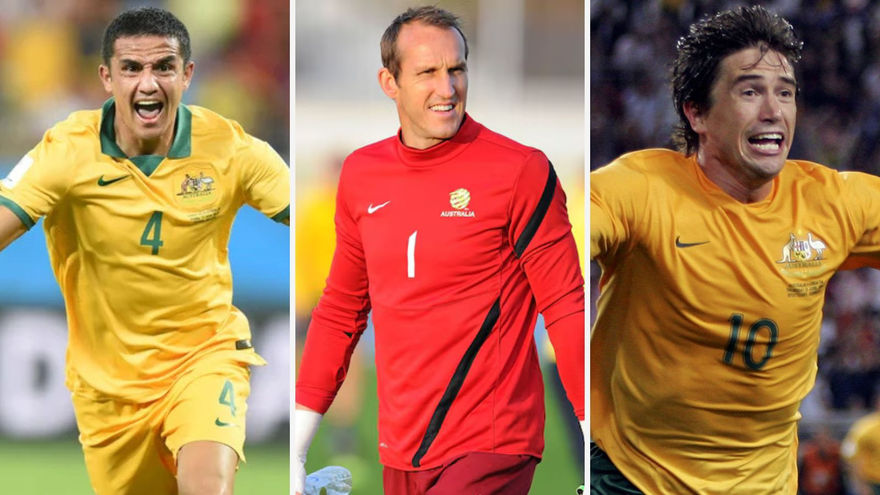
3. Mark Schwarzer — Goalkeeper (1990–2016)
Schwarzer is the model professional: consistent, durable and remarkably reliable. With over 500 Premier League appearances and 109 caps for Australia, he produced pivotal performances for Middlesbrough and Fulham — including deep runs in European competition. His longevity and steady excellence make him one of Australia’s most dependable exports.
Key facts: 514 Premier League appearances; 109 caps; League Cup winner (Middlesbrough); two European finals.
2. Harry Kewell — Left Winger / Forward (1996–2014)
At his peak, Harry Kewell was one of the most electrifying wide players in Europe. Rapid, skilful and creative, he starred for Leeds United and won the Champions League with Liverpool (2005). Recurrent injuries curtailed his prime, but his technical brilliance and influence on younger Australian players are undeniable.
Key facts: Champions League winner (2005); PFA Young Player of the Year; multiple Oceania Footballer of the Year awards.
1. Tim Cahill — Attacking Midfielder / Striker (1998–2019)
Tim Cahill is Australia’s definitive football icon. Aerially exceptional and a master of timing, Cahill became the nation’s all‑time top scorer with 50 goals in 108 caps. He scored Australia’s first World Cup goal in 2006 and kept producing memorable, decisive strikes across four World Cups and multiple international tournaments. Cahill’s consistency, clutch scoring and cultural resonance place him at the summit of Australian football.
Key facts: 50 goals in 108 caps; scored in three separate World Cups; Everton legend; AFC Asian Cup 2015 winner.
Honorable Mentions
Frank Farina: early European pioneer and domestic stalwart.
Ned Zelic: technically gifted defensive midfielder with European pedigree.
Mathew Ryan: modern-era goalkeeper with 90+ caps and enduring quality.
Lucas Neill: combative defensive captain for the Socceroos.
Damian Mori: NSL era’s lethal marksman and early national record-holder.
The Biggest Debate: Tim Cahill vs Harry Kewell
This list’s most charged debate pits Cahill’s enduring international heroics against Kewell’s higher individual technical ceiling. Kewell’s peak brilliance could outshine many contemporaries, but injuries limited his sustained global dominance. Cahill, by contrast, produced consistent, decisive moments across four World Cups and held Australia’s scoring record—traits that, for many fans and analysts, define national greatness.
Comparing the Top Three
Tim Cahill: unmatched clutch scoring and cultural impact; 50 international goals.
Harry Kewell: pure technical virtuosity and Champions League pedigree.
Mark Schwarzer: extraordinary longevity, reliability and European consistency.
Conclusion
Australia’s football story is one of steady evolution — from grassroots pioneers to Europe’s established performers. The players on this list span eras and styles, yet each helped change how the world perceives Australian football. Tim Cahill’s blend of record‑breaking output, big‑game delivery and national symbolism places him at the apex, but the debate around Kewell, Schwarzer, Viduka and others highlights a rich, proud tradition that continues to grow.
Which of these players shaped your memories of the Socceroos? Would you swap anyone in or out of the top ten?
Frequently Asked Questions:
Q: Who is the greatest Australian footballer of all time?
A: This ranking places Tim Cahill at number one for his 50 international goals, World Cup impact and consistent big‑game delivery.
Q: Which Australian players have won the UEFA Champions League?
A: Harry Kewell (with Liverpool, 2005) and Craig Johnston (with Liverpool, 1984) are associated with European Cup/Champions League success.
Q: Who is Australia’s most capped player?
A: Mark Schwarzer earned 109 caps for Australia, making him one of the nation’s most capped players.
Q: Which Australians had notable Premier League careers?
A: Tim Cahill, Mark Viduka, Mark Schwarzer, Brett Emerton, Mile Jedinak and Craig Johnston all had significant Premier League or English league careers.
Q: Who scored Australia’s first World Cup goal?
A: Tim Cahill scored Australia’s first World Cup goal at the 2006 tournament against Japan.
Also Read |