
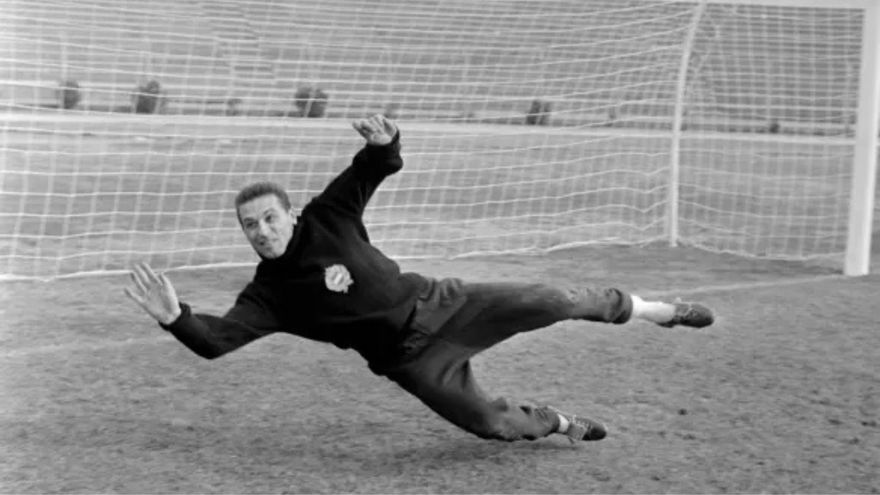
There was a time when Hungary were the greatest football team in the world, and that legendary side was known as the Mighty Magyars. Gyula Grosics was the goalkeeper of this magnificent team, and is widely regarded as one of best goalkeepers the game has ever seen. The Hungarian's decision to wear black clothes while playing saw him earn the nickname of Fekete Párduc, which translates to Black Panther.
Early life
Grosics was born 4 February 1926 in Dorog, Hungary. His mother was encouraging him to be a priest while growing up, but he ended up choosing professional football in Dorog. Dorogi Bányász became the opening chapter of his football career in 1943. He also fought for the Axis during World War II, and was even captured by American forces.
Early football years and arrest
It was in 1947 that Grosics made his debut with the Hungary national team. Although he was comparatively short for a goalkeeper, Grosics became a key figure of the legendary Hungary side that went on an unbeaten streak in 1948 that would last until the 1954 FIFA World Cup.
The year of 1949 saw him be caught for the act of defect. This eventually led to Grosics being charged with espionage and treason by the secret service and placed under house arrest. However, a lack of evidence ultimately led to the charges being dropped. Despite the dropped charges, he was still banned from the national team for two years. A year later, Grosics made his return to the national team,and also joined Hungarian club Budapest Honvéd FC in 1950.
Olympic success, Wembley shocker, and World Cup heartbreak
2 years later, Grosics led Hungary to Olympic gold in the 1952 Summer Olympics Football. The following year saw one of the most dominant displays in football history, as Hungary thrashed the England national side 6–3 at Wembley, thus becoming the first team outside the British Isles to beat England at home. The match was later dubbed as "The Match of the Century".
Hungary entered the 1954 FIFA World Cup as heavy favorites, riding on the huge momentum of their four-year unbeaten streak. However, they shockingly lost the final to West Germany 3-2, the same team they beat 8-3 in the group stages. It was a moment of eternal sorrow for Grosics and his teammates, with the former's magnificent efforts as goalie going in vain. His heroic performances saw him selected as the goalkeeper of the 1954 World Cup's All Star Team. It was a severe blow to recover for Hungary, who had recorded 42 victories with Grosics in goal, 7 draws, and just that one loss when it mattered the most.
During the 1956 Hungarian Revolution, Grosics and his family fled the country and attempted to start a new life. However, they were forced to return. Grosics was then transferred to Hungarian side Tatabánya Bányász SC.
Final years and influence
The Hungarian national team went into decline after the shocking World Cup disaster, but they still made it to the 1958 and 1962 World Cups with Grosics in goal. His career came to a sad end though, as he was banned from joining Ferencvárosi TC after the 1962 season by the Communist Hungarian Sports Ministry, which ultimately led to Grosics announcing his retirement.
That was the end of the Black Panther's football journey, which culminated with 86 national side appearances and 390 Hungary first division games.
Grosics will forever remain a legend of Hungarian football, and arguably the greatest ever goalkeeper the country has ever had.
Also Read | 1950s Hungary The Mighty Magyars