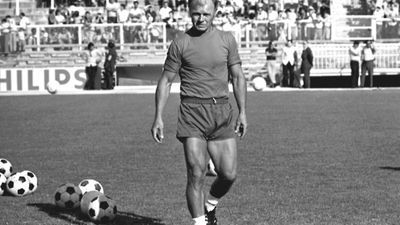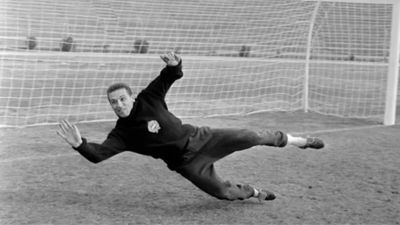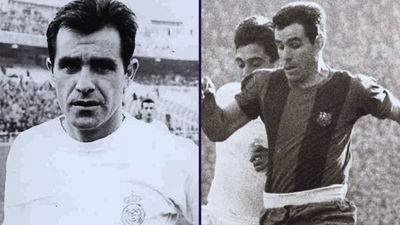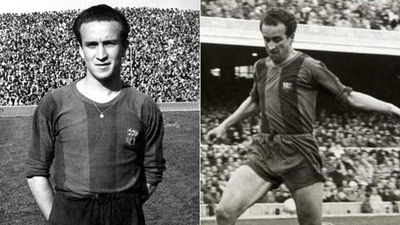

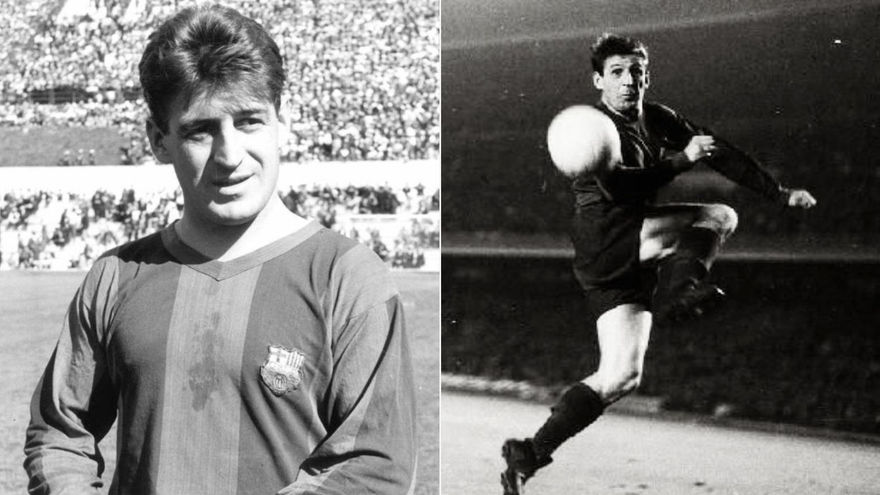
A young Zoltán Czibor had taken his initial steps in football with Komárom AC and Komárom MÁV. Interestingly, he also operated as a train engine driver at the time. It was Hungary youth team coach Sándor Mezei that noticed the youngster's talent in football, which led to him joining Hungarian side Ferencváros TC. Czibor ended up winning the Hungarian League in 1949 with Ferencváros. This was followed by a move to Csepel SC, which continued until the player got called up into the army team known as Honvéd.
His time in Hungarian club football was nothing short of a success, having scored over 100 goals during his time at these clubs. Let us now look at Czibor's remaining career in detail, as we look back at this Hungarian legend's career.
Stint with the national side
Czibor made his international debut in 1949. Playing on the left wing, the Hungarian made 43 appearances and scored 17 goals. He was a part of their golden generation, which included world-class stars such as Ferenc Puskás, Sándor Kocsis, and József Bozsik. Known as the Golden Team, the Hungarians went on a legendary 32-game unbeaten streak at the time.
They became Olympic Champions, won the Central European International Cup, and beat the dominant English national side twice during this unforgettable run. The streak came to a heartbreaking end in thr 1954 World Cup Final, as Hungary were shockingly beaten 3-2 by Germany. Czibor in particular was a key player in the final, as he scored a crucial goal for the country. However, those efforts unfortunately went in vain.
Must Read | 1950s Hungary The Mighty Magyars
A wild time at Honvéd
It was in 1953 that Czibor joined fellow internationals Puskás, Kocsis, and Bozsik at Honvéd. He added a further two Hungarian League titles (1954, 1955) to his trophy cabinet with Honvéd. The Hungarian left winger was prolific in front of goal as well, finishing the 1955 league campaign as top scorer with 20 goals.
In 1956, Honvéd faced Athletic Bilbao in the European Cup first round. The Hungarian side lost the first leg 3-2, this was followed by the Hungarian Revolution's commencement in Budapest before the home leg could be played. The players decided against going back to Hungary and arranged for the return match with Athletic to be played at the Heysel Stadium in Brussels. Honvéd's goalkeeper suffered an injury during the second leg, which forced Czibor to play in goal. Despite a 3-3 draw, the Hungarian side lost 5-6 on aggregate.
After their European Cup elimination, the Hungarian players summoned their families from Budapest and organised a fundraising tour of Italy, Portugal, Spain and Brazil. This was done despite opposition from FIFA and the Hungarian football authorities.
The players parted ways after returning to Europe, with some of them returning to Hungary and certain others finding new clubs in Western Europe. Czibor was one of those who shifted to Western Europe, as he took the next big leap of his career.
The Barca years
Czibor's next chapter in football took him to Italy, where he took part in few unofficial games for AS Roma. However Hungarian refugee Ladislao Kubala persuaded him and fellow countrymen Sándor Kocsis to join him at FC Barcelona. The Hungary left winger became a key part of the Blaugrana, helping them win 2 La Liga titles, a Copa del Generalísimo, and a Fairs Cup during his time at the club. Barca and Czibor managed to reach the 1961 European Cup final as well, but ultimately lost 3-2 to Benfica.
After his Barcelona stint, Czibor joined their local rivals Español for the 1961–62 season. This was followed by spells at Switzerland and Austria. The year of 1964 saw him further move to clubs Hamilton Steelers and Hungária SC Toronto.
Czibor called it a time on his football career with Toronto City in 1965, marking the end of a beautiful chapter that saw amaze the footballing world with his precious talent.