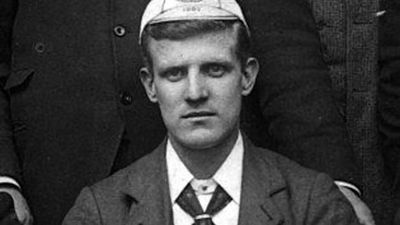


Chelsea currently have one of the best right-backs in world football with Reece James. A look back at the club's history shows us that the Blues have never had a problem when it comes to owning world-class right-backs. The likes of Cesar Azpilicueta and Branislav Ivanovic are prime examples of this.
This article will go back to the 1950's, when the Blues had one of their greatest ever right-back players at the time. Let us go through Peter Sillett's time at Chelsea.
Goalscoring prowess and career-defining moment
After 3 years at Southampton, Peter Sillett was signed by Chelsea in 1953. Sillet eventually established himself as the club's top right-back when fit. The Englishman was a physically strong defender that was blessed with a powerful shooting ability. His 34 goals for the London club made him Chelsea's greatest ever defensive goalscorer, until it was broken by John Terry.
One of his greatest ever contributions for Chelsea came during the 1954-55 season, as he scored what was widely perceived as that season's title-winning goal. The mentioned goal came up against their rivals Wolves, as Sillet scored a penalty to give Chelsea a 1-0 victory. This was followed by yet another victory against Sheffield United, which ultimately made Chelsea the Champions of England.
The popular youth years
Peter Sillett's excellent displays from such a young age saw him attract interest from various corners, and his England Under-23 caps were followed by his first full international against France in May 1955. The former Chelsea right-back also represented the London XI team in the 1955-58 Inter-Cities Fairs Cup alongside Chelsea teammates Ken Armstrong, Derek Saunders and Jim Lewis. They were able to reach the finals as well, which saw them lose to Barcelona on aggregate.
The player's immense talent at a young age also him saw captain the England under-23 side on four occasions in 1955, which had several notable players like , Bobby Robson, Johnny Haines and Duncan Edwards.That very same year also saw Sillett represent Great Britain in a special exhibition match against a Rest of Europe side.
Playing style
The former Chelsea man did not play in the most flashy or stylish manner, but his exceptional natural talent was more than enough to make him stand out at the time. Sillett's footballing excellence also resulted in Juventus approaching the player, but he turned down the move in typically laid back fashion by reportedly stating that Italy was "too bloody hot for football".
A career that could've been much bigger
There was a point of time as well when Peter Sillett was widely tipped to be a captain of the England senior side, but it was never meant to be. The belief was that his cool, relaxed and modest attitude when it came to both life and football was what ultimately stopped him from becoming an all-time great of the country. Such was the natural talent that Chelsea's former right-back possessed. It was truly a shame that Sillett's lack of discipline stopped him from reaching his true potential.
Peter Sillett's time at Chelsea lasted for over 9 years, during which he made a total of 288 appearances. His 29 goals for the club were quite impressive for a defender as well. He eventually bid farewell to Chelsea in June 1962.
Later career
Peter Sillett moved to Guildford City after his legendary stint at Chelsea. This was followed by a player-manager role at Ashford Town. He managed both Ashford Town and Hastings United twice each and oversaw promotion during each spell. Thus providing his talent when it came to football management as well.
The legendary Chelsea player ended his association with football after one final managerial stint at Hastings Town, which finished in 1992.
Also Read |