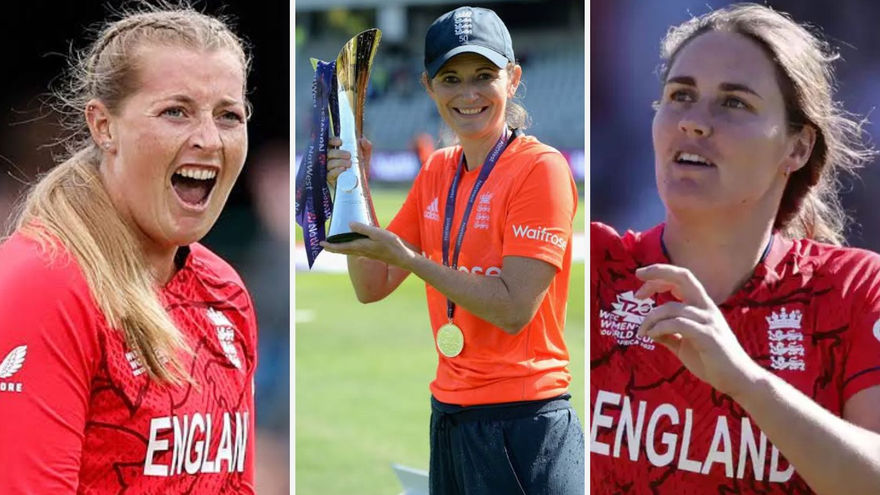
Selecting an all-time England Women’s ODI XI means balancing historic pioneers, prolific batters, world-class all-rounders, and match-winning bowlers. Since winning the inaugural Women’s Cricket World Cup on home soil in 1973, England has remained one of the most influential teams in women’s cricket.
England has won four Women’s Cricket World Cup titles, in 1973, 1993, 2009, and 2017. Across these generations, the team has produced exceptional performers who have shaped the development of the women’s game. Choosing an all-time XI, however, requires more than comparing career statistics. Batting roles, bowling combinations, wicketkeeping ability, leadership, and performances under pressure all matter.
This selection brings together England’s greatest women cricketers across five decades of ODI history. The aim is to build a balanced 50-over team capable of competing against the strongest international sides, while recognising the achievements of players from different eras.
All-Time England Women’s ODI XI: The Complete Lineup
No. | Player | Role | Batting/Bowling Style |
1 | Tammy Beaumont | Opening batter | Right-hand bat |
2 | Charlotte Edwards (C) | Opening batter and captain | Right-hand bat |
3 | Claire Taylor | Top-order batter | Right-hand bat |
4 | Janette Brittin | Top-order batter | Right-hand bat |
5 | Nat Sciver-Brunt | Pace all-rounder | Right-hand bat, right-arm medium-fast |
6 | Rachael Heyhoe Flint | Middle-order batter | Right-hand bat |
7 | Sarah Taylor (WK) | Wicketkeeper-batter | Right-hand bat |
8 | Katherine Sciver-Brunt | Fast bowler and all-rounder | Right-hand bat, right-arm fast-medium |
9 | Anya Shrubsole | Fast bowler | Right-arm medium-fast |
10 | Sophie Ecclestone | Left-arm spinner | Slow left-arm orthodox |
11 | Gill Smith | Fast bowler | Right-arm fast |
Charlotte Edwards leads the side, while Sarah Taylor takes the gloves. The batting order combines modern scoring power with the technical consistency of earlier generations. Nat Sciver-Brunt provides a crucial seam-bowling option, and the attack features pace, swing, and left-arm spin.
Top-Order Batters: Tammy Beaumont, Charlotte Edwards, Claire Taylor and Janette Brittin
1. Tammy Beaumont
Tammy Beaumont earns her place through her consistency and ability to build substantial ODI innings. An accomplished opener, she combines positive strokeplay with strong footwork against spin, giving England a dependable foundation at the top.
Beaumont played a key role in England’s 2017 Women’s Cricket World Cup triumph and won Player of the Tournament. Her capacity to turn a promising start into a major score makes her particularly valuable in a format where the opening partnership can determine the direction of an innings.
Role in the XI: Provide an aggressive yet controlled start and establish a platform for the middle order.
2. Charlotte Edwards (Captain)
Charlotte Edwards is one of the defining figures in England Women’s cricket. She scored 5,992 ODI runs in 191 matches, averaging 38.16, and built a reputation for consistency across a career spanning two decades.
Her leadership strengthens an already experienced lineup. Edwards captained England in 117 ODIs, winning 72 matches, and led the team to the 2009 Women’s Cricket World Cup and ICC Women’s World Twenty20 titles.
Her selection reflects both her batting record and her ability to manage a team through different match situations.
Role in the XI: Anchor the opening partnership, guide the innings, and provide experienced tactical leadership.
3. Claire Taylor
Claire Taylor was among the outstanding batters of her generation. Her technical precision, composure, and ability to perform in important matches made her a central figure in England’s successful 2009 campaign.
That year, Taylor became the first woman named a Wisden Cricketer of the Year. She played a major role in England winning both the Women’s Cricket World Cup and the World Twenty20.
Taylor also brought excellent fielding and sharp running between the wickets, qualities that remain important when building a balanced ODI team.
Role in the XI: Stabilise the top order and maintain scoring momentum through the middle overs.
4. Janette Brittin
Janette Brittin was a cornerstone of England’s batting lineup for nearly two decades. Playing between 1979 and 1998, she scored more than 2,100 ODI runs despite competing in an era with fewer international fixtures.
Brittin also remains England’s leading run-scorer in women’s Test cricket. Her technical reliability and ability to handle demanding bowling conditions make her a strong choice for a team spanning different generations.
She was an important contributor to England’s 1993 World Cup victory, reinforcing her place among the country’s greatest batters.
Role in the XI: Add stability and technical discipline when early wickets fall.
All-Rounders and Wicketkeeper: Sciver-Brunt, Heyhoe Flint and Sarah Taylor
5. Nat Sciver-Brunt
Nat Sciver-Brunt provides the all-round ability that every successful ODI side needs. She combines powerful middle-order batting with right-arm medium-fast bowling, allowing the captain to adjust the balance between attack and defence.
Her record includes major performances in World Cup knockout matches, including consecutive centuries in high-pressure finals. She is also known for the inventive “Natmeg” shot, played through the batter’s legs.
Sciver-Brunt offers flexibility with both bat and ball, making her one of the most important selections in this XI.
Role in the XI: Accelerate the scoring rate, rebuild after setbacks, and contribute overs with the ball.
6. Rachael Heyhoe Flint
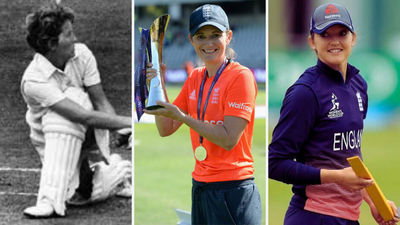
Rachael Heyhoe Flint represents the pioneering generation of women’s cricket. Her influence extended well beyond her individual performances: she helped spearhead the inaugural Women’s Cricket World Cup in 1973 and captained England to the title.
A competitive batter and respected leader, she helped establish a foundation for the international game that followed. Her inclusion recognises the historical importance of players whose achievements helped create opportunities for future generations.
Role in the XI: Strengthen the middle order while bringing experience from England’s formative World Cup era.
7. Sarah Taylor (Wicketkeeper)
Sarah Taylor was renowned for her exceptional wicketkeeping, particularly her quick hands, athletic movement, and ability to stand up to the stumps against pace bowling.
She was also a highly accomplished batter, scoring more than 4,000 ODI runs. Her attacking strokeplay gave England another scoring option, while her work behind the stumps added significant value.
Taylor’s combination of wicketkeeping excellence and batting quality makes her the natural choice for the role.
Role in the XI: Keep wickets, contribute runs in the middle order, and create opportunities through sharp glovework.
Bowling Attack: Katherine Sciver-Brunt, Anya Shrubsole, Sophie Ecclestone and Gill Smith
8. Katherine Sciver-Brunt
Katherine Sciver-Brunt led England’s pace attack for much of a 19-year international career. She finished with 170 ODI wickets in 140 matches, making her England’s leading wicket-taker in the format according to the figures used for this selection.
Her strengths included movement with the new ball, aggressive seam bowling, and accurate yorkers at the death. She could also contribute useful lower-order runs.
Role in the XI: Take early wickets, apply pressure at the end of an innings, and provide depth at number eight.
9. Anya Shrubsole
Anya Shrubsole’s defining performance came in the 2017 Women’s Cricket World Cup final at Lord’s. She took 6 for 46 against India, helping England recover from a difficult position to secure the trophy.
Her ability to generate movement and deliver under pressure makes her an ideal partner for Sciver-Brunt. Shrubsole also finished her ODI career with more than 100 wickets.
Role in the XI: Attack with the new ball and deliver important breakthroughs in high-pressure situations.
10. Sophie Ecclestone
Sophie Ecclestone brings a different dimension to the bowling attack. Her slow left-arm orthodox spin offers control through the middle overs, while her accuracy and ability to generate turn make her a consistent wicket-taking threat.
She rose to the top of the ICC Women’s ODI Bowling Rankings early in her career and established herself among the leading bowlers in international cricket.
Ecclestone is especially valuable in a team otherwise built around several pace options.
Role in the XI: Control the middle overs, restrict scoring opportunities, and break partnerships through spin.
11. Gill Smith
Gill Smith, formerly known as Gill McConnell, was an important England bowler during the 1990s. She claimed 73 wickets in 57 ODIs, with a bowling average below 17.50 and an economy rate under 2.50 runs per over, according to the career figures cited for this selection.
Her pace and ability to generate bounce made her an effective strike bowler. Including Smith also recognises the contributions of players whose careers preceded the professional opportunities available to modern cricketers.
Role in the XI: Provide pace and bounce, particularly when the conditions favour seam bowling.
Notable Omissions from the All-Time XI
Several accomplished players miss out because the team needs a workable combination of batting, wicketkeeping, and bowling.
Heather Knight: A World Cup-winning captain and accomplished batter, but the selected top order and all-rounder combination leave limited room.
Jenny Gunn: A valuable all-round option who narrowly misses selection.
Danielle Hazell: An experienced spin-bowling candidate, competing for a place with Ecclestone.
Enid Bakewell: A major figure in England’s early World Cup history who deserves consideration in any discussion of the country’s greatest players.
These omissions are inevitably debatable. Different selectors might prioritise career longevity, peak performance, statistical records, or historical influence and arrive at a different XI.
Frequently Asked Questions
Who is England’s highest run-scorer in Women’s ODIs?
Charlotte Edwards scored 5,992 runs in 191 ODI matches at an average of 38.16, according to the figures used in this selection.
Who is England’s leading Women’s ODI wicket-taker?
Katherine Sciver-Brunt leads the selected historical record with 170 wickets in 140 matches.
How many Women’s Cricket World Cups has England won?
England has won four 50-over Women’s Cricket World Cups: 1973, 1993, 2009, and 2017.
Who is England’s greatest women’s wicketkeeper?
Sarah Taylor is a leading candidate because of her outstanding glovework, athleticism, and batting ability.
Why is Heather Knight not in the starting XI?
Knight is an accomplished batter and World Cup-winning captain. However, the selected top order, Sciver-Brunt’s all-round role, and the need to maintain bowling balance leave her outside this particular lineup.
What were Anya Shrubsole’s figures in the 2017 World Cup final?
Shrubsole took 6 wickets for 46 runs against India at Lord’s, playing a decisive role in England’s victory.
Also Read |