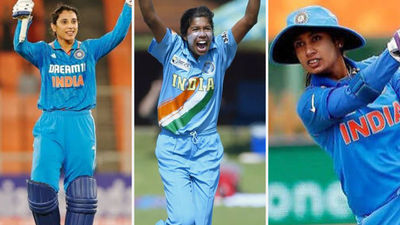

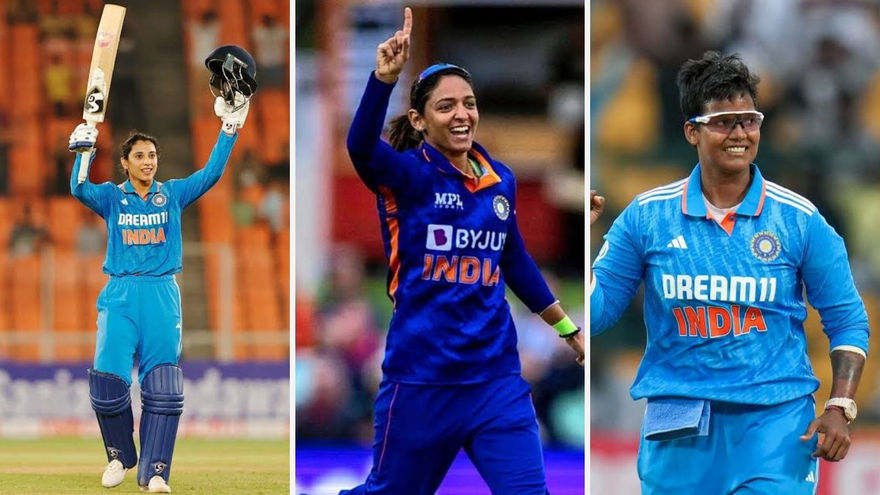
The rise of Indian women’s cricket over the past decade has transformed the profile of the sport in India. The team has moved from playing before sparse crowds to performing on major stages and attracting global attention, particularly in the shortest format.
Selecting an All-Time Best India Women's T20I XI is therefore a difficult exercise. The strongest combination cannot simply be a collection of famous names. It needs explosive Powerplay batting, middle-order control, finishing ability, all-round depth, fielding quality and enough bowling variety to handle different match situations.
This XI is built around those requirements, with players selected for their impact, longevity, big-match performances and ability to complement the roles around them.
All-Time Best India Women's T20I XI
No. | Player | Role |
1 | Smriti Mandhana | Opener |
2 | Shafali Verma | Opener |
3 | Mithali Raj | Anchor |
4 | Harmanpreet Kaur (C) | Captain / Middle-order all-rounder |
5 | Jemimah Rodrigues | Middle-order batter |
6 | Richa Ghosh (WK) | Wicketkeeper / Finisher |
7 | Deepti Sharma | All-rounder |
8 | Pooja Vastrakar | Seam-bowling all-rounder |
9 | Radha Yadav | Specialist spinner |
10 | Poonam Yadav | Leg-spinner |
11 | Jhulan Goswami | Pace spearhead |
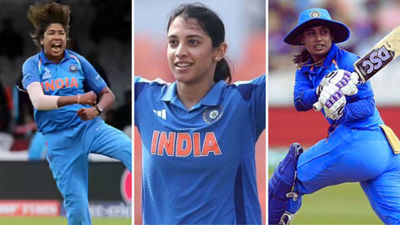
The combination gives India a left-right opening pair, an experienced anchor, multiple attacking batters, two all-rounders, three specialist spin options and a senior pace leader.
Top Order: Mandhana, Shafali and Mithali
1. Smriti Mandhana — Opener
Role: Aggressive opener and dynamic stroke-maker
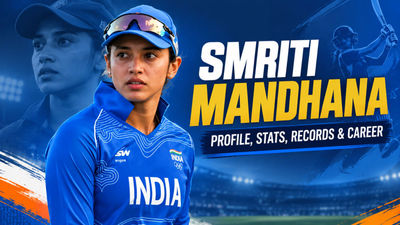
Smriti Mandhana provides the class and timing at the top of the order. Her ability to find boundaries through the infield makes her particularly valuable during the Powerplay, when fielding restrictions create opportunities for attacking batters.
Her range against both pace and spin also gives the opening partnership flexibility. In this XI, Mandhana sets the tempo while allowing the more explosive Shafali Verma to attack from the other end.
2. Shafali Verma — Opener
Role: Power hitter and Powerplay enforcer
Shafali brings a completely different approach. She attacks from ball one and changed the way India could approach the opening six overs after making her debut as a teenager.
The contrast with Mandhana is a major strength. Mandhana offers timing and placement, while Shafali supplies immediate power. Together, they give the XI an aggressive opening platform.
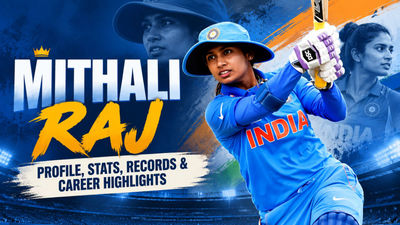
3. Mithali Raj — Anchor
Role: Top-order anchor and innings constructor
Mithali Raj provides the stability that allows the rest of the batting order to play more aggressively. In a T20 lineup filled with attacking options, her ability to manage an innings becomes especially useful if India lose early wickets.
Rather than asking every batter to attack at the same tempo, this combination gives Mithali a clear responsibility: control the innings when necessary and create a stable platform for the hitters around her.
Middle Order and Finishing Power
4. Harmanpreet Kaur — Captain
Role: Captain, middle-order power hitter and off-spin option
Harmanpreet Kaur is the tactical leader of this XI. Her power-hitting makes her a natural middle-order match-winner, particularly when India need to increase the scoring rate.
Her famous unbeaten 171 in the 2017 ODI World Cup remains one of the defining innings of Indian women's cricket. In this T20 combination, however, her leadership and ability to attack in the later stages of an innings are central to her selection.
5. Jemimah Rodrigues — Middle Order
Role: Strike rotator, gap finder and high-energy fielder
Jemimah Rodrigues adds a different skill set to the middle order. She is comfortable manipulating gaps, rotating strike and using sweeps against spin while maintaining scoring pressure.
Her fielding adds another dimension. In a format where individual fielding moments can change a match, her energy around the boundary strengthens the overall XI.
6. Richa Ghosh — Wicketkeeper and Finisher
Role: Wicketkeeper and designated finisher
Richa Ghosh fills one of the most demanding roles in modern T20 cricket: finishing an innings at high intensity while also keeping wicket.
Her ability to attack both pace and spin makes her particularly valuable in overs 16–20. With Richa at No. 6, India have a specialist boundary-hitting option rather than relying entirely on their top order to produce the final push.
All-Rounders Add Depth
7. Deepti Sharma — All-Rounder
Role: Premier all-rounder and match-winner
Deepti Sharma is the key balancing piece of the XI. Her off-spin gives India control across different phases, while her left-handed batting adds depth to the lower order.
She can contribute during the Powerplay, operate through the middle overs and provide accuracy when defending runs. Her batting also gives India additional insurance if the top and middle order fail to produce a substantial total.
8. Pooja Vastrakar — Seam-Bowling All-Rounder
Role: Seam all-rounder and lower-order hitter
Pooja Vastrakar supplies the pace-bowling balance this team needs. Her hard-length bowling and ability to move the ball off the seam complement the spin-heavy attack.
She also provides late-order hitting. That combination of seam bowling and six-hitting makes her an important No. 8 in a side that needs both bowling depth and lower-order runs.
Bowling Attack
9. Radha Yadav — Left-Arm Spinner
Role: Middle-overs wicket-taker and elite fielder
Radha Yadav gives the attack left-arm spin variety. Her flat, tight approach is designed to restrict scoring options and force batters into difficult strokes.
Her fielding is another major part of her value. She adds intensity to an XI that already contains several players capable of influencing matches away from their primary roles.
10. Poonam Yadav — Leg-Spinner
Role: Attacking leg-spinner
Poonam Yadav brings a contrasting spin option. Her slower, flighted leg-breaks can tempt batters into attacking shots, creating opportunities for wickets.
Her spell against Australia in the 2020 T20 World Cup opener is highlighted as a major example of her ability to influence a high-pressure match.
11. Jhulan Goswami — Pace Spearhead
Role: New-ball leader and bowling spearhead
Jhulan Goswami completes the attack as the experienced pace leader. Her height, bounce, seam movement and accuracy provide an immediate threat with the new ball.
Her presence also gives the bowling unit a clear leader, while Pooja Vastrakar supplies additional seam support and the spinners take responsibility for controlling the middle overs.
Final Verdict
This All-Time Best India Women's T20I XI combines experience, power, spin variety, seam bowling and finishing depth. Mandhana and Shafali provide an aggressive opening partnership, Mithali adds stability, Harmanpreet supplies leadership and power, while Richa, Deepti and Pooja strengthen the lower order.
The bowling attack has multiple spin options alongside the experience of Jhulan Goswami. While any all-time XI will remain open to debate, this combination is designed around defined roles and tactical balance rather than reputation alone.
Also Read |