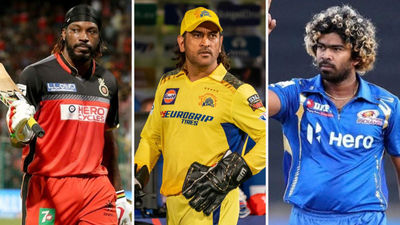
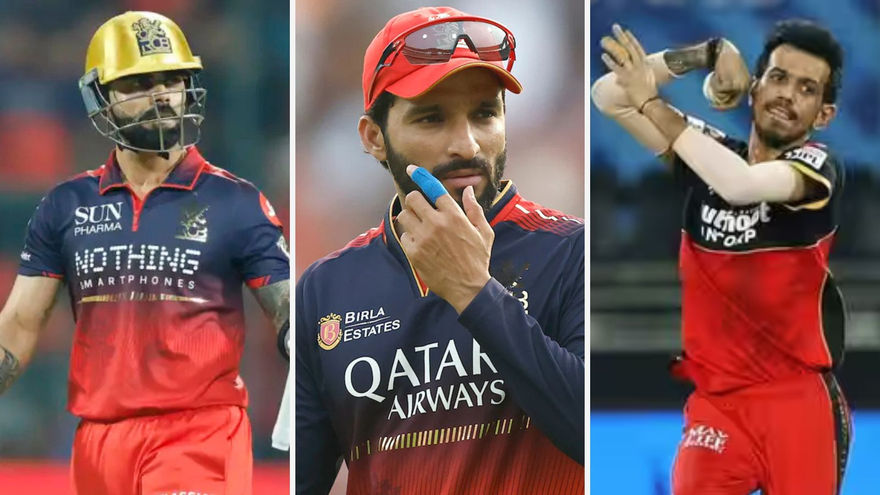
Royal Challengers Bengaluru (RCB) have built one of the IPL’s most recognisable legacies through explosive batting, iconic match-winners and an unusually passionate home crowd at M. Chinnaswamy Stadium. Choosing an all-time RCB XI, however, is more complicated than simply selecting the biggest names.
The challenge is to build a side that could actually function within IPL team-composition rules. That means balancing elite batting with specialist bowling and limiting the starting XI to four overseas players.
This all-time RCB XI does exactly that. Chris Gayle and AB de Villiers provide the overseas batting firepower, Glenn Maxwell adds all-round value, and the fourth overseas place goes to a genuine pace-bowling all-rounder in Jacques Kallis or Shane Watson.
All-Time RCB Playing XI
No. | Player | Role | Key RCB Impact |
1 | Chris Gayle ✈️ | Left-handed opener | IPL-record 175* |
2 | Virat Kohli | Right-handed batter | RCB's leading run-scorer; 973 runs in 2016 |
3 | Rajat Patidar (c) | Right-handed batter | Versatile and Explosive top-order batter |
4 | AB de Villiers ✈️ | Right-handed batter | 4,491 RCB runs at a 150+ strike rate |
5 | Glenn Maxwell ✈️ | All-rounder | Explosive middle-order batting and off-spin |
6 | Dinesh Karthik (WK) | Wicketkeeper-batter | Elite death-overs finisher |
7 | Jacques Kallis ✈️ / Shane Watson ✈️ | Fast-bowling all-rounder | Provides balance with pace and lower-order power |
8 | Harshal Patel | Right-arm medium-fast | 32 wickets in a single IPL season for RCB |
9 | Mohammed Siraj | Right-arm fast | New-ball movement and powerplay wickets |
10 | Yuzvendra Chahal | Right-arm leg-spin | RCB's leading wicket-taker |
11 | Anil Kumble | Right-arm leg-spin | Former captain and big-match spinner |
✈️ Overseas player
Why Chris Gayle Opens
Chris Gayle transformed RCB's batting identity after joining the franchise in 2011. His combination of size, timing and six-hitting made him one of the most destructive players in T20 cricket.
His defining RCB performance came against Pune Warriors India, when he smashed 175* — still the highest individual score in IPL history and the highest individual score in T20 cricket.
Gayle scored more than 3,100 runs for RCB at a strike rate above 150. His ability to win matches almost single-handedly makes him an automatic selection at the top of this XI.
Virat Kohli: Franchise Icon
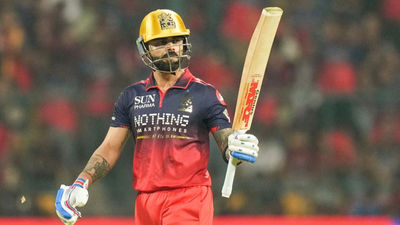
No all-time RCB XI can be discussed without Virat Kohli. He has represented the franchise since the inaugural IPL season in 2008 and became its defining player and long-term leader.
Kohli's 973-run campaign in 2016 remains the benchmark for an individual IPL batting season. His consistency across seasons also gives this XI an anchor capable of controlling an innings after Gayle's initial assault.
Rajat Patidar: Captain
Rajat Patidar occupies the No. 3 position because he gives the lineup a different type of top-order option. He is the natural choice for the captain as he led RCB to the title back to back in 2025 and 2026.
AB de Villiers: RCB's 360-Degree Match-Winner
AB de Villiers is one of the clearest selections in the side. During his RCB career, he scored 4,491 runs while maintaining a strike rate above 150.
His greatest strength was his ability to score around the ground. He could attack pace, manipulate spin and change the course of an innings from almost any situation.
His partnership with Kohli became one of the defining batting combinations in IPL history. Placing de Villiers at No. 4 gives RCB a devastating middle-order weapon without disrupting the aggressive opening combination.
Glenn Maxwell Strengthens the Middle Order
Glenn Maxwell adds another layer of attacking intent. Unlike a specialist batter, Maxwell also offers off-spin, which gives the captain an additional bowling option.
His ability to attack spin through the middle overs makes him particularly valuable in a side already packed with top-order stroke-makers. Maxwell's role is not simply to score quickly; he also helps connect the batting unit to the bowling attack.
Dinesh Karthik as the Wicketkeeper-Finisher
Dinesh Karthik earns the wicketkeeping role because of his effectiveness as a specialist T20 finisher.
During his second RCB stint, Karthik developed into one of the league's most dangerous late-innings hitters, striking at more than 180 during his peak years. His experience behind the stumps and ability to remain composed in high-pressure situations add further value.
Rahul could provide wicketkeeping cover, but Karthik's finishing ability makes him the stronger choice for this particular XI.
Kallis or Watson: The Fourth Overseas Slot
The fourth overseas position is the most tactical selection in the team.
Jacques Kallis provides early-era reliability as a genuine fast-bowling all-rounder. His ability to contribute with both bat and ball gives the XI structural balance.
Shane Watson, meanwhile, offers greater lower-order power and valuable pace bowling, particularly during RCB's run to the 2016 final.
Either player addresses the same weakness: the need for a genuine pace-bowling all-rounder rather than another specialist batter.
Harshal Patel Leads the Death Bowling
Harshal Patel brings a skill set that is especially valuable at Chinnaswamy. His slower balls, changes of pace and variations make him an effective death-overs specialist.
His 32-wicket season remains one of the outstanding individual bowling campaigns for RCB in the IPL. In a team containing so much batting firepower, Harshal's ability to create breakthroughs and control the closing overs is essential.
Mohammed Siraj Leads the Pace Attack
Mohammed Siraj's development at RCB has been one of the franchise's most notable bowling stories. He evolved from an inconsistent young seamer into an elite international fast bowler.
His strengths include seam presentation, new-ball movement and the ability to challenge batters during the powerplay. In this XI, Siraj takes responsibility for attacking the top order before returning later to support the death-overs plan.
Chahal and Kumble Form a Unique Spin Pair
Yuzvendra Chahal is RCB's all-time leading wicket-taker, and his inclusion is straightforward. Leg-spin can be particularly difficult to defend on a batting-friendly ground, and Chahal consistently embraced that challenge.
He often used flight and width to tempt batters into attacking shots, creating wicket-taking opportunities even when the conditions favoured batting.
Anil Kumble brings a different kind of value. The former RCB captain combines tactical authority with outstanding run containment. His famous 4/16 in the 2009 IPL final remains a defining example of his ability to perform under pressure.
Together, Chahal and Kumble give the XI two experienced leg-spinners with contrasting approaches.