
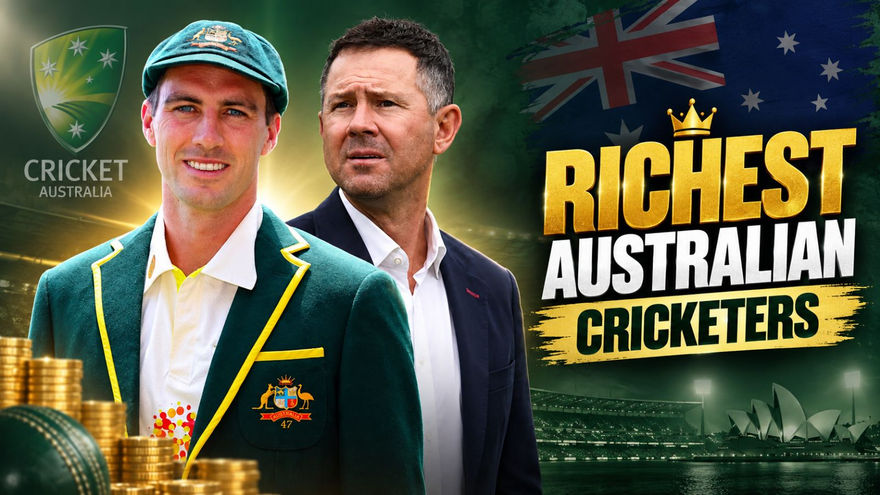
Cricket in Australia has evolved from a summer sporting tradition into a major commercial industry. Over the past two decades, elite players have gained access to Cricket Australia contracts, lucrative franchise leagues, international sponsorships, broadcasting opportunities and investment deals.
That shift has created a new generation of wealthy Australian cricketers. Some built their fortunes through long international careers before moving into coaching and broadcasting, while others have accelerated their wealth through the Indian Premier League (IPL), global T20 competitions and business investments.
This guide ranks the richest Australian cricketers in 2026, based on estimated wealth accumulated from playing contracts, property, business interests, investments and endorsements.
Top 10 Richest Australian Cricketers in 2026
The list includes both retired legends and active players. Retired stars often benefit from decades of accumulated assets, while current players can command exceptional salaries through international cricket and franchise competitions.
Rank | Player | Status | Estimated Net Worth (AUD) | Estimated Net Worth (USD) |
1 | Ricky Ponting | Retired | $105M–$115M | ~$75M |
2 | Shane Warne (Estate) | Deceased / Estate | $70M–$75M | ~$50M |
3 | Pat Cummins | Active | $65M–$75M | ~$45M–$50M |
4 | Steve Smith | Active | $50M–$58M | ~$35M–$38M |
5 | David Warner | Active / T20 | $40M–$48M | ~$28M–$32M |
6 | Glenn Maxwell | Active | $22M–$28M | ~$15M–$18M |
7 | Mitchell Starc | Active | $20M–$25M | ~$14M–$17M |
8 | Shane Watson | Retired | $18M–$24M | ~$12M–$16M |
9 | Michael Clarke | Retired | $18M–$22M | ~$12M–$15M |
10 | Aaron Finch | Retired | $12M–$16M | ~$8M–$11M |
Analysis of Net Worth of Richest Australian Cricketers
Ricky Ponting: Estimated Net Worth of AUD $105M–$115M
Ricky Ponting sits at the top of this ranking, with an estimated net worth of AUD $105 million to $115 million.
His financial position extends well beyond his playing career. After retiring from international cricket, Ponting established himself as a coach, broadcaster and brand ambassador.
His IPL coaching roles, commentary work in Australia and the UK, and property holdings have created multiple sources of income.
Key wealth drivers:
Premium residential real estate
IPL coaching
Broadcasting
Brand partnerships
Ponting's career demonstrates how a leading international player can turn sporting reputation into long-term post-retirement income.
Pat Cummins: Estimated Net Worth of AUD $65M–$75M
Pat Cummins ranks as the wealthiest active Australian cricketer in this list, with an estimated net worth of AUD $65 million to $75 million.
His position as an Australian captain has strengthened his commercial profile, while his Cricket Australia contract and IPL career provide major sporting income.
Cummins also benefits from a strong international brand profile, helping him secure premium sponsorship opportunities.
Key wealth drivers:
Cricket Australia contract
IPL earnings
Global endorsements
Sydney property and commercial investments
Steve Smith: Estimated Net Worth of AUD $50M–$58M
Steve Smith's estimated net worth stands at AUD $50 million to $58 million.
His cricket earnings remain central to his financial position, but his investment strategy has also attracted attention. His reported Koala investment illustrates how an early equity position can potentially generate returns far beyond a traditional sponsorship payment.
Smith has also built a Sydney property portfolio, with investments associated with areas including Balmain and Birchgrove.
Key wealth drivers:
Test and Cricket Australia earnings
T20 league income
Startup investments
Sydney real estate
David Warner: Estimated Net Worth of AUD $40M–$48M
David Warner has transformed his international success into a long-running franchise career.
His more than decade-long association with the IPL generated substantial player-contract income, while his popularity across international cricket markets helped sustain commercial partnerships with sporting and technology brands.
Key wealth drivers:
Global T20 franchise contracts
IPL earnings
Brand sponsorships
Sydney property and private investments
Frequently Asked Questions
Who is the richest Australian cricketer in 2026?
Ricky Ponting ranks first, with an estimated net worth of AUD $105 million to $115 million. His wealth is associated with his playing career, property investments, IPL coaching, broadcasting and commercial work.
How much do Australian cricketers earn from Cricket Australia contracts?
Top-tier players are estimated to receive annual retainers of AUD $1.5 million to $3 million, with match fees potentially adding to that income. Indicative fees range from AUD $10,000 for a T20I to around AUD $20,000 for a Test.
How does the IPL affect Australian cricketers' wealth?
The IPL can dramatically increase a player's annual earnings. Leading Australian players have secured contracts worth several million Australian dollars for a single season, while other international leagues provide additional opportunities.
Which active Australian cricketer is the richest?
Pat Cummins leads the active players in this ranking, with an estimated net worth of AUD $65 million to $75 million.
Did Steve Smith build his wealth only through cricket?
No. Cricket provided Smith with substantial professional earnings, but his reported business investments have also contributed to his wealth. His early Koala investment is the most notable example, with the stake later estimated at more than AUD $12 million.
How do retired Australian cricketers continue earning money?
Retired players can move into coaching, broadcasting, commentary, endorsements, corporate work and property or business investments. These income streams can extend their earning potential well beyond their playing careers.
Conclusion
The richest Australian cricketers in 2026 illustrate how elite sporting careers can evolve into diversified financial portfolios.
Ricky Ponting's post-playing career highlights the value of coaching, broadcasting and property. Pat Cummins represents the earning power available to a modern international captain, while Steve Smith demonstrates the potential impact of business equity alongside cricket income.
The broader lesson is that major playing contracts provide the foundation, but long-term wealth depends on what happens with that income afterward. Diversification, sensible investment decisions and planning for life after cricket remain central to protecting a fortune once the playing career ends.
Also Read |