
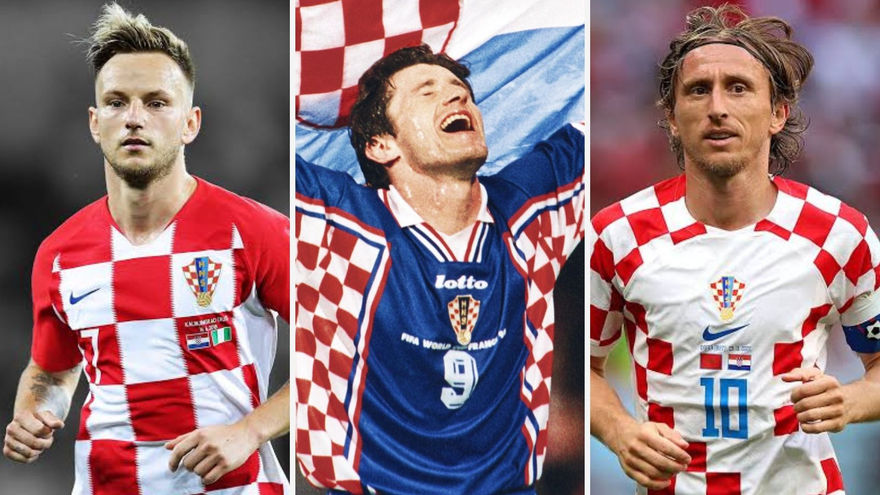
Few nations have shaped modern football with the force of Croatia. Since independence in the early 1990s, a country of fewer than four million people has repeatedly challenged the sport’s established powers, reaching the 1998 World Cup semifinals, the 2018 final, and the 2022 third-place playoff. Croatia’s football story is one of technical brilliance, fierce competitiveness, and an uncanny ability to produce players who thrive under pressure.
What makes Croatian football special is the blend of grit and craft. Its greatest players have rarely been ordinary specialists; they have been leaders, creators, and match-winners capable of changing the course of major tournaments. This ranking weighs peak ability, career achievements, international impact, longevity, individual awards, and influence on football to identify the ten finest Croatian men’s footballers of all time.
The 10 Greatest Croatian Footballers of All Time
10. Robert Jarni
Position: Left-back / left wing-back
Years Active: 1985–2002
Major Clubs: Hajduk Split, Bari, Torino, Juventus, Real Betis, Real Madrid
Robert Jarni was one of Europe’s most dependable and dynamic wide defenders in the 1990s. Blessed with pace, stamina, and a devastating left foot, he moved from Hajduk Split to Italy and then Spain, where his performances for Real Betis earned him a transfer to Real Madrid. Jarni also became a foundational figure in Croatia’s modern era, helping bridge the transition from Yugoslav football to the independent national team.
Major Achievements
Domestic: Yugoslav Cup (1987, 1991), Serie A (1994–95), Coppa Italia (1994–95).
Continental: Intercontinental Cup (1998).
International: FIFA World Cup Bronze Medal (1998), FIFA World Youth Championship winner (1987 with Yugoslavia).
Why He Is Ranked Here
Jarni earns his place for redefining the attacking full-back role in a Croatian context. His consistency at clubs like Juventus and Real Madrid gave Croatia a player of genuine European pedigree, while his tactical value in 1998 made him indispensable.
Legacy
Jarni set the template for future Croatian wide players: athletic, technically clean, and comfortable on the biggest stages.
9. Alen Bokšić
Position: Striker
Years Active: 1987–2003
Major Clubs: Hajduk Split, Marseille, Lazio, Juventus, Middlesbrough
Alen Bokšić was a striker built for elite football. Tall, explosive, and technically gifted, he had the rare ability to beat defenders with power or finesse. His peak came at Marseille, where he was central to their 1993 Champions League triumph and finished runner-up for the Ballon d’Or that same year. Injuries limited his international presence, but at club level, Bokšić was one of the most feared forwards in Europe.
Major Achievements
Domestic: Yugoslav Cup (1991), French Division 1 (1992–93), Serie A (1996–97, 1999–2000), Coppa Italia (1998, 2000).
Continental: UEFA Champions League (1992–93), UEFA Cup Winners’ Cup (1998–99), UEFA Super Cup (1996, 1999), Intercontinental Cup (1996).
Individual: French Division 1 top scorer (1992–93), Croatian Footballer of the Year (1993), Ballon d’Or runner-up (1993).
Why He Is Ranked Here
Bokšić’s peak was elite enough to outweigh the interruptions in his career. When fit, he was a complete striker who could overwhelm the strongest defensive systems.
Legacy
He remains one of Croatia’s most naturally gifted forwards and a model for modern, multi-dimensional center-forwards.
8. Darijo Srna
Position: Right-back / right wing-back
Years Active: 1999–2019
Major Clubs: Hajduk Split, Shakhtar Donetsk, Cagliari
Darijo Srna embodied loyalty, competitiveness, and professionalism. He spent more than a decade as captain of Shakhtar Donetsk, turning the club into a European force, while also leading Croatia with rare emotional authority. Across 134 caps, he became one of the nation’s most trusted leaders and one of its best delivery men from wide areas. His commitment during difficult moments only deepened his standing with fans.
Major Achievements
Domestic: Croatian First League (2000–01), Ukrainian Premier League (10 titles between 2004 and 2017), Ukrainian Cup (7 titles).
Continental: UEFA Cup (2008–09).
Individual: Ukrainian Premier League Player of the Year (2008–09, 2009–10), UEFA Champions League Squad of the Season (2010–11).
Why He Is Ranked Here
Srna’s crossing, set-piece quality, and longevity make him one of Croatia’s most accomplished defenders. His leadership also linked the pioneering 1998 generation with the later golden era.
Legacy
He remains the standard-bearer for Croatian full-back leadership and club loyalty.
7. Mario Mandžukić
Position: Striker / winger
Years Active: 2004–2021
Major Clubs: Dinamo Zagreb, VfL Wolfsburg, Bayern Munich, Atlético Madrid, Juventus, AC Milan
Mario Mandžukić was built for decisive moments. He was never just a target man; he was a pressing machine, an aerial threat, and a tactical weapon who sacrificed personal numbers for team balance. His biggest nights came in Champions League finals for Bayern and Juventus, and his extra-time winner against England in the 2018 World Cup semifinal made him a national icon.
Major Achievements
Domestic: Croatian First League (3 titles), Bundesliga (2012–13, 2013–14), Serie A (4 titles between 2016 and 2019), Coppa Italia (3 titles).
Continental: UEFA Champions League (2012–13), UEFA Super Cup (2013), FIFA Club World Cup (2013).
International: FIFA World Cup runner-up (2018).
Individual: Croatian Footballer of the Year (2012, 2013), UEFA Euro co-top scorer (2012).
Why He Is Ranked Here
Mandžukić ranks ahead of many more naturally gifted players because his impact in the biggest matches was so consistent. Croatia’s greatest campaigns needed his work rate and nerve.
Legacy
He defined the selfless, combative side of modern Croatian football.
6. Ivan Perišić
Position: Winger / left wing-back
Years Active: 2007–Present
Major Clubs: Club Brugge, Borussia Dortmund, VfL Wolfsburg, Inter Milan, Bayern Munich, Tottenham Hotspur, Hajduk Split
Ivan Perišić has been one of Croatia’s most important tournament performers of the modern era. Ambidextrous, tireless, and dangerous in the air, he delivered repeatedly when Croatia needed him most. His goals and influence in the 2018 World Cup run, plus his continued excellence in 2022, have made him one of the defining players of Vatreni's golden period.
Major Achievements
Domestic: Bundesliga (2011–12, 2019–20), DFB-Pokal (3 titles), Serie A (2020–21), Coppa Italia (2021–22).
Continental: UEFA Champions League (2019–20).
International: FIFA World Cup runner-up (2018), FIFA World Cup bronze medal (2022), UEFA Nations League runner-up (2023).
Individual: Belgian Pro League top scorer / Player of the Year (2010–11).
Why He Is Ranked Here
Perišić’s longevity and tournament record give him an edge over many Croatian wingers. Few players in the nation’s history have delivered so often on the biggest stage.
Legacy
He is Croatia’s modern big-game winger: relentless, versatile, and consistently decisive.
5. Robert Prosinečki
Position: Attacking midfielder / central midfielder
Years Active: 1986–2004
Major Clubs: Dinamo Zagreb, Red Star Belgrade, Real Madrid, Real Oviedo, Barcelona, Sevilla, Portsmouth
Robert Prosinečki was pure footballing artistry. His close control, dribbling, and imagination made him one of the most gifted midfielders of his generation. He was central to Red Star Belgrade’s 1991 European Cup triumph and remains one of the few players to represent both Real Madrid and Barcelona. He also scored in World Cups for two different countries, first for Yugoslavia and later for Croatia.
Major Achievements
Domestic: Yugoslav First League (3 titles), Copa del Rey (1992–93), Supercopa de España (1993, 1996), Croatian First League (3 titles).
Continental: European Cup (1990–91).
International: FIFA World Cup bronze medal (1998), FIFA World Youth Championship winner and Golden Ball (1987).
Individual: Croatian Footballer of the Year (1990, 1997), Bravo Award (1991).
Why He Is Ranked Here
Prosinečki’s peak technical level is among the highest ever produced by a Croatian footballer. Injuries held him back, but his brilliance was unquestionable.
Legacy
He remains the archetypal Croatian creative genius: elegant, inventive, and hard to contain.
4. Zvonimir Boban
Position: Attacking midfielder / mezzala
Years Active: 1985–2001
Major Clubs: Dinamo Zagreb, AC Milan, Bari, Celta Vigo
Zvonimir Boban was both a footballer and a symbol. He combined class, leadership, and emotional intensity, becoming the captain who helped define Croatia’s football identity in the 1990s. At AC Milan, he was a key figure in one of Europe’s great club sides and famously contributed to the dismantling of Barcelona in the 1994 Champions League final.
Major Achievements
Domestic: Serie A (1991–92, 1992–93, 1993–94, 1998–99), Supercoppa Italiana (3 titles).
Continental: UEFA Champions League (1993–94), UEFA Super Cup (1994).
International: FIFA World Cup bronze medal (1998), FIFA World Youth Championship winner (1987).
Individual: Croatian Footballer of the Year (1991, 1999).
Why He Is Ranked Here
Boban edges Prosinečki because of his leadership, consistency, and tactical intelligence at Milan and with Croatia. He was the emotional anchor of the 1998 side.
Legacy
His influence stretches beyond football. Boban became a symbol of Croatian identity, leadership, and sporting maturity.
3. Ivan Rakitić
Position: Central midfielder / attacking midfielder
Years Active: 2005–Present
Major Clubs: Basel, Schalke 04, Sevilla, Barcelona, Al-Shabab, Hajduk Split
Ivan Rakitić is one of the most complete midfielders Croatia has ever produced. He balanced creativity and discipline with rare composure, becoming a vital figure for both Sevilla and Barcelona. He scored in the 2015 Champions League final and played a decisive role in Croatia’s 2018 World Cup run, especially in penalty shootouts against Denmark and Russia.
Major Achievements
Domestic: La Liga (4 titles), Copa del Rey (4 titles), Swiss Cup (2006–07).
Continental: UEFA Champions League (2014–15), UEFA Europa League (2013–14, 2022–23), UEFA Super Cup (2015), FIFA Club World Cup (2015).
International: FIFA World Cup runner-up (2018).
Individual: La Liga Fair Play Award (2013–14), Croatian Footballer of the Year (2015), UEFA Europa League final man of the match (2014).
Why He Is Ranked Here
Rakitić’s elite club career and his central role in Croatia’s greatest World Cup run place him firmly in the top three. His adaptability made him invaluable.
Legacy
He stands as a model of modern midfield professionalism and technical balance.
2. Davor Šuker
Position: Striker
Years Active: 1984–2003
Major Clubs: Osijek, Dinamo Zagreb, Sevilla, Real Madrid, Arsenal, West Ham, 1860 Munich
Davor Šuker was Croatia’s first global football superstar. His left foot, movement, and finishing were relentless, and in 1998 he produced one of the great World Cup campaigns, scoring six goals to win the Golden Boot and drive Croatia to third place. He also won league and European honours with Real Madrid and established himself as one of Europe’s finest finishers.
Major Achievements
Domestic: La Liga (1996–97), Supercopa de España (1997).
Continental: UEFA Champions League (1997–98), Intercontinental Cup (1998).
International: FIFA World Cup bronze medal (1998), FIFA World Youth Championship winner (1987).
Individual: FIFA World Cup Golden Boot (1998), FIFA World Cup Silver Ball (1998), Ballon d’Or runner-up (1998), Croatia’s all-time top scorer (45 goals).
Why He Is Ranked Here
Šuker remains Croatia’s greatest striker and one of the defining figures of the 1998 generation. His World Cup scoring and unbroken national record make his case exceptional.
Legacy
He put Croatian football on the world map with elegance and ruthless efficiency.
1. Luka Modrić
Position: Central midfielder
Years Active: 2003–Present
Major Clubs: Dinamo Zagreb, Tottenham Hotspur, Real Madrid
Luka Modrić stands at the summit of Croatian football history. A complete midfielder of rare intelligence and longevity, he became the heartbeat of Real Madrid’s modern dynasty and the captain of Croatia’s two finest national-team campaigns. His 2018 Ballon d’Or, won while ending the Messi-Ronaldo duopoly, confirmed what his performances had long suggested: he is one of the greatest midfielders in football history.
Major Achievements
Domestic: Croatian First League (3 titles), La Liga (4 titles), Copa del Rey (2013–14, 2022–23).
Continental: UEFA Champions League (6 titles), UEFA Super Cup (5 titles), FIFA Club World Cup (5 titles).
International: FIFA World Cup runner-up (2018), FIFA World Cup bronze medal (2022), UEFA Nations League runner-up (2023).
Individual: Ballon d’Or (2018), FIFA World Cup Golden Ball (2018), UEFA Men’s Player of the Year (2017–18), The Best FIFA Men’s Player (2018), Croatian Footballer of the Year (12-time winner).
Why He Is Ranked Here
Modrić ranks first because he excels across every major measure: peak, longevity, trophies, leadership, and international influence. He is the player who lifted Croatia from an extraordinary football nation to a permanent place among the global elite.
Legacy
Modrić is the defining Croatian footballer of the modern age. His control, resilience, and authority have changed how the world views both Croatia and the midfield position itself.
Honorable Mentions
Bernard Vukas: A legendary Hajduk Split forward and one of Croatia’s most revered pre-independence stars.
Mateo Kovačić: A technically polished midfielder with major trophies across multiple elite clubs.
Marcelo Brozović: Croatia’s modern midfield engine and an essential part of recent tournament success.
Joško Gvardiol: A world-class defender whose career trajectory points toward future all-time greatness.
Stipe Pletikosa: A dependable goalkeeper and long-serving national-team figure.
Biggest Ranking Debate
The hardest call is Boban versus Prosinečki. Prosinečki had the greater raw talent and a ceiling that looked almost untouchable at times, especially with Red Star Belgrade’s 1991 European Cup-winning side. Boban, however, offered more leadership, more consistency, and greater influence on Croatia’s emerging football identity in the 1990s.
The list places Boban ahead because he combined elite club success with international authority at the exact moment Croatia needed it most. Prosinečki remains the purer artist, but Boban was the more complete leader.
How the Top Three Compare
Criterion | Luka Modrić | Davor Šuker | Ivan Rakitić |
Peak performance | World-class orchestrator; 2018 Ballon d’Or peak | Elite finisher; 1998 World Cup Golden Boot | Versatile midfield engine; central to Barcelona’s treble era |
Club achievements | 6 Champions Leagues, 4 La Liga titles | Champions League and La Liga winner | Champions League, two Europa Leagues, four La Liga titles |
International success | 2018 runner-up, 2022 bronze, 2023 Nations League runner-up | 1998 World Cup bronze | 2018 World Cup runner-up |
Individual awards | Ballon d’Or, World Cup Golden Ball, 12x Croatian POTY | Golden Boot, Silver Ball, Ballon d’Or runner-up | Croatian Footballer of the Year, Europa League final award |
Influence on football | Redefined midfield longevity and control | Croatia’s first true global superstar striker | Model of modern tactical adaptability |
Overall legacy | Croatia’s all-time standard-bearer | The goalscorer who put Croatia on the map | The consummate modern professional |
The Greatest Croatian Footballer
Luka Modrić is the greatest Croatian footballer of all time. He stands above the rest not just because of his medals, but because of the scale of his influence. Modrić dictated the rhythm of Real Madrid’s most successful era while captaining Croatia to a World Cup final and a third-place finish, all after winning the Ballon d’Or in the peak of the Messi-Ronaldo era.
What separates Modrić from Šuker and Rakitić is completeness. Šuker was the supreme finisher; Rakitić the elite adapter. Modrić combined both the artistry and authority of a true all-time great, while also sustaining his level deep into his thirties. He is the defining footballer of Croatia’s golden age.
Conclusion
Croatia’s football legacy is built on more than results. It is a story of defiance, technical excellence, and players who consistently rise when the stakes are highest. The 1998 generation introduced Croatia to the world, while the 2018 and 2022 sides proved that its rise was no accident.standard.co+1
From Šuker’s goals to Boban’s leadership, from Prosinečki’s flair to Rakitić’s control, Croatia has produced a remarkable line of footballers. Yet Luka Modrić remains the standard by which all Croatian greatness is measured. His blend of skill, intelligence, trophies, and leadership makes him the undisputed greatest footballer in Croatian history.
FAQs
Who is the greatest Croatian footballer ever?
Luka Modrić is widely regarded as Croatia’s greatest footballer because of his Champions League success, Ballon d’Or, and leadership of the national team.
Which Croatian player scored the most famous goals at the 1998 World Cup?
Davor Šuker was Croatia’s standout scorer in 1998, winning the Golden Boot and leading the team to third place.
Who is Croatia’s greatest midfielder besides Modrić?
Zvonimir Boban and Robert Prosinečki are the strongest alternatives, with Boban ranked higher here for leadership and consistency.
Which Croatian player had the biggest club career in Europe?
Luka Modrić has the strongest club résumé, with six Champions League titles and multiple domestic trophies at Real Madrid.
Why is Croatia so successful in football despite its small population?
Croatia combines technical development, resilience, and a strong football culture that produces players who perform well under pressure.
Also Read |