
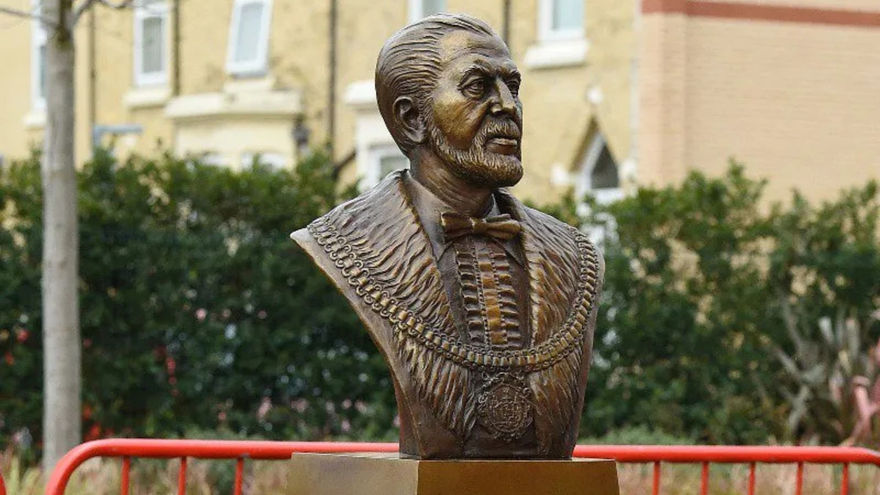
John Houlding pursued his education at Liverpool College, and eventually became a businessman in the city of Liverpool. The Englishman became well settled towards the end of the 19th century, owning a brewery that left him in a comfortable financial state for the rest of his life. With great financial power also came the opportunity of achieving a high-profile position in life, and thus he was elected to the Liverpool City Council as a Conservative representing the Everton ward. Greater things however, were waiting for Houlding as he was later appointed Lord Mayor of Liverpool in 1897. In addition to this, He was a member of the Orange Order, a Protestant fraternal organization that had a large following in the Liverpool area.
The Liverpool Business was also a freemason and founded Anfield Lodge No. 2215, he also attended Everton Lodge No. 823 and Hamer Lodge No. 1395. He also held the position of Provincial Senior Grand Warden in West Lancashire and, in 1897, was appointed Senior Grand Deacon. In short, Houlding led a dream life filled with money and power.
The football dream, and Anfield's first ever football match
Houlding was about to contest for an election during the 1880's, and it was prior to this that was involved with the city's first professional football team, Everton F.C. However, an 1882 ruling forced Everton to play their games at an enclosed ground, having previously played them on the public Stanley Park. This led to a meeting that was held by Houlding, where they decided to rent a field off Priory Road. Another obstacle came upon them though, as the owner of this field eventually asked them to leave.
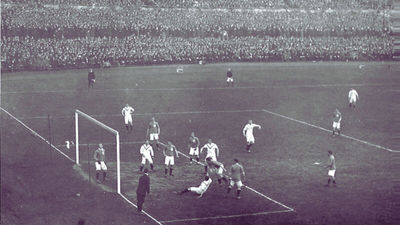
This led to Houlding securing a new pitch at Anfield Road, paying a small rent to John Orrell, who was a fellow brewer. History was eventually made, as the first football match at Anfield was held on 28th September 1884, when Everton beat Earlestown 5–0.
Anfield stands were later erected, with attendance figures reaching 8,000 per game, Everton also became a founding member of the Football League in 1888, which marked the beginning of England's first ever league football season.
Mounting problems and Everton's move to Goodison Park
Although things were heading in a good direction, Houlding was beginning to annoy the club and its members. The English Businessman increased the rate of interest on his loan to the club, and the players were forced to use the Sandon Hotel in Oakfield Road for changing, both before and after games.
The Anfield Road land that was owned by Orell was purchased by Houlding in 1885, as the former owned land next to the ground and planned to build an access road across Houlding's land. The only way to stop this was to rent Orrell's land or buy it, which was done by Houlding.
Upon this purchase, Houlding started to charge rent from Everton F.C. The whole sequence of events was seen as a move for Houlding to make a lot of money and eventually have Everton be run by a small number of large shareholders. Thus, Many of the club's members accused Houlding of trying to make a profit at the club's expense.
All of this led to the club's 279 members to meet in January 1892 to discuss the matter. Following another meeting on 15 March 1892, the club decided to leave Anfield and find a new ground.
This was a historic moment in football history, as it led to Everton eventually moving to Goodison Park later that year, as they embarked on a new era.
The birth of Liverpool
Houlding and Orrell were left with an empty football ground, and the former felt that the only logical decision was to create a new football club. A new club was made, known as Everton Athletic, but the Football Association did not allow this name to be used due to its similarity to the original club Everton. What occurred next was one of the most monumental events in football history.The club was thus renamed, now known as Liverpool F.C. Their first ever game was played against Rotherham Town of the Midland League on 1st September 1892.
This was the story of John Houlding, the legend who laid the foundation of one of football's greatest ever clubs. He later died following a lengthy illness in 1902 in Cimiez, a neighbourhood of Nice, France, at the age of 69. At his funeral, players of both Liverpool and Everton carried his coffin, as a mark of respect for all he had done for football in the city.
In November 2018, Houlding was commemorated with a bronze bust, which stands at just under 7 feet, outside Anfield, to mark the 125th anniversary of Liverpool F.C. Thus, the legendary founder of Liverpool had been immortalised, guaranteed to forever live on in the hearts of the club and its supporters.
Also Read |