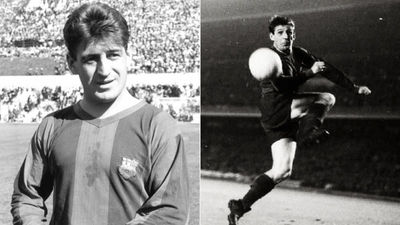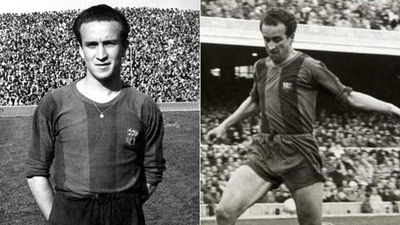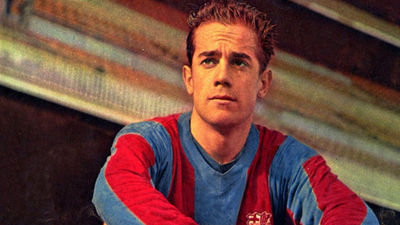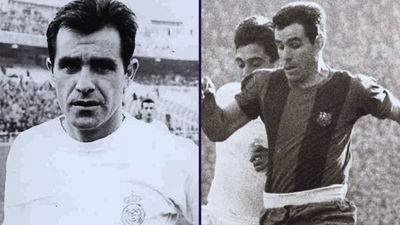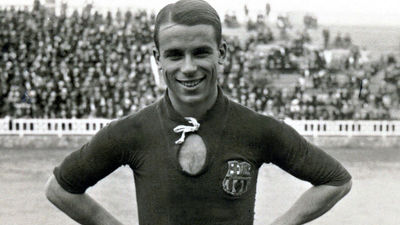

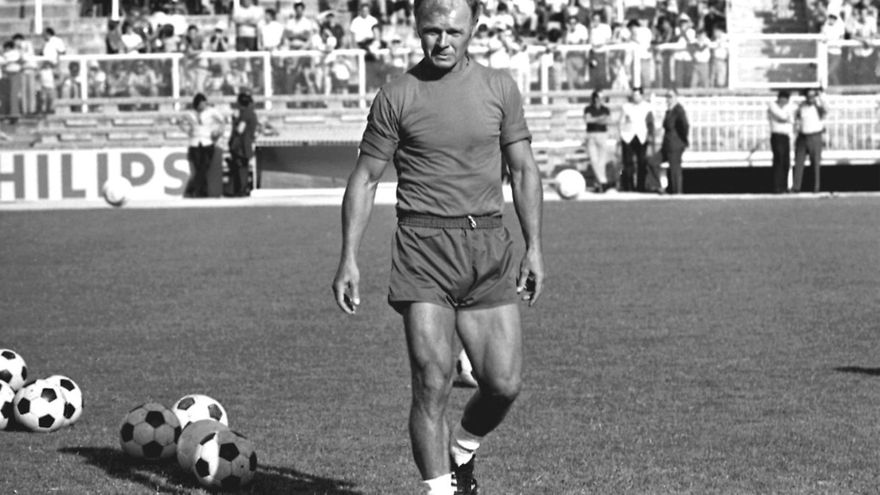
László Kubala was a former Hungarian Striker, widely considered to be one of the greatest players to have come from the country. He was an instrumental part of Barcelona's golden period during the 1950's, and is seen as an integral part of their rich history.
The former striker also had Czechoslovak and Spanish citizenship, which resulted in Kubala playing for three different national sides. We will be rewinding back to the early 1950's in this article, as we take a look at Kubala's time with the Blaugrana.
A massive signing by Barcelona
It was on the 15th June of 1950 that Barcelona signed László Kubala, with the deal also resulting in his former Hungary coach Ferdinand Daučík being appointed as Barcelona manager. The transfer was immense for the Blaugrana, as they snatched him from rival's Real Madrid. Los Blancos had even offered a contract to the player, but Barca's chief scout José Samitier was successful in persuading the player to join them.
Despite his signing, Kubala was unable to take part in official matches for Barcelona due to a one- year FIFA ban that was still active on the player. The ban came as a result of a dispute between Kubala and the Hungarian Football Federation in 1949.
Kubala was still permitted to take part in friendlies, and played consecutive matches against Frankfurter S.V. with Barca. The Hungarian ended up with an astonishing 6 goals and 5 assists by the end of those 2 games. He eventually took part in the Copa del Generalísimo with Barcelona, who ended the tournament as champions.
A blockbuster start to life at Barca
The 1951–52 season was Kubala's first for Barca, and he ended that campaign with a ridiculous 26 goals in just 19 appearances. Two of his memorable performances came against the likes of Sporting de Gijón and Celta de Vigo, as he scored an unbelievable 7 and 5 goals respectively against these clubs. The 7 goals against Gijón till date remains as the highest number of goals scored by a player in a single La Liga match.
Kubala was vital in the Copa del Generalísimo as well, as he scored in Barca's historic 4-2 victory over Valencia. It was a legendary season for Barcelona, and one of their most successful at the time.
Along with Kubala, the likes of magnificent players in the form of Emilio Aldecoa, Velasco, Joan Segarra and Ramallets were instrumental in leading Barcelona to glory. This golden period resulted in several title victories, including La Liga, the Copa del Generalísimo, the Latin Cup, and the Copa Eva Duarte.
A major setback, miraculous recovery, and further greatness
After his first season heroics at Barca, Kubala shockingly got diagnosed with Tuberculosis. The disease threatened to end his playing career, and the Hungarian missed most of the 1952–53 campaign. However, the magical striking sensation returned to help Barcelona retain both the league and Copa del Generalísimo. He went on to score in yet another Copa final as well, this time against Athletic Bilbao.
The following season saw Kubala persuade fellow Hungarian compatriots Sándor Kocsis and Zoltán Czibor to join Barcelona. In addition to this, the likes of a young Luis Suárez and Evaristo led Barca to further greatness. They ended up winning a La Liga / Copa del Generalísimo double in 1959 and a La Liga / Fairs Cup double in 1960.
Despite the success, Kubala saw himself out of favour with then Barca coach Helenio Herrera. This resulted in the Hungarian missing out Barca's 1960 European Cup semi-final against rivals Real Madrid.
Real Madrid went on to win the tie 6-2 on aggregate, and that was also the end of Herrera at Barca. Kubala eventually returned to the team and took revenge on Los Blancos exactly a year later.
The Hungarian put up an inspirational performance that saw them beat Madrid 4-3 on aggregate, which took them to the 1961 European Cup finals. It was a historic result that also made them the first team to defeat Madrid in the competition. Despite this success, they ended up losing the final to Benfica 3-2.
Kubala briefly retired as a player in 1961, and he initially became a youth coach at Barcelona.This was followed by the Hungarian coaching the senior team for the 1962–63 season. He was however sacked after losing a Fairs Cup game to Red Star Belgrade.
That was the end of his magic association with the Blaugrana, which lasted for 12 beautiful years.