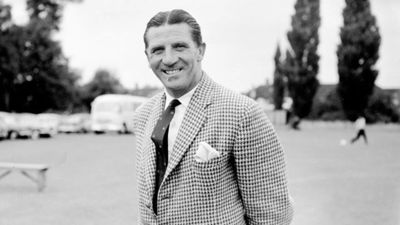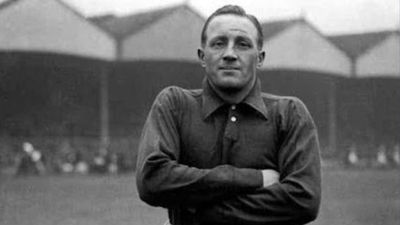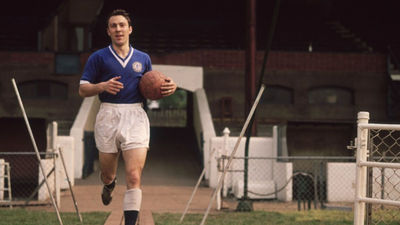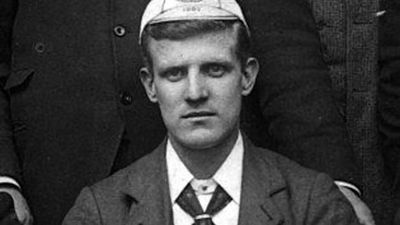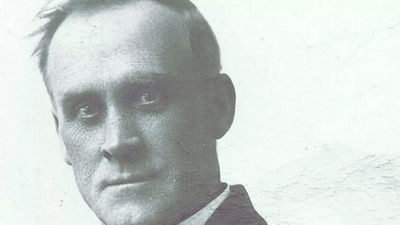

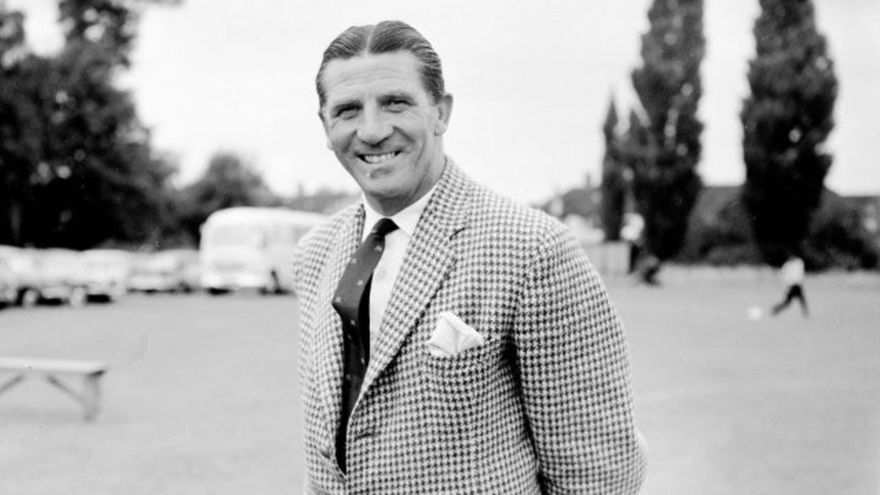
Certain individuals in football make history as players, while others make their Mark as a manager. The beautiful game however, has an elite list of legendary individuals that won the biggest of prizes in football both as a player and manager.
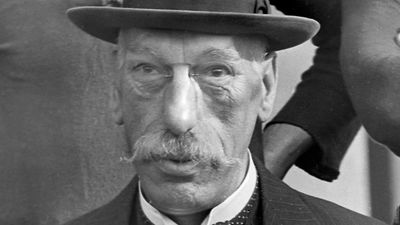
Ted Drake is one such individual, who went on to achieve historic feats with London clubs Arsenal and Chelsea. We will be looking back at his stint with the Gunners and the Blues in this article, which saw him enter into the history books of English football.
The Arsenal playing years
It was in 1974 that Ted Drake joined Arsenal for £6,500, after 3 years at Southampton. He had a dream league debut with the club, as Drake scored in Arsenal's 3-2 win over Wolves on 24th March 1934. The English Centre forward's late arrival at the club however, meant that he was ineligible to earn a League Championship medal for Arsenal's 1933–34 league victory.
Drake eventually won the league with Arsenal just a year later, as the Gunners reclaimed their league title in the 1934–35 campaign. The former Southampton Englishman was instrumental in the success, as he scored a brilliant 42 league goals in just 41 appearances. With 2 more goals coming in the FA Cup and Charity Shield, Drake finished that season with 44 goals. This meant that he broke the previous club record held by Jack Lambert, and it still holds to this day.
The 1935–36 season saw Arsenal win the FA Cup, with Drake scoring the only goals in their victory against Sheffield United. That season was also memorable for his performance against Aston Villa at Villa Park on 14th December 1935, as the English centre-forward scored an astonishing 7 goals in that much. This feat still remains as both a club and top flight record.
Drake remained Arsenal's first-choice forward for the rest of the decade, with the Englishman finishing as their top scorer for each of the five seasons from 1934–35 to 1938–39. His excellent pace, shooting skills, and lively playing style made him a world-class player at the time.
The Second World War curtailed Drake's career, although he served in the Royal Air Force and turned out for Arsenal in wartime games. He also later appeared as a guest player for West Ham United later during the World War II period.
After the war, a spinal injury that Drake suffered against Reading in 1945 forced him to retire from playing. He finished his legendary Arsenal stint with 139 goals in 184 games, making him the club's joint-fifth all-time scorer along with Jimmy Brain.
Drake is also one of the 32 Arsenal legends who are painted in a mural upon the walls of the club's Emirates Stadium.
Chelsea's league winning manager
The year of 1952 saw Drake be appointed as Chelsea manager in June. It wasn't seen as a controversial move at the time, as the rivalry between Arsenal and Chelsea didn't exist at the time.
Drake went on to make several changes at Chelsea upon his arrival. The Englishman got rid of the club's previous amateurish, music hall image, and also discarded the club's Chelsea pensioner crest and with it the Pensioners nickname. He further insisted a new one be developed, which gave birth to the Lion Rampant Regardant crest and the Blues nickname.
This was followed by the introduction of scouting reports and a new, tougher, training regime based on ballwork, a rare practice in English football at the time.
Chelsea's transfer policy of signing unreliable big-name players was abandoned as well, with Drake using his knowledge of the lower divisions and the amateur game to recruit little-known, but more reliable players. This resulted in the likes of club legends John McNichol, Frank Blunstone, Derek Saunders, Jim Lewis and Peter Sillett being signed by the Blues.
Drake was eventually successful in leading Chelsea to the league title within three years, as they won the 1954–55 league season. Thus, he made history by becoming the first person to win the league title both as player and manager.
Despite this initial success, Drake was never able to repeat those heroics with Chelsea. The championship-winning side was gradually broken up, but the Blues were still unsuccessful in reclaiming their glorious feats with a fresh crop of promising players. This eventually led to the sacking of Drake early into the 1961–62 season.
That was the end of his golden chapter in football, which saw the Englishman take both London clubs to the zenith of English league football.