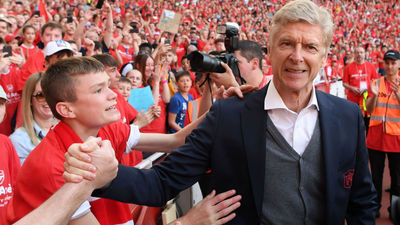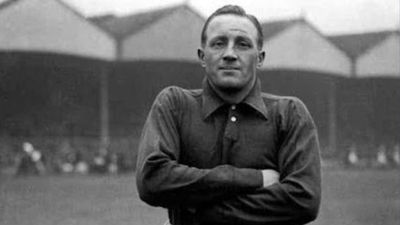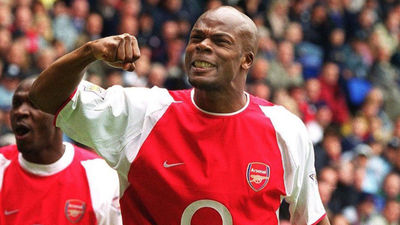

Even the most casual Arsenal fan out there would be able to give an answer to the question of Arsenal's longest serving manager, which is none other than Arsene Wenger. The legendary Frenchman had been Arsenal's manager for an astounding 22 years, thus making it plain obvious to any fan that he's been the longest serving boss of the Gunners.
However, the majority of the Arsenal fans would fail to give a definite answer regarding the second longest serving Arsenal manager behind Wenger. Various answers might be given to this, with modern Arsenal fans probably even naming current coach Mikel Arteta.
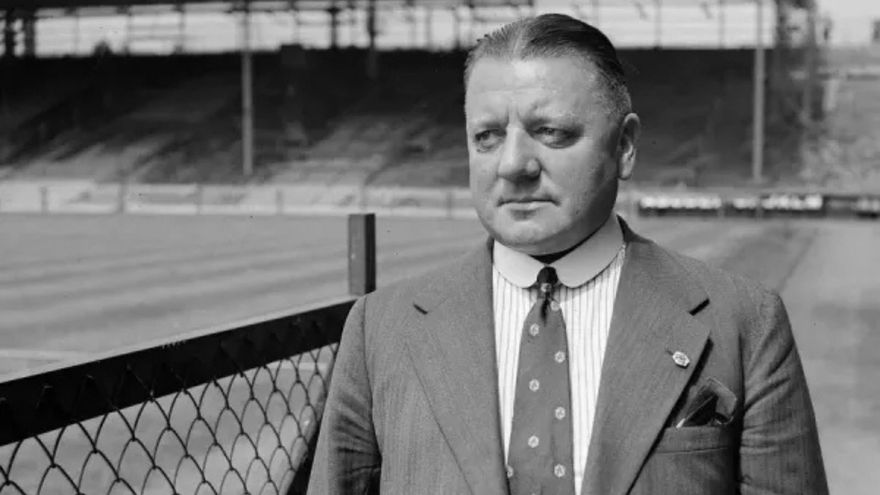
The answer to this question is none other than George Allison. He was a former English football journalist, broadcaster and manager. Allison is also notable for being the first ever sports commentator of BBC. Before his entry into football, Allison had a career in journalism as well. Let us now look back at time with the Gunners.
Early role at Arsenal
A young George Allison had always wished to become a footballer, but he ultimately failed to make the grade as a professional. The closest he got to that dream was a trial with English club Shildon.
It was after moving to London in 1906 that Allison soon became associated with Woolwich Arsenal. He took up the role of club programme editor and continued his association with the club even after they shifted to Highbury. It was during this period that the club renamed themselves to Arsenal.
Allison soon became a member of Arsenal's board of directors after the First World War had concluded. The Englishman also held the role of club secretary at first, before eventually becoming managing director.
The manager years
The unexpected death of legendary Arsenal manager Herbert Chapman in January 1934 led to Allison being named as his successor in the summer. Arsenal were going through a golden phase during this period, as they had already won two consecutive league championships under Chapman and caretaker manager Joe Shaw. Allison managed to lead Arsenal to a third consecutive league title in the 1934-35 campaign. An FA Cup was added to the silverware collection in the 1935–36 season, which was followed by yet another league title win in the 1937–38 campaign. The year of 1938 was also notable for Allison setting a world record transfer fee by bringing in Wolves player Bryn Jones for ₤14,000.
Allison had made a popular appearance in a movie named The Arsenal Stadium Mystery in 1939, which was set in Arsenal's very own Highbury. The manager had a speaking part in the movie, and one of the lines he uttered at half went on to become an iconic moment. Those lines were "It's one-nil to Arsenal. That's the way we like it", which paved the way for creating the club's famous one-nil to the Arsenal chant.
His approach to managing involved a hands-off approach though, which was completely contrary to his predecessor Chapman. It was Joe Shaw and Tom Whittaker that took charge of Arsenal's training and squad discipline, while Allison concentrated on the club's transfer policy and relationship with the media.
While his time at the club did result in numerous trophies coming to the club, Arsenal were a shadow of their all-conquering team by the end of the 1930's. Allison had been blamed for his inability to replace many of the stars from the first half of the decade, especially Alex James.
Departure, death, and legacy
As the Second World War commenced, official competition in England was suspended. Allison continued to manage Arsenal in the Wartime League, without even being paid for the job.
After the physical armed clashes in war ended, most of the key Arsenal players at that time (such as Cliff Bastin and Ted Drake) ended up retiring. Arsenal finished an underwhelming 13th in the 1946–47 campaign, and Allison, by now in his mid-sixties and tiring of managerial life, decided to step down and retire from the game. He died in 1957 after several years of illness.
His time as Arsenal manager was one of both success and flaws, but he will forever remain as an important part of their rich coveted history.
Also Read | Tore André Flo’s Chelsea Career Explained