

Abdullah Shafique produced a masterclass in patience, technique, and composure at Queen’s Park Oval in Port of Spain, Trinidad. Playing in the second Test against the West Indies, the talented top-order batter slammed a magnificent, undefeated 160 runs off 323 balls. His heroic knock guided Pakistan into a position of total dominance, setting the stage to level the two-match series.
This detailed article covers every aspect of Shafique’s historic innings in Trinidad. You will discover how his 168-run partnership with captain Babar Azam reshaped the match, how this knock places him among legendary Pakistani batters, and what this performance means for Pakistan's Test future.
Understanding this performance matters because away series victories in the Caribbean are exceptionally rare for Asian teams. Shafique's disciplined stay at the crease not only ended Pakistan's away slump but also proved that traditional Test match grit still reigns supreme in modern cricket.
Pakistan’s High-Stakes Battle in Port of Spain
Pakistan entered the second Test in Trinidad carrying heavy pressure. Having lost the series opener, the team faced an eight-match away losing streak in Test cricket. The pitch at Queen’s Park Oval presented uneven bounce and movement for seamers early on, demanding absolute concentration from opening batters.
Team management made a bold decision by bringing Abdullah Shafique into the top order to replace Shan Masood. Shafique walked out with a clear mandate: build long partnerships, absorb the West Indies pacers' spells, and anchor the innings.
West Indies 1st Innings Score
West Indies: 344 all out
Pakistan Response: 387 all out (Shafique 160*)
2nd-Wicket Stand: 168 runs with Babar Azam (88)
Pakistan secured a 43-run first-innings lead and set up an 8-wicket win
How Shafique Built His Unbeaten 160
Shafique’s innings was a textbook lesson in Test match batting. Rather than forcing the pace, he allowed the ball to come to him, respecting good deliveries while punishing loose balls with authority.
Front-Foot Stance → Weight Transfer → Precise Placement
Balanced base against seam and spin
Early judgment of line and length
15 Fours & 3 Sixes targeted into gaps
Key Phases of the Innings
The First 50 Runs (Survival Mode): Shafique left balls outside off-stump with precision, frustrating the West Indian pace attack during their initial, fresh spells.
The Middle Phase (Building the Platform): Alongside Babar Azam, Shafique rotated the strike cleanly, using soft hands against the spinners to neutralize turn.
The Final Stretch (Accelerating Control): Once past his century, Shafique expanded his shot selection, hitting 15 boundaries and 3 cleanly-struck sixes.
Historic Milestones Reached in Trinidad
Abdullah Shafique’s unbeaten 160 was not just a match-defining knock; it rewrote decades of cricket history for Pakistan in the Caribbean.
Statistic / Record | Abdullah Shafique’s Figures | Historical Significance |
Runs Scored | 160* (Unbeaten) | Highest individual score by a Pakistani in Trinidad since 1977. |
Balls Faced | 323 balls | Shows world-class endurance and patience in Caribbean conditions. |
Boundary Count | 15 Fours, 3 Sixes | Balanced risk management with assertive strokeplay. |
2nd-Wicket Stand | 168 runs with Babar Azam | Broken only by an unfortunate run-out of Babar Azam (88). |
Years Since Last 150+ | 49 Years | First Pakistani batter to score 150+ in West Indies since Majid Khan (1977). |
Exclusive Elite Club: Pakistan Batters with 150+ Scores in West Indies
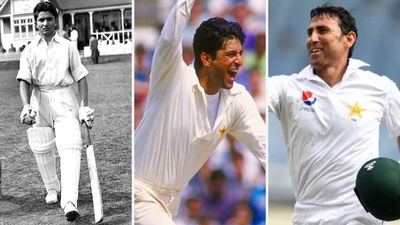
Only five Pakistan batters in history have scored 150 or more runs in a single Test match innings on West Indian soil. Shafique’s name now sits alongside some of the greatest legends of Asian cricket.
Hanif Mohammad (337): Bridgetown, January 1958
Wazir Mohammad (189): Bridgetown, January 1958
Majid Khan (167): Georgetown, March 1977
Saeed Ahmed (150): Bridgetown, January 1958
Abdullah Shafique (160*): Port of Spain, August 2026
Tactical Analysis: What Makes Abdullah Shafique’s Technique Stand Out?
Young batters studying Test cricket can learn crucial lessons from Shafique's batting mechanics during his 323-ball marathon.
Technique Strengths
Head Position at Impact: His head remained stable directly over the front knee, preventing edges when playing seam bowling.
Disciplined Off-Stump Awareness: He repeatedly left balls on the fourth and fifth stump line, forcing bowlers to bowl into his pads.
Decisive Footwork Against Spin: He used his long reach to smother spin or rocked back quickly to pull short balls.
Key Tactical Adjustments in the Caribbean
Playing Late: Caribbean pitches offer extra bounce; Shafique played the ball directly under his eyes rather than pushing out in front.
Managing Energy Levels: Tempering aggression during humid Trinidad conditions allowed him to avoid mental fatigue across 323 deliveries.
Frequently Asked Questions
What was Abdullah Shafique's final score in the Trinidad Test?
Abdullah Shafique finished unbeaten on 160 runs off 323 balls in the first innings, hitting 15 fours and 3 sixes.
How long had it been since a Pakistan batter scored 150+ in the West Indies?
It had been 49 years. The last Pakistani batter to achieve this feat in the Caribbean was Majid Khan, who scored 167 in Georgetown back in March 1977.
Who shared the crucial second-wicket partnership with Abdullah Shafique?
Pakistan captain Babar Azam shared a game-changing 168-run partnership with Shafique for the second wicket, contributing a vital 88 runs.
Did Pakistan win the second Test in Port of Spain, Trinidad?
Yes. Pakistan completed an eight-wicket victory on Day 4, successfully levelling the two-match Test series 1-1.
Why was this Test match victory significant for Pakistan?
This victory ended Pakistan’s eight-match away Test losing streak and marked their first Test win on foreign soil in three years.
Conclusion
Abdullah Shafique’s unbeaten 160 in Trinidad stands out as one of the finest Test innings by a young Asian opener in recent Caribbean cricket history. By anchoring Pakistan's innings through 323 balls of pure discipline, he not only set up a crucial series-levelling victory but also etched his name into the record books alongside Pakistani legends like Hanif Mohammad and Majid Khan.
Also Read |