

Sanju Samson’s T20 World Cup 2026 Masterclass: The Three Innings That Won India the Trophy
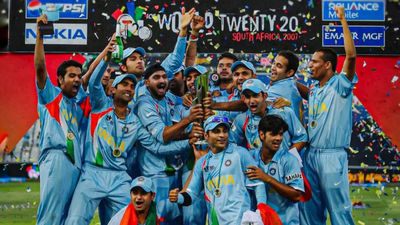
India’s historic triumph at the ICC T20 World Cup 2026 will be remembered for many reasons, but above all, it will be remembered for the extraordinary rise of Sanju Samson.
After spending the early part of the tournament on the bench, Samson seized his opportunity in dramatic fashion. Once he entered the playing XI, he transformed India’s batting lineup and delivered three unforgettable innings that powered India to their third T20 World Cup title.
From rescuing India in a must-win match to dominating the knockout stages, Samson produced one of the greatest individual campaigns in T20 World Cup history.
Sanju Samson’s Record-Breaking T20 World Cup 2026 Campaign
Before examining the three defining innings, the numbers alone show the scale of Samson’s dominance during the tournament.
Metric | Achievement |
Matches | 5 |
Total Runs | 321 (Most by an Indian in a single T20 World Cup edition) |
Average | 80.25 |
Strike Rate | 199.37 |
Sixes | 24 (World Record in a single T20WC edition) |
Highest Score | 97* vs West Indies |
Award | Player of the Tournament |
In just five matches, Samson produced a batting display defined by power, composure, and remarkable consistency under pressure.
1. The Super 8 Rescue: 97* (50) vs West Indies
The Situation
India entered the Super 8 clash against West Indies in a must-win scenario at Eden Gardens. Chasing a daunting target of 196, India lost both openers early against the West Indian spinners, leaving the team under severe pressure.
The Knock
Promoted to open the innings to counter the spin attack, Samson delivered a stunning performance. He remained unbeaten on 97 off just 50 balls, striking 12 fours and 4 sixes while controlling the chase with remarkable composure.
Why It Mattered
The innings became the turning point of India’s campaign. Samson’s 97* surpassed Virat Kohli’s 82* as the highest score by an Indian in a successful T20 World Cup chase, reigniting India’s momentum in the tournament.
2. The Semi-Final Statement: 89 (42) vs England
The Situation
India faced England in a high-pressure semi-final at the Wankhede Stadium. England’s bowling attack targeted India’s top order early, hoping to seize control of the match.
The Knock
Samson responded with an explosive display of power hitting. His 89 off 42 balls, scored at a strike rate of 211.90, included several fearless shots against both pace and spin.
The Record
During this innings, Samson smashed 7 sixes, breaking Rohit Sharma’s record for the most sixes by an Indian in a single T20 World Cup edition.
His aggressive knock propelled India to a formidable total, which ultimately helped them secure a thrilling 7-run victory and a place in the final.
3. The Grand Finale: 89 (46) vs New Zealand
The Situation
The final took place at the Narendra Modi Stadium in Ahmedabad, in front of a massive home crowd. India batted first against New Zealand, knowing that a big total would be crucial on the big stage.
The Knock
Samson once again rose to the occasion. He produced another brilliant innings of 89 runs, this time off 46 balls, anchoring India’s record-breaking total.
India finished with 255/5 — the highest score ever recorded in a T20 World Cup final.
The Legacy
With back-to-back scores of 89 in the semi-final and final, Samson joined an elite list including Shahid Afridi and Virat Kohli as players who scored fifties in both knockout matches of the same T20 World Cup edition.
His 8 sixes in the final took his tournament tally to 24 sixes, setting a new world record that may stand for years.
The Arrival of the “Samson Era”
Sanju Samson did not simply contribute to India’s World Cup victory — he defined it.
His journey from being a bench player to becoming the Player of the Tournament is one of the most remarkable stories in modern cricket. Through fearless batting and unmatched composure in high-pressure moments, Samson proved that he could lead India’s next generation of T20 cricket.
If the 2026 T20 World Cup belongs to anyone, it belongs to Sanju Samson.
And for Indian cricket fans, it may well mark the beginning of the Samson Era.