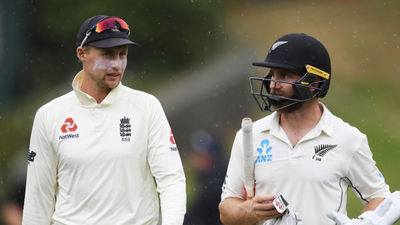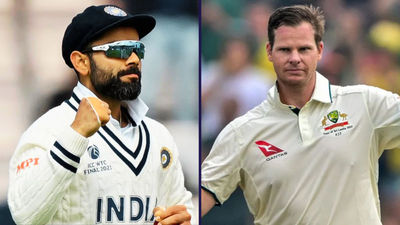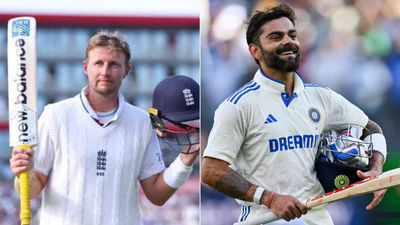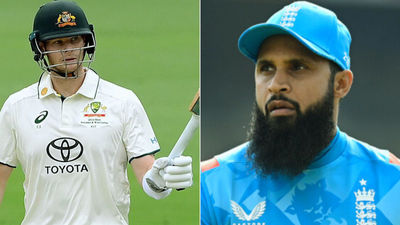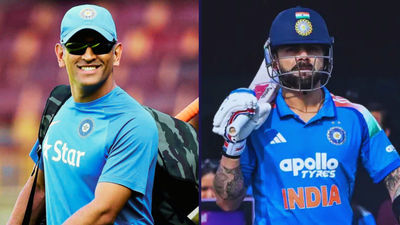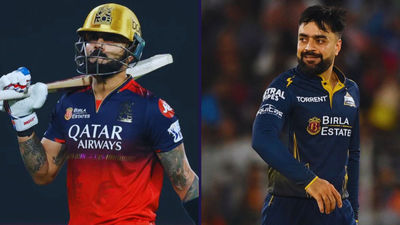


When former New Zealand cricketer Martin Crowe introduced the “Fab Four” concept in 2014, he identified four young batters who appeared capable of defining their generation: Virat Kohli, Joe Root, Steve Smith and Kane Williamson.
The comparison has endured because each developed into a cornerstone of his national side while taking a very different route to success.
Kohli built an exceptional white-ball record alongside his Test career. Root became a prolific Test run-scorer. Smith produced outstanding red-ball numbers with an unconventional technique, while Williamson established himself through balance, patience and precise stroke play.
This Virat Kohli vs Joe Root vs Steve Smith vs Kane Williamson comparison examines their records, batting techniques, strengths, limitations and the lessons developing batters can take from the Fab Four.
What Is the Fab Four in Cricket?
The Fab Four in cricket refers to Virat Kohli of India, Joe Root of England, Steve Smith of Australia and Kane Williamson of New Zealand.
All four were born between 1988 and 1990 and emerged as leading international batters during a similar period. Although the original discussion focused heavily on their Test potential, each became an important player across multiple formats.
Their contrasting methods make the comparison particularly interesting. There is no single formula behind their success: Kohli's intensity differs from Williamson's restraint, Smith's movement contrasts with Root's fluidity, and each has adapted his technique to different conditions and formats.
Fab Four Career Comparison: Key Numbers
The figures below provide a snapshot of the records presented in the original comparison.
Player | Test Matches | Test Runs (Avg / 100s) | ODI Runs (Avg / 100s) | T20I Runs (Avg / 100s) | International 100s |
Virat Kohli | 115+ | 9,000+ (48.0+ / 29) | 13,900+ (58.0+ / 50) | 4,100+ (48.5+ / 1) | 80 |
Joe Root | 145+ | 12,400+ (50.5+ / 34) | 6,500+ (47.5+ / 16) | 800+ (35.7+ / 0) | 50 |
Steve Smith | 108+ | 9,600+ (56.5+ / 32) | 5,400+ (43.5+ / 12) | 1,000+ (24.8+ / 0) | 44 |
Kane Williamson | 100+ | 8,800+ (54.5+ / 32) | 6,800+ (48.5+ / 13) | 2,500+ (33.4+ / 0) | 45 |
These numbers also show why format matters when comparing the four. Test averages, career run totals, ODI records and T20I output measure different aspects of batting, so one statistic cannot settle the broader comparison.
Virat Kohli: The All-Format Run-Scorer
Virat Kohli's batting combines a strong front-foot game, wristwork, fitness and aggressive running between the wickets.
His white-ball career is particularly significant. Kohli developed a reputation for controlling ODI run chases by rotating the strike, limiting unnecessary risk and accelerating as the target approached.
Kohli's Key Strengths
Run chasing: His ability to pace ODI chases has been one of the defining features of his career.
Fitness and running: Kohli's conditioning supports sharp singles, quick doubles and long innings.
Pressure batting: He has repeatedly produced important performances in high-profile matches.
All-format record: His career includes major contributions in Tests, ODIs and T20Is.
One technical challenge has been the moving ball outside off stump. Bowlers have targeted the fifth-stump channel, tempting him into drives away from his body.
His scoring rate against high-quality spin has also slowed at certain stages of his later white-ball career.
Joe Root: The Test Run Accumulator
Joe Root's game is built around quick footwork, strike rotation and an unusually broad range of scoring options.
Against spin, his sweep and reverse sweep allow him to disrupt a bowler's length. Against pace, his ability to play late and find gaps helps him score without depending on power.
Root's Key Strengths
Playing spin: Root uses conventional and reverse sweeps effectively.
Strike rotation: He keeps the scoreboard moving with low-risk singles.
Longevity: His availability has helped him accumulate a large volume of Test runs.
Adaptability: Root has shown that a technically sound Test batter can expand his scoring options without completely changing his foundation.
Earlier in his career, Root's conversion of fifties into hundreds attracted criticism compared with his peers. His record in Australia has also included missed opportunities to turn starts into major Ashes hundreds.
Steve Smith: The Unorthodox Test Specialist
Steve Smith demonstrates why batting technique should be judged by its results and repeatability rather than appearance alone.
His pronounced movement across the crease, unusual setup and late adjustments differ sharply from textbook batting. Yet those movements help him get his eyes into a strong position and access deliveries on his pads.
Smith's Key Strengths
Smith combines exceptional hand-eye coordination with concentration and the ability to bat for long periods.
He has also produced major Test innings away from home, including performances in challenging conditions in England and India.
His method is not without risks. Short-pitched bowling directed toward his body has sometimes been used to restrict his movement and scoring options.
Smith has also had less impact in T20 internationals than in Test cricket. His game relies heavily on placement and manipulation rather than sustained power hitting.
Kane Williamson: The Model of Control
Kane Williamson's technique is the most classical of the four.
He uses minimal unnecessary movement, plays the ball late and keeps his hands soft. Those qualities are particularly valuable when the ball is swinging or seaming.
Williamson's Key Strengths
Late contact: He allows the ball to travel before committing to a stroke.
Soft hands: This reduces the danger of edges carrying when the ball moves.
Conversion: Williamson has regularly turned established starts into substantial Test scores.
Composure: His patient approach can stabilize an innings when early wickets fall.
Williamson's limitations have included recurring elbow problems that caused him to miss international cricket. In shorter formats, his classical method can also make immediate acceleration more difficult when a situation demands frequent boundaries.
How the Fab Four's Batting Techniques Differ
The clearest difference between Kohli, Root, Smith and Williamson is how they solve the same batting problems.
\
Batter | Technical Approach | Standout Feature |
Virat Kohli | Front-foot press, strong cover drive | Wristwork and controlled aggression |
Joe Root | Early back-and-across movement | Sweeps and strike rotation |
Steve Smith | Pronounced shuffle across the crease | Hand-eye coordination and adjustment |
Kane Williamson | Minimal trigger, soft hands | Late contact and control |
Smith moves substantially across his stumps, while Williamson minimizes movement. Kohli prefers a decisive front-foot stride, whereas Root's early trigger gives him options on both sides of the wicket.
The broader lesson is important: effective technique is individual. A developing batter should understand why a movement works rather than simply copying the visible mannerisms of an elite player.
Frequently Asked Questions
Who has the most international centuries among the Fab Four?
In the statistics supplied for this comparison, Virat Kohli leads with 80 international centuries, followed by Joe Root with 50, Kane Williamson with 45 and Steve Smith with 44.
Who has the highest Test batting average among the Fab Four?
Based on the figures presented here, Steve Smith has the highest Test average, ahead of Kane Williamson, Joe Root and Virat Kohli.
Who has scored the most Test runs among the Fab Four?
The supplied figures place Joe Root first in Test runs, with more than 12,400.
Why are Kohli, Root, Smith and Williamson called the Fab Four?
Martin Crowe grouped the four together in 2014 after identifying them as outstanding young batters of a similar generation who had the potential to become leading international players.
Can Joe Root break Sachin Tendulkar's Test run record?
Sachin Tendulkar's record stands at 15,921 Test runs in the source article. Root's career run accumulation makes the record a natural point of discussion, but whether he reaches it depends on future form, fitness, selection and how long he continues playing Test cricket.
Conclusion
The Fab Four comparison has lasted because Kohli, Root, Smith and Williamson represent four different approaches to elite batting.
Smith's Test average and unconventional method, Root's Test run accumulation, Kohli's white-ball record and Williamson's technical control highlight different forms of batting excellence.
Rather than forcing the comparison into a single measure, their careers are more useful when viewed by format, conditions, technique and role. Together, Virat Kohli, Joe Root, Steve Smith and Kane Williamson have provided four distinct models of how a world-class international batter can succeed.
Also Read |