
The ICC Cricket World Cup is the pinnacle of One Day International (ODI) cricket. Since its inaugural edition in 1975, the tournament has evolved from a traditional 60-over competition into a global sporting event defined by tactical innovation, intense rivalries, and memorable performances.
Across 13 completed editions, six nations have lifted the men's ODI World Cup. Australia leads the all-time standings with six titles, followed by India and the West Indies with two each. Pakistan, Sri Lanka, and England have each won the trophy once.
This guide covers every Cricket World Cup winner from 1975 to 2023, including the winning captains, final results, historical milestones, and the key details of the upcoming 2027 tournament.
Complete List of ICC Cricket World Cup Winners (1975–2027)
The following table lists the champions, runners-up, final results, host nations, and winning captains for every edition. The 2027 winner and final details remain undecided.
Year | Host Nation(s) | Winner | Runner-Up | Final Result | Winning Captain |
1975 | England | West Indies | Australia | Won by 17 runs | Clive Lloyd |
1979 | England | West Indies | England | Won by 92 runs | Clive Lloyd |
1983 | England | India | West Indies | Won by 43 runs | Kapil Dev |
1987 | India and Pakistan | Australia | England | Won by 7 runs | Allan Border |
1992 | Australia and New Zealand | Pakistan | England | Won by 22 runs | Imran Khan |
1996 | India, Pakistan, and Sri Lanka | Sri Lanka | Australia | Won by 7 wickets | Arjuna Ranatunga |
1999 | United Kingdom, Ireland, and Netherlands | Australia | Pakistan | Won by 8 wickets | Steve Waugh |
2003 | South Africa, Zimbabwe, and Kenya | Australia | India | Won by 125 runs | Ricky Ponting |
2007 | West Indies | Australia | Sri Lanka | Won by 53 runs (DLS) | Ricky Ponting |
2011 | India, Sri Lanka, and Bangladesh | India | Sri Lanka | Won by 6 wickets | MS Dhoni |
2015 | Australia and New Zealand | Australia | New Zealand | Won by 7 wickets | Michael Clarke |
2019 | England and Wales | England | New Zealand | Super Over tie-break | Eoin Morgan |
2023 | India | Australia | India | Won by 6 wickets | Pat Cummins |
2027 | South Africa, Zimbabwe, and Namibia | To be decided | To be decided | To be decided | To be decided |
Era-by-Era Breakdown of World Cup Champions
1. West Indies Dominate the First Two Editions (1975–1979)
The West Indies established themselves as the first dominant force in ODI cricket by winning the inaugural World Cups in 1975 and 1979 under Clive Lloyd.
In the 1975 final at Lord's, Lloyd scored 102 off 85 balls to help his team reach 291/8 in 60 overs. The West Indies then defeated Australia by 17 runs.
Four years later, Vivian Richards produced an unbeaten 138, while Joel Garner claimed five wickets against England. The West Indies secured a 92-run victory and became the first team to win consecutive World Cups.
Their success combined powerful batting with a formidable fast-bowling attack.
2. Asia's Rise and a Changing ODI Landscape (1983–1996)
The next four editions brought major changes to the tournament's competitive balance and playing conditions.
1983: India's historic breakthrough
Kapil Dev led India to an unexpected title against the two-time champions, West Indies. India defended a modest total of 183, bowling out the West Indies for 140 and winning by 43 runs. The victory became a defining moment in Indian cricket history.
1987: Australia's first championship
The tournament moved outside England for the first time, and matches were reduced from 60 overs to 50 per side. Australia defeated England by seven runs in Kolkata, with Allan Border captaining the winning team.
1992: Pakistan's comeback
Pakistan recovered from a difficult start to win the tournament under Imran Khan, earning the nickname "Cornered Tigers." The 1992 edition also introduced white balls, coloured clothing, floodlights, and black sightboards, helping shape the modern ODI presentation.
1996: Sri Lanka changes opening strategy
Sri Lanka won its first World Cup under Arjuna Ranatunga, defeating Australia by seven wickets in Lahore. Openers Sanath Jayasuriya and Romesh Kaluwitharana used aggressive batting during the early fielding restrictions, influencing how teams approached the opening overs.
3. Australia's Three Consecutive Titles (1999–2007)
Australia established an exceptional period of dominance by winning three consecutive World Cups across the 1999, 2003, and 2007 editions.
1999: Steve Waugh's team overcame a tense semi-final against South Africa before defeating Pakistan by eight wickets in the final. Shane Warne took four wickets for 33 runs.
2003: Ricky Ponting scored an unbeaten 140 against India in Johannesburg, helping Australia post 359 and win by 125 runs.
2007: Adam Gilchrist struck 149 off 104 balls in a rain-affected final against Sri Lanka in Barbados. Australia won by 53 runs under the Duckworth–Lewis method.
Australia's consistency across batting, bowling, fielding, and high-pressure matches established the foundation for its record number of titles.
4. Modern Champions and Tactical Evolution (2011–2023)
2011: India wins at home
MS Dhoni captained India to a six-wicket victory over Sri Lanka in Mumbai, making India the first team to win the World Cup on home soil. Dhoni's match-winning six became one of the tournament's most memorable moments, while Yuvraj Singh earned Player of the Tournament honours.
2015: Australia lifts its fifth trophy
Australia defeated co-hosts New Zealand by seven wickets in the final at the Melbourne Cricket Ground. Mitchell Starc's early bowling breakthrough helped Australia take control of the match.
2019: England wins a dramatic final
England and New Zealand finished level after 50 overs at Lord's. Their Super Over also ended in a tie, and England won under the boundary-count rule used at the time. The result remains one of the most dramatic finishes in World Cup history.
2023: Australia claims its sixth title
India entered the final in Ahmedabad after an unbeaten run through its first 10 matches. Australia, led by Pat Cummins, restricted India to 240 before Travis Head scored 137 to guide the chase. Australia won by six wickets, extending its record to six World Cup titles.
Cricket World Cup Winners by Country
Australia sits comfortably at the top of the all-time championship standings. India and the West Indies have each won twice, while four other nations have reached the final without securing multiple titles.
Country | World Cup Titles | Runner-Up Finishes | Total Final Appearances |
Australia | 6 | 2 | 8 |
India | 2 | 2 | 4 |
West Indies | 2 | 1 | 3 |
England | 1 | 3 | 4 |
Pakistan | 1 | 1 | 2 |
Sri Lanka | 1 | 2 | 3 |
New Zealand | 0 | 2 | 2 |
Australia won in 1987, 1999, 2003, 2007, 2015, and 2023. Its three consecutive championships from 1999 to 2007 remain a defining achievement in men's ODI cricket.
2027 ICC Cricket World Cup: Hosts and Format
The next Men's ODI World Cup is scheduled for October and November 2027, with South Africa, Zimbabwe, and Namibia sharing hosting duties.
The planned tournament format expands the competition to 14 teams, arranged into two groups of seven. Teams will progress to a Super Sixes stage before the knockout rounds.
South Africa and Zimbabwe are set to qualify automatically as co-hosts alongside the top-ranked ICC Full Members. Namibia must follow the standard African qualification pathway despite being a co-host.
The tournament will give teams another opportunity to challenge Australia's historical dominance, although the eventual winner and final result remain unknown.
What Does It Take to Win an ODI World Cup?
Past champions demonstrate that World Cup success depends on more than individual star performances. Four tactical factors stand out:
Aggressive opening batting: Sri Lanka's approach in 1996 and Australia's attacking batting in 2003 showed how strong starts can establish control.
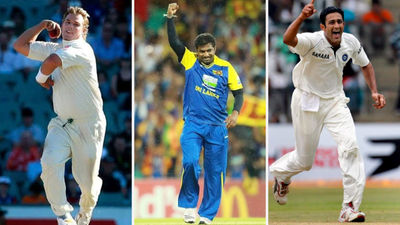
Effective spin bowling: Wrist-spinners such as Shane Warne have played important roles in breaking partnerships and controlling the middle overs.
Batting depth: Teams need contributions beyond the top order, particularly when early wickets fall or a late acceleration becomes necessary.
Fitness and fielding discipline: Saving runs and taking difficult catches can make a decisive difference in close knockout matches.
Successful teams adapt these strengths to the conditions, opposition, and demands of each match rather than relying on a single winning formula.
Frequently Asked Questions
Which team has won the most ICC Cricket World Cups?
Australia holds the record with six titles, won in 1987, 1999, 2003, 2007, 2015, and 2023.
Which countries have won the World Cup on home soil?
India won in 2011, Australia in 2015, and England in 2019 while hosting the tournament.
Which captains have won two Men's ODI World Cups?
Clive Lloyd led the West Indies to titles in 1975 and 1979. Ricky Ponting captained Australia to consecutive championships in 2003 and 2007.
Which team has reached the most finals without winning?
New Zealand has reached two finals, in 2015 and 2019, without winning the trophy. England previously finished runner-up three times before its 2019 victory.
When is the next Men's ODI World Cup?
The 2027 ICC Men's Cricket World Cup is scheduled for October and November 2027 in South Africa, Zimbabwe, and Namibia.
Conclusion
The ICC Cricket World Cup reflects the evolution of ODI cricket across five decades. The West Indies set the early standard, India and Sri Lanka helped reshape the competitive landscape, and Australia built the strongest championship record with six titles.
As the tournament prepares to expand to 14 teams in 2027, its history provides a useful measure of sustained excellence. Winning requires balanced team selection, tactical flexibility, consistent performances, and the ability to deliver under pressure.