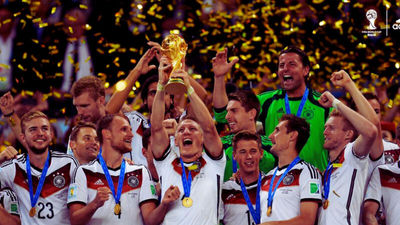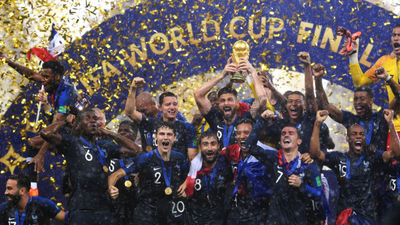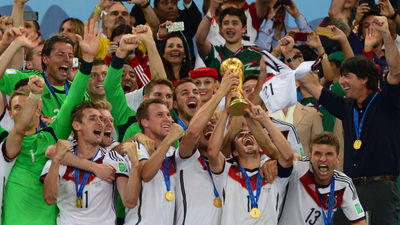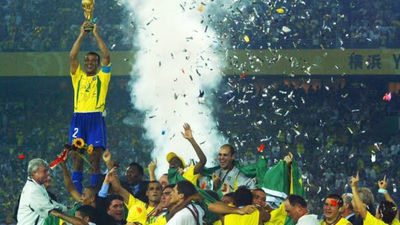

The 2026 FIFA World Cup has reached the stage where every remaining contender must prove far more than technical quality. Knockout football rewards teams that remain disciplined, adapt quickly, and deliver under immense pressure. While several nations entered the tournament with championship ambitions, only a handful have consistently demonstrated the balance required to lift the trophy.
Argentina, Brazil, France, and Spain each possess a distinct identity built around experienced coaching, influential leaders, and tactical cohesion. Their paths have been different, but every squad has shown the resilience needed to survive difficult moments. As the competition intensifies, these four nations appear best positioned to fight for football's biggest prize.
Argentina's Winning Experience
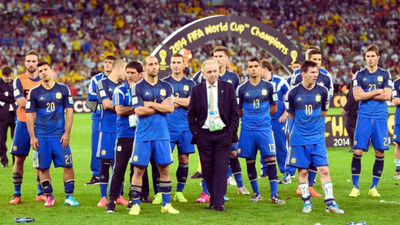
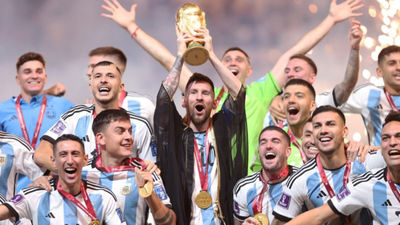
Argentina remains one of the clearest title threats because the squad understands knockout football. Lionel Scaloni has built a team that can control possession, defend compactly, or slow the rhythm when matches become tense. That flexibility matters because Argentina is trying to become the first men's World Cup champion to defend the title since Brazil in 1962.
Argentina's foundation remains its balance. Emiliano Martínez provides security in goal, Cristian Romero anchors the defense, and Enzo Fernández and Alexis Mac Allister help link defense with attack. Julián Álvarez adds constant movement up front, forcing defenders to make decisions under pressure.
Another factor working in Argentina's favor is continuity. Much of the core that won the 2022 World Cup remains together, giving the squad a level of chemistry that few rivals can match.
For readers following deeper World Cup analysis, that chemistry matters because Argentina rarely loses its tactical shape when matches become tense. Players understand Scaloni's expectations, communicate effectively under pressure, and adjust without sacrificing organization.
Spain's Modern Edge
Spain has returned to the elite conversation by mixing possession with sharper attacking intent. Luis de la Fuente's side still values control, but this version is more willing to play forward quickly when space appears. Spain entered the Round of 32 after topping Group H, demonstrating its ability to handle the group stage.
That balance explains why Spain remains central to the odds to win FIFA World Cup discussion among analysts and bettors. Lamine Yamal gives Spain creativity on the right, Nico Williams stretches defenses on the left, and Pedri helps manage tempo in midfield. With Rodri protecting the center, Spain can dominate the ball without becoming predictable.
Spain has also demonstrated impressive maturity despite relying on several young stars. The squad relies on collective movement and quick passing combinations rather than individual brilliance.
That discipline makes Spain difficult to press and allows the team to create chances patiently, even against organized defensive opponents. If this consistency continues, Spain will remain one of the tournament's strongest championship candidates.
Brazil's Attacking Depth
Brazil showed its resilience in the Round of 32 by coming from behind to beat Japan 2- 1. Gabriel Martinelli's stoppage-time winner showed Brazil could respond when a match became uncomfortable. That resilience often matters more than a routine win in knockout football.
The attack remains Brazil's greatest weapon. Vinícius Júnior can break defensive shape with pace and direct dribbling, while Gabriel Martinelli gives the front line speed, movement, and decisive finishing. Behind them, Bruno Guimarães and João Gomes help Brazil recover possession and restart attacks quickly. If Brazil keeps that balance, its talent can survive difficult tactical matchups.
Brazil has also become more disciplined defensively than in previous tournaments. The back line remains compact, while the midfield works tirelessly to close passing lanes before opponents can launch dangerous counterattacks. This improved defensive structure allows Brazil's attacking players to play with greater freedom, knowing the team remains organized whenever possession changes hands.
This balance also reduces the need for constant last-ditch defending, which is often what breaks teams down in high-pressure knockout matches. It also means Brazil can absorb pressure in phases without losing its attacking rhythm when possession is regained.
France's Tournament Power
France continues to look like a team built for the final rounds. Its 3 to 0 win over Sweden in the Round of 32 showed both star quality and collective control. Kylian Mbappé scored twice, while Bradley Barcola and Michael Olise added speed, creativity, and precision around him.
What makes France so difficult to eliminate is depth. Deschamps can rely on elite midfield depth, a strong central defense, and impact substitutes who raise the tempo late in matches. France also manage games effectively after taking the lead, maintaining pressure and preventing them from becoming chaotic.
France's experience in major tournaments continues to separate it from many competitors. Several players have already competed in World Cup finals and European Championship knockout matches, giving the squad valuable perspective during high-pressure situations. Recent football news has consistently emphasized France's ability to combine world-class talent with tactical discipline, strengthening its status as one of the leading contenders.
Heart Will Decide the Champion
Argentina brings experience, Spain brings control, Brazil brings attacking firepower, and France brings depth. Each contender has enough quality to win the tournament, but the champion will likely be the team that handles difficult moments best. In a knockout match, courage often appears in simple actions: a calm pass, a recovery run, or a composed finish under pressure.
The next rounds will test every weakness. Argentina must manage the burden of defending its title. Spain must prove its young stars can handle the biggest moments. Brazil must stay organized when matches become tense. France must maintain intensity against opponents that sit deep. Whoever solves those challenges will have the heart to become champion.