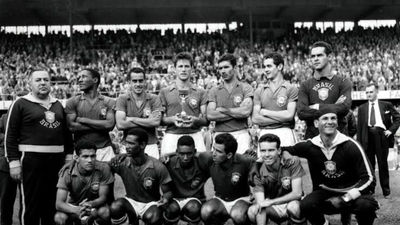

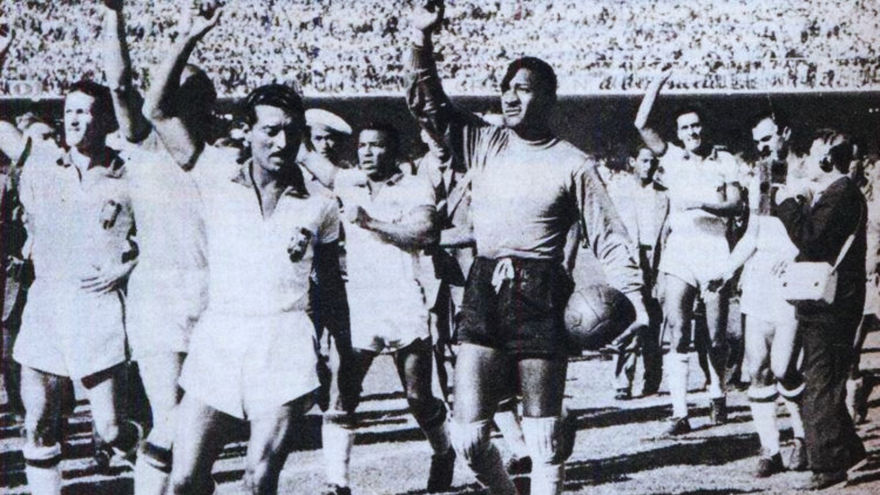
The 1950 FIFA World Cup in Brazil is one of football’s great cultural and sporting touchstones. After a twelve‑year hiatus forced by World War II, the tournament returned on a continental stage eager to showcase renewal and national pride. Brazil built the Maracanã as a cathedral for the occasion and entered with a forward line widely expected to produce an easy coronation. Instead, the event produced the Maracanazo — the shock that reverberated across a nation and rewrote footballing history.
Tournament snapshot
Host nation: Brazil
Teams: 13 (after several late withdrawals)
Format: Four initial groups of unequal sizes; group winners advanced to a final four-team round‑robin. The top team in the final group was declared champion (no single-match final).
Champion: Uruguay (2nd title)
Runner-up: Brazil
Third place: Sweden
Golden Ball: Zizinho (Brazil)
Golden Boot: Ademir (Brazil) — 8 goals
Road to the World Cup
Post‑war politics and economics shaped the entry list: Germany and Japan were banned, the Soviet Union did not enter, and several nations withdrew late for financial or political reasons. Brazil arrived as overwhelming favourites after dominating the 1949 Copa América. England made a much‑anticipated World Cup debut, and Uruguay—led by the steel of veterans and the craft of Juan Alberto Schiaffino—arrived quietly confident despite playing little competitive football beforehand.
Group stage recap
The uneven group structure produced mixed fortunes.
Group 4: Uruguay dispatched Bolivia 8–0 to advance comfortably, Schiaffino scoring a hat‑trick.
Group 1: Brazil thrashed Mexico 4–0, drew 2–2 with Switzerland in a scare, then beat Yugoslavia 2–0 to progress after reintroducing Zizinho.
Group 2: England suffered a stunning 1–0 defeat to the United States (Joe Gaetjens’ famous header) and were eliminated after losing to Spain.
Group 3: Sweden progressed and later benefitted from Italy’s ongoing post‑Superga reconstruction.
Final round‑robin (decider)
The four group winners—Brazil, Uruguay, Spain and Sweden—met in a final round‑robin. Brazil’s performances in the first two fixtures were overwhelming: a 7–1 demolition of Sweden (Ademir netting four) and a 6–1 rout of Spain left them needing only a draw against Uruguay on the final matchday to secure the title.
Uruguay, however, had endured a different path: gritty draws and narrow victories that sharpened resolve rather than inflated confidence. Obdulio Varela’s leadership and Alcides Ghiggia’s pace were central to a side built to absorb pressure and strike in transition.
The Maracanazo — match narrative
On July 16, 1950, an estimated crowd of well over 150,000 packed the Maracanã in a spectacle of national expectation. Brazil’s attack dominated early spells, and in the 47th minute Friaça finished clinically to make it 1–0. With jubilant crowds envisioning an imminent coronation, Uruguay remained composed.
In the 66th minute Uruguay struck back: Ghiggia burst past Brazil’s defender and fed Juan Alberto Schiaffino, who volleyed into the roof of the net to level. The game’s decisive moment arrived in the 79th minute. A quick move down the right saw Ghiggia again outpace his marker and drive a low shot into the near post; goalkeeper Moacir Barbosa could only brush the ball as it crossed the line. Uruguay led 2–1. Brazil failed to recover; Uruguay were world champions.
Psychology and gamesmanship
Obdulio Varela’s calm, deliberate handling of the game’s emotional tempo—famously delaying play to converse with the referee after Brazil’s opener—was crucial. His composed protests and tactical management of the crowd helped defuse the manic atmosphere and allowed Uruguay to play their game.
Defining moments
Ghiggia’s near‑post strike (79’): The goal that silenced the Maracanã and secured an upset for the ages.
Varela’s psychological interventions: A masterclass in captaincy that shifted momentum and smothered panic.
Joe Gaetjens’ USA header over England: One of the tournament’s great shocks and a lasting underdog story.
The white‑shirted Brazil to yellow transition: The national trauma led to a redesign of Brazil’s kit into the iconic yellow and green.
The collapsing post‑match ceremony: Administrative chaos and stunned silence became part of the myth.
Standout players
Obdulio Varela (Uruguay)
The captain’s leadership, tactical calm and physical presence defined Uruguay’s triumph.
Zizinho (Brazil)
The creative fulcrum of Brazil’s attack and the tournament’s best player in the eyes of many contemporaries.
Alcides Ghiggia (Uruguay)
The clinical, pacey wide forward who produced decisive contributions throughout the final round.
Tactical trends
Brazil deployed a fluid diagonal variation of the WM/sistema that emphasised rotating inside‑forwards and overlapping fullbacks to create overloads. Uruguay countered with compact transitional defence and direct counterattacks; their low block and rapid vertical outlet passes into Ghiggia proved decisive. The tournament illustrated how psychological preparation and in‑game leadership could neutralise purely technical superiority.
Records and statistics
Top scorer: Ademir (Brazil) — 8 goals.
Attendance peak: The Maracanã hosted over 150,000 officially, with modern estimates exceeding 170,000 — a crowdsizing that can never be repeated in modern stadia.
Notable feat: Ghiggia scored in every match he played in the final round; Uruguay reclaimed the world title with tactical resolve rather than flamboyance.
Legacy
Maracanazo's legacy is both sporting and cultural. In Brazil it created a national trauma that reshaped football identity, tactics, and aesthetics—most visibly with the change to the yellow and green kit. Moacir Barbosa unfairly became a scapegoat for decades. For Uruguay, the victory cemented national pride and the ethos of Garra Charrúa: doggedness, tactical discipline and courage.
Tactically, 1950 exposed vulnerabilities in open, possession‑heavy systems when confronted by organised counter‑pressing and clinical transition play. The event compelled Brazilian football to reassess defensive organisation, conditioning and psychological resilience—factors that fed into Brazil’s later successes, including the 1958 title.
Why 1950 is remembered
Brazil 1950 remains a foundational World Cup for its drama, crowd spectacle and cultural consequences. It demonstrates football’s capacity to embody national narratives: joy and despair, hubris and humility. The Maracanazo is a reminder that no outcome is guaranteed, and that leadership and nerve can overturn even the boldest expectations.
Conclusion
The 1950 World Cup delivered a story larger than sport. It gave us unforgettable upsets, enduring national myths and a lesson in the emotional weight football can carry. From Joe Gaetjens’ improbable header to Ghiggia’s decisive strike and Varela’s composed captaincy, the tournament remains a touchstone in the history of the game—a testament to why football never ceases to surprise.
FAQs
What is the Maracanazo?
The Maracanazo refers to Uruguay’s 2–1 win over Brazil on July 16, 1950, at the Maracanã—a shock result that denied hosts Brazil the title and became a national tragedy.
Who scored Uruguay’s winning goal in 1950?
Alcides Ghiggia scored the decisive 79th‑minute goal that gave Uruguay a 2–1 lead and ultimately the championship.
Did the 1950 World Cup have a traditional final?
No. The tournament used a final four-team round‑robin to decide the champion; the match between Brazil and Uruguay functioned as the de‑facto decider.
Why is Joe Gaetjens’ goal vs England significant?
Gaetjens’ header gave the USA a shock 1–0 win over England, one of the biggest upsets in World Cup history and a defining underdog moment of 1950.
What lasting impact did the Maracanazo have on Brazil?
The defeat triggered a national trauma that influenced Brazil’s football culture, including a change of kit colour and a long‑lasting scapegoating of goalkeeper Moacir Barbosa.
Also Read |