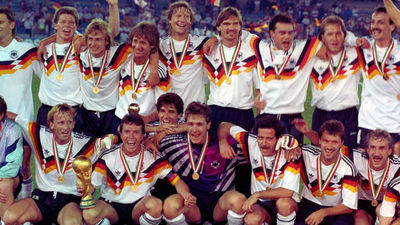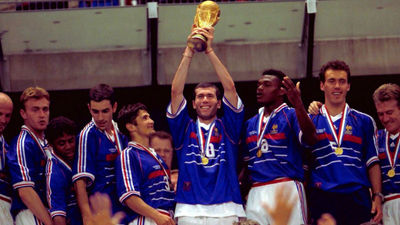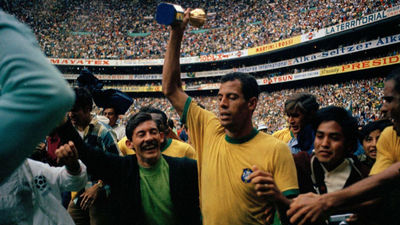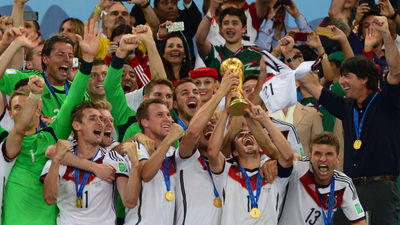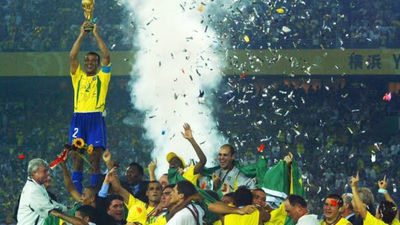

The decision to stage the 1994 FIFA World Cup in the United States was met with scepticism from traditionalists. A country without a top-tier domestic league and with different sporting priorities — baseball, American football, basketball — felt an odd fit for the world game. Yet USA ’94 delivered a sun-drenched spectacle that changed perceptions. Packed stadiums, record attendances and a renewed focus on attacking football turned what many feared would be a sterile commercial exercise into one of the tournament’s most consequential and emotionally resonant editions.
Context and stakes
The early 1990s had remapped international football: the Soviet Union’s collapse and German reunification altered competitive geography, while rule changes — notably three points for a win and strict enforcement of the back-pass rule — incentivized attack-minded play. The storylines arriving in 1994 were cinematic: Brazil sought to end a 24-year drought; Italy and a resurgent Sweden presented formidable opposition; emerging Eastern European sides stunned expectations; and the tragic arc surrounding Colombia and Andrés Escobar foregrounded the darker intersections of sport and society. Above all, USA ’94 became the stage for Brazil’s pragmatic reinvention under Carlos Alberto Parreira and the heartbreaking, permanent memory of Roberto Baggio’s missed penalty.
Tournament snapshot
Host nation: United States
Teams: 24
Format: Group stage (6 groups of 4), then 16-team knockout bracket
Champion: Brazil (4th title)
Runner-up: Italy
Third place: Sweden
Golden Ball: Romário (Brazil)
Golden Boot: Hristo Stoichkov (Bulgaria) & Oleg Salenko (Russia) — 6 goals each
Golden Glove: Michel Preud’homme (Belgium)
Best Young Player: Marc Overmars (Netherlands)
Road to the finals
Qualification was brutal and unpredictable. England, Euro ’92 winner Denmark, and a strong France all missed out. Argentina’s path was chaotic, forcing a playoff with Australia and culminating in the recalled Diego Maradona. Brazil stumbled in the qualifiers but reached the finals after the dramatic return of Romário. Colombia arrived with high expectations only to see that optimism explode into catastrophe after the group stage. These qualification dramas foreshadowed a tournament where pedigree could count for little.
Group stage — shocks and storylines
The group phase was vivid and, at times, tragic. Group A told the tournament’s darkest story: Andrés Escobar’s own goal against the USA contributed to Colombia’s exit, and his murder after returning home cast a long shadow over the competition. Group E went statistically insane — all four teams (Mexico, Ireland, Italy, Norway) finished with identical points and goal difference, a rare competitive knot resolved through tie-breakers and memories of Ray Houghton’s celebrated volley for Ireland.
Individual fireworks punctuated the opening round. Oleg Salenko’s five-goal haul against Cameroon put his name into football memory books even as Russia failed to progress. Diego Maradona’s brief, emotional resurgence for Argentina ended abruptly after his positive drugs test and expulsion — one of the tournament’s defining off-field collapses.
Knockout stage — drama intensifies
Round of 16
From the opening knockouts, the pressure rose. The United States pushed Brazil hard, but a Romário assist to Bebeto forced Parreira’s side through. Italy escaped late against Nigeria, rescued by Roberto Baggio’s 88th-minute equaliser and a decisive extra-time penalty — a sequence that both elevated Baggio’s status and foreshadowed his final-day torment. Romania’s rapid counter-attacks, guided by Gheorghe Hagi, toppled Argentina in a 3–2 classic.
Quarter-finals
The quarters delivered high drama. Brazil and the Netherlands combined attacking flair and nerve in Dallas, where Branco’s 35-yard free-kick ultimately separated the teams after a frantic back-and-forth. Bulgaria produced one of the tournament’s biggest shocks in New York, knocking out reigning champions Germany with Stoichkov and Letchkov combining for an unforgettable comeback. Sweden edged Romania in penalties to reach the semis.
Semi-finals and third place
Brazil broke through Sweden courtesy of a high, clinical finish from Romário — an example of instinctive forward play thriving amid tactical rigidity. Italy’s Roberto Baggio shone again, guiding his team past Bulgaria into the final. Sweden rounded out the podium with a 4–0 third-place win over Bulgaria, a spirited coda to a strong Scandinavian campaign.
The final — attrition and the penalty that hurt
The Rose Bowl final between Brazil and Italy was a tactical, exhausting duel played under heavy heat. Both sides deployed compact blocks and combative midfield shields: Parreira’s double-pivot of Mauro Silva and Dunga versus Sacchi’s disciplined Italians. Chances were scarce; both defences held firm for 120 minutes, producing the first goalless World Cup final after extra time.
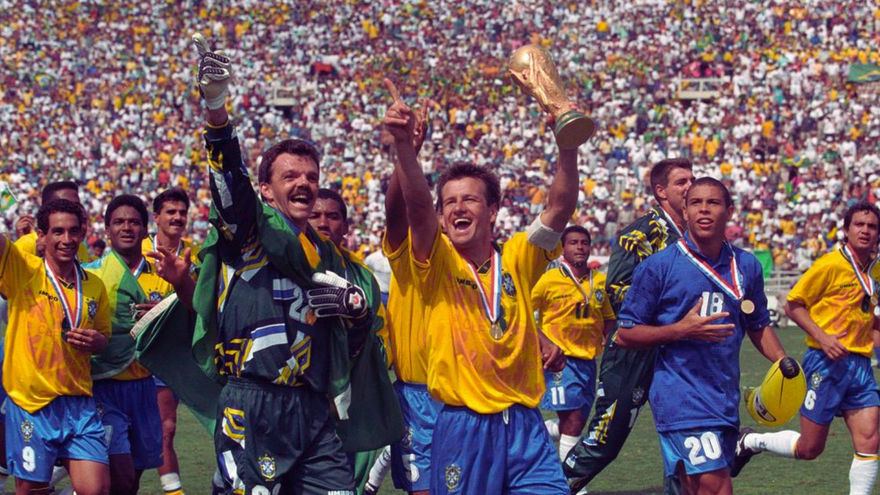
The match was decided on penalties. The shootout became the tournament’s most indelible and heartbreaking image: Roberto Baggio, who had carried Italy through three knockouts, stepped up but struck his spot-kick over the bar. Brazil celebrated a long-awaited fourth title; Baggio’s frozen figure, head bowed on the Pasadena turf, remains one of sport’s defining moments of agony.
Defining moments
Colombia’s tragedy: Andrés Escobar’s own goal and subsequent murder showed how football can be dangerously entangled with social turmoil.
Maradona’s expulsion: Maradona’s positive test and removal from the tournament marked the end of a complex modern career.
Oleg Salenko’s five goals (Russia 6–1 Cameroon): A single-match scoring record that still astonishes.
Branco’s free-kick (Brazil 3–2 Netherlands): A decisive 35-yard strike in a high-stakes quarter-final.
Baggio’s penalty miss: A split-second that encapsulated the tournament’s human drama and left a lifelong imprint.
Best players
Romário (Brazil) — Golden Ball winner who combined instinctive finishing with clinical decision-making. His partnership with Bebeto and compatibility with Parreira’s pragmatic system delivered Brazil’s attacking edge.
Roberto Baggio (Italy) — A wounded hero whose late goals in the knockout rounds powered Italy to the final despite physical pain; his miss in the shootout remains tragically famous.
Hristo Stoichkov (Bulgaria) — Co‑Golden Boot winner whose ferocious directness and set-piece mastery carried an inspired Bulgarian run.
Tactical trends
USA ’94 marked a decisive shift towards pragmatism and defensive structure at the highest level. The sweeper/libero was in decline; flat back-fours and double-pivot shields became the norm. Parreira’s Brazil epitomised this change: Mauro Silva and Dunga provided a steelier base that liberated the front two while prioritizing balance and protection over flamboyance. These structural shifts influenced club and national tactics for the rest of the decade.
Records and statistics
Total attendance: 3,587,538 (an all-time tournament record)
Average attendance per match: 68,991
Total goals: 141 (average 2.71 per match)
Golden Boot: Hristo Stoichkov & Oleg Salenko — 6 goals each
Oleg Salenko: five goals in a single match (Russia 6–1 Cameroon) — a standing tournament record
Legacy
USA ’94’s commercial and infrastructural success provided the foundation for Major League Soccer’s launch in 1996 and ultimately helped anchor professional football in North America. Structurally, the tournament accelerated tactical pragmatism and validated rule changes that encouraged attacking play. Culturally, it revealed both football’s capacity to unify and the dangers when sport intersects with societal violence, as tragically illustrated by Escobar’s death.
The 1994 World Cup remains a pivotal turning point in modern football. It balanced spectacle and substance, launched careers, reshaped tactical orthodoxy and left images that have endured in collective memory — from Romário’s celebrating instinct to Roberto Baggio’s frozen grief. USA ’94 was the tournament where football not only conquered a new continent but also confronted the full complexity of its global reach.
Also Read |