
The 2006 FIFA World Cup in Germany remains one of the modern game's most dramatic and texturally rich tournaments. It arrived at a moment of tactical transition: the defensive disciplines of the late 20th century colliding with 21st-century athletic professionalism. Off the pitch, the event was an exercise in national image-making for a reunified Germany; on it, the tournament became a study in redemption, structure and human drama—culminating in Italy’s triumph and Zinedine Zidane’s unforgettable farewell.
Backdrop
Italy arrived under a cloud. The Calciopoli scandal had gutted Serie A’s reputation and left the national team carrying the burden of scandal and scepticism. Brazil, by contrast, were the pre-tournament favourites—an irresistible attacking quartet of Ronaldinho, Ronaldo, Kaká and Adriano promised spectacle. France brought Zinedine Zidane back from international retirement for a final swansong. Germany, led by Jurgen Klinsmann, offered youthful energy and a fresh tactical approach. These narratives produced a tournament that was as much about psychology and national identity as tactics and talent.
Tournament snapshot
Host nation: Germany
Teams: 32
Format: Group stage (8×4) then single-elimination knockouts
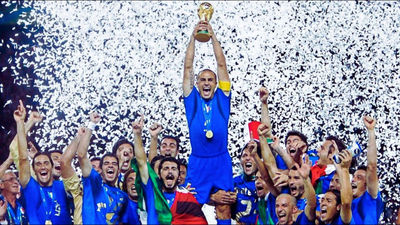
Champion: Italy (4th title)
Runner-up: France
Third place: Germany
Golden Ball: Zinedine Zidane (France)
Golden Boot: Miroslav Klose (Germany — 5 goals)
Golden Glove: Gianluigi Buffon (Italy)
Best Young Player: Lukas Podolski (Germany)
Road to the finals
Qualification reshaped the global map. Africa produced fresh faces (Ivory Coast, Ghana, Angola, Togo) while Uruguay and Greece missed out. Italy’s pathway into Germany was heavy with off-field drama; yet Marcello Lippi’s side arrived battle-hardened. Brazil carried the weight of expectation. France’s recall of Zidane framed the tournament as his final act. Germany’s Klinsmann experiment, with attacking intent and athleticism, revived domestic pride in a campaign dubbed the “Sommermärchen” (Summer Fairytale).
Group stage
The tournament opened with entertainment rather than turgidity—Germany’s 4–2 win over Costa Rica set the tone, Philipp Lahm’s curling opener becoming an early highlight. Group E emerged as the liveliest: Italy topped it, but Ghana — in their World Cup debut — impressed and advanced, powered by Michael Essien’s relentless engine. Argentina signalled their class with a 6–0 rout of Serbia & Montenegro; a young Lionel Messi scored on his World Cup debut. France, meanwhile, laboured through a poor group, looking structurally disjointed and unconvincing.
Knockout stage — tension and controversy
Round of 16
The knockout phase amplified intensity. Germany beat Sweden thanks to Lukas Podolski, while Argentina’s Maxi Rodríguez produced a memorable extra-time volley to edge Mexico. Italy survived a physical Australia after Francesco Totti netted a 95th-minute penalty. The “Battle of Nuremberg” between Portugal and the Netherlands descended into chaos (a record card haul), and Zidane’s France produced a late comeback to beat Spain and begin a remarkable run.
Quarter-finals
Pre-tournament favourites fell. France stunned Brazil 1–0—Zidane was the virtuoso, floating the decisive free-kick to Thierry Henry. Germany held their nerve against Argentina in a shootout, with Jens Lehmann’s now-infamous notes proving a provocative subplot. Portugal eliminated England on penalties, and Italy dismantled Ukraine to progress comfortably.
Semi-finals — theatre and crescendo
The semi-finals were contrasting dramas. France beat Portugal via a Zidane penalty and defensive discipline. Italy produced one of the tournament’s great late finishes against Germany in Dortmund. After a tactical, attritional 119th minute, Andrea Pirlo’s disguised pass found Fabio Grosso, who curled home. Italy then countered to allow Alessandro Del Piero to seal victory—two climactic strikes in injury time that sent the Azzurri to the final.
Third-place playoff
Germany salvaged home pride, beating Portugal 3–1 in Stuttgart. Bastian Schweinsteiger’s emergence as a midfield dynamo—scoring twice—was a reminder of the tournament’s generational shifts at national level.
The final — glory and ignominy
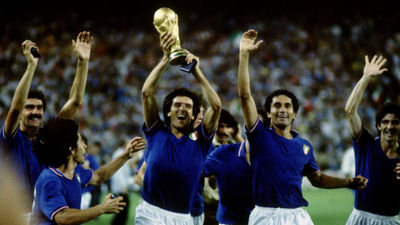
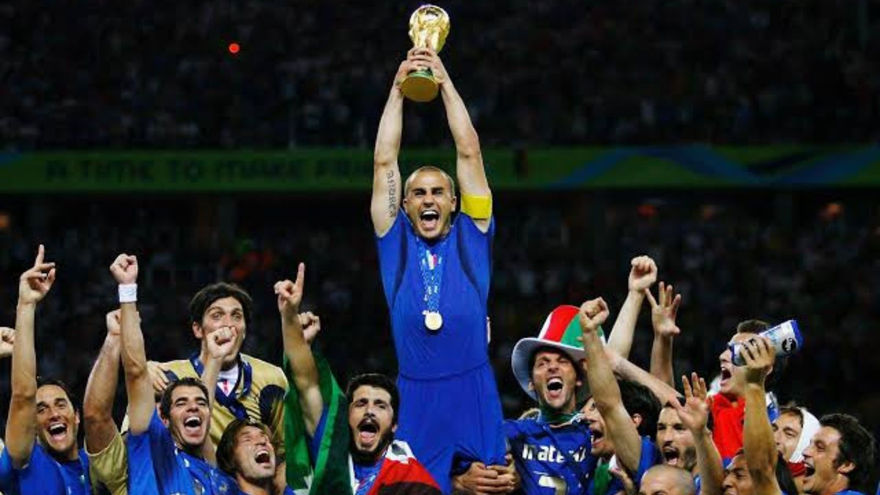
Berlin’s Olympiastadion hosted a final of mythic contrasts. Zidane opened the scoring with a cheeky Panenka penalty, and Marco Materazzi equalised with a header. For much of the match the balance was tactical and tense, Buffon and Zidane both producing outstanding moments. Then, in the 110th minute, Zidane headbutted Materazzi after an exchange of words. The red card that followed transformed the ending: a career of artistry concluded in scandal. Italy held their nerve in the shootout; Fabio Grosso’s winning penalty sealed a fourth world title and completed a narrative of domestic redemption.
Defining moments
Lahm’s opening strike (Germany 4–2 Costa Rica): an early statement of intent and a national high point.
Argentina’s 26-pass team goal (Argentina 6–0 Serbia & Montenegro): a flashing example of technical cohesion.
Zidane’s masterclass vs Brazil (France 1–0 Brazil): a vintage display from a player at the peak of his powers.
The late drama in Dortmund (Italy 2–0 Germany): Pirlo’s vision and Grosso’s curling finish stunned a nation.
Zidane’s headbutt (Italy 1–1 France): an act that eclipsed sport and entered wider cultural discourse.
Best players
Fabio Cannavaro (Italy) — captain and central defender, whose positional intelligence, timing and aerial strength anchored a defence that conceded just two goals (excluding penalties). His performances earned him the 2006 Ballon d’Or.
Zinedine Zidane (France) — Golden Ball winner; his creative control and calmness lifted a French side widely predicted to underperform. His tournament remains both transcendent and tragic.
Andrea Pirlo (Italy) — the regista whose passing range and set-piece mastery provided Italy with its creative fulcrum.
Tactical trends
Germany 2006 cemented the dominance of midfield control and heralded the widespread adoption of the 4-2-3-1 and variants that prioritised a midfield overload. The lone-striker model, protected by a double pivot, became a template for limiting space and controlling tempo. Defensive organisation reached a new peak; goals from open play became rarer, and set-pieces and counters grew in tactical value.
Statistics and records
Total goals: 147
Average goals per match: 2.30
Cards: 307 yellows, 28 reds (a tournament disciplinary high)
Golden Boot: Miroslav Klose — 5 goals
Cannavaro and Buffon solidified their reputations among the tournament’s best performers
Legacy
Germany 2006 is best understood as a tournament of redemption and transition. Italy used collective discipline to rebuff scandal and claim a fourth title. Zidane’s mixed legacy—an exemplary performer whose final act was self-destructive—gave the tournament an operatic quality that extends beyond football. For Germany, the “Sommermärchen” rekindled national confidence and sowed seeds that contributed to the country’s later success. Tactically and culturally, 2006 sits among World Cups that reshaped the sport—like Mexico 1970 or 1994—for its blend of narrative heft, tactical refinement and theatrical drama.
The 2006 World Cup combined high stakes, intense tactical chess and human stories that elevated it beyond sport. It was a month in which national scars were healed, legends were written and one of football’s greatest careers ended in infamy. Decades on, the tournament remains a reference point for how football mirrors society: complex, glorious and sometimes painfully human.
Also Read |