
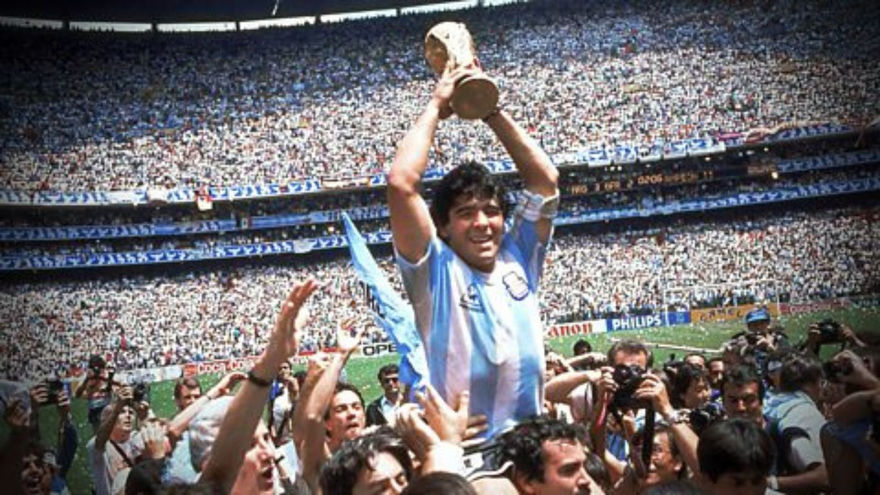
The 1986 FIFA World Cup in Mexico is widely regarded as one of the greatest tournaments in football history. It was a World Cup defined by political uncertainty, extreme playing conditions, unforgettable matches, tactical innovation, and above all, the extraordinary brilliance of Diego Maradona.
From the infamous "Hand of God" to the "Goal of the Century," Maradona produced arguably the finest individual performance ever seen at a FIFA World Cup, leading Argentina to their second world title while redefining what one player could achieve on football's biggest stage.
Held amid sweltering temperatures, high altitude, and enormous logistical challenges, Mexico 1986 became the perfect blend of drama, quality, and history—cementing its place among the greatest World Cups ever staged.
Mexico 1986 FIFA World Cup at a Glance
Category | Details |
Host Nation | Mexico |
Dates | 31 May – 29 June 1986 |
Teams | 24 |
Matches | 52 |
Goals | 132 |
Champion | Argentina (2nd title) |
Runner-up | West Germany |
Third Place | France |
Golden Ball | Diego Maradona (Argentina) |
Golden Boot | Gary Lineker (England) – 6 Goals |
Best Young Player | Enzo Scifo (Belgium) |
Final Attendance | 114,600 (Estadio Azteca) |
Why Mexico Hosted the 1986 FIFA World Cup
The tournament was originally awarded to Colombia. However, economic difficulties forced Colombia to withdraw in 1982 after admitting it could not meet FIFA's infrastructure requirements.
Mexico stepped in with less than four years to prepare and became the first nation to host the FIFA World Cup twice, having previously staged the memorable 1970 tournament.
Preparations became even more difficult after the devastating Mexico City earthquake in September 1985. Despite widespread destruction, Mexico successfully organized the competition, earning global admiration.
Qualification: Several Giants Missed Out
The road to Mexico was unforgiving.
The Netherlands, featuring rising stars Marco van Basten and Ruud Gullit, were eliminated by Belgium in the playoffs.
Argentina barely qualified after Ricardo Gareca's dramatic late goal against Peru preserved their place in the finals, easing pressure on coach Carlos Bilardo, whose pragmatic methods had divided opinion throughout the country.
Tournament Favorites
Several nations entered Mexico as genuine contenders.
France
Fresh from winning UEFA Euro 1984, Michel Platini's France possessed perhaps the finest midfield in world football with the legendary Carré Magique.
Brazil
Telê Santana's Brazil remained one of football's most talented teams, featuring stars such as Zico, Sócrates, Careca and Júlio César.
West Germany
Franz Beckenbauer had built another disciplined German side capable of navigating knockout football better than almost anyone.
Denmark
"Danish Dynamite" arrived as Europe's most exciting team after dazzling during qualification and Euro 1984.
Group Stage: Early Surprises and Emerging Storylines
Group A
Argentina topped the group ahead of defending champions Italy.
Maradona scored a stunning cushioned volley against Italy in a 1-1 draw, providing the first glimpse of what was to come.
Group B
Hosts Mexico thrilled home supporters by finishing first, inspired by Hugo Sánchez and an outstanding defensive structure.
Group C
The Soviet Union announced themselves as serious contenders by demolishing Hungary 6-0.
Valeriy Lobanovskyi's pressing system looked years ahead of its time, while France comfortably progressed alongside them.
Group D
Brazil won all three matches, with Careca emerging as one of the tournament's most clinical forwards.
Group E – The Group of Death
Denmark became everyone's favorite neutral team.
Three victories included:
6-1 vs Uruguay
2-0 vs West Germany
1-0 vs Scotland
Michael Laudrup and Preben Elkjær produced some of the tournament's finest attacking football.
Group F
England recovered from a dreadful start thanks to Gary Lineker's first-half hat-trick against Poland.
Morocco made history by becoming the first African nation to win a FIFA World Cup group.
Round of 16: Knockout Football Begins
The expanded 24-team format introduced a Round of 16 for the first time.
Some of the standout matches included:
Argentina defeated Uruguay 1-0 in a fiercely contested South American derby.
Belgium edged the Soviet Union 4-3 after extra time despite Igor Belanov's hat-trick.
Spain crushed Denmark 5-1, with Emilio Butragueño scoring four goals.
France eliminated defending champions Italy 2-0 with a composed display.
Quarter-finals: One of the Greatest Days in World Cup History
France 1-1 Brazil (France won on penalties)
Many consider this the finest match of the tournament.
Careca opened the scoring before Michel Platini equalized.
Late drama followed when substitute Zico missed a penalty after Joël Bats produced a remarkable save.
France eventually prevailed in the shootout.
West Germany 0-0 Mexico (West Germany won on penalties)
The hosts pushed the Germans all the way before eventually falling in the penalty shootout.
Belgium 1-1 Spain (Belgium won on penalties)
Belgium continued their remarkable run by eliminating Spain after another tense shootout.
Argentina 2-1 England
No match has produced two more famous goals.
Following the political backdrop of the Falklands War, Diego Maradona scored twice within four unforgettable minutes.
First came the controversial "Hand of God."
Then followed the breathtaking "Goal of the Century," as Maradona dribbled from inside his own half past five English players before rounding Peter Shilton.
Gary Lineker scored late, but Argentina held on.
Semi-finals
Argentina 2-0 Belgium
Belgium's outstanding tournament finally came to an end.
Maradona delivered another masterpiece, scoring twice—including another dazzling solo effort—to send Argentina into the final.
West Germany 2-0 France
Franz Beckenbauer's side once again demonstrated their tournament experience.
Platini was effectively neutralized as West Germany reached another World Cup Final.
Third Place Playoff
France defeated Belgium 4-2 after extra time to secure third place.
It served as a fitting conclusion to one of the greatest generations in French football history.
The 1986 FIFA World Cup Final
29 June 1986
Estadio Azteca, Mexico City
Argentina 3-2 West Germany
The final perfectly encapsulated everything Mexico 1986 had become.
Argentina dominated early.
José Luis Brown headed home the opener before Jorge Valdano doubled the advantage after halftime.
West Germany refused to surrender.
Goals from Karl-Heinz Rummenigge and Rudi Völler erased the two-goal deficit within seven minutes.
Then came Maradona's defining contribution.
Receiving possession under heavy pressure, he delivered a perfectly weighted first-time through ball that split the German defense.
Jorge Burruchaga raced clear and calmly finished beyond Harald Schumacher.
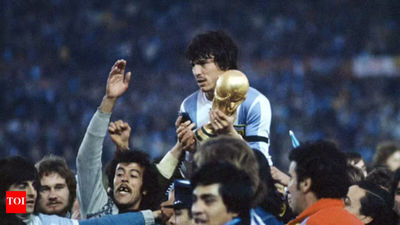
Argentina were world champions once again.
Diego Maradona's Greatest World Cup Ever
No player has ever exerted greater influence over a World Cup.
Tournament Statistics
5 Goals
5 Assists
53 Successful Dribbles (World Cup record)
Captain of Argentina
Golden Ball Winner
Maradona either scored or created 10 of Argentina's 14 tournament goals.
His performances against England, Belgium and West Germany remain among the finest ever produced by an individual footballer.
Many historians still consider Mexico 1986 the greatest individual tournament performance in football history.
Five Defining Moments of Mexico 1986
1. The Hand of God
Maradona punched the ball past Peter Shilton to open the scoring against England.
The goal stood and became one of football's most debated moments.
2. Goal of the Century
Only four minutes later, Maradona dribbled over 60 yards past five defenders before scoring one of the greatest goals ever witnessed.
3. Manuel Negrete's Bicycle Volley
Negrete produced an extraordinary scissor-kick against Bulgaria, later voted one of the greatest World Cup goals.
4. Joël Bats Saves Zico's Penalty
The French goalkeeper's late save helped eliminate Brazil in an unforgettable quarter-final.
5. Denmark's 6-1 Destruction of Uruguay
The tournament's most entertaining team produced one of the greatest group-stage performances in World Cup history.
Best Players of the Tournament
1. Diego Maradona (Argentina)
Position: Attacking Midfielder
Golden Ball winner
5 goals
5 assists
Tournament's undisputed star
2. Gary Lineker (England)
Position: Striker
Golden Boot winner
6 goals
Hat-trick against Poland
Established himself among Europe's elite forwards
3. Michel Platini (France)
Despite playing through injury, Platini orchestrated France's midfield brilliantly and helped guide Les Bleus to third place.
4. Enzo Scifo (Belgium)
Belgium's creative heartbeat won the inaugural Best Young Player award after inspiring their run to the semi-finals.
5. Careca (Brazil)
Brazil's leading scorer combined movement, finishing and intelligence throughout the tournament.
Tactical Innovations That Changed Football
Carlos Bilardo introduced a highly effective 3-5-2 formation built around defensive balance and midfield superiority.
The system featured:
Three central defenders
Two adventurous wing-backs
Compact midfield
Total creative freedom for Maradona
The success of Argentina's tactical approach influenced club and international football throughout the late 1980s and 1990s.
Meanwhile, the Soviet Union under Valeriy Lobanovskyi showcased advanced pressing concepts that foreshadowed many modern tactical systems.
Records and Milestones
Top Scorers
Player | Goals |
Gary Lineker | 6 |
Diego Maradona | 5 |
Careca | 5 |
Emilio Butragueño | 5 |
Historic Achievements
Argentina won their second FIFA World Cup.
Maradona set the World Cup record with 53 successful dribbles.
Morocco became the first African nation to win a World Cup group.
José Batista received the fastest red card in World Cup history after only 56 seconds against Scotland.
Mexico became the first country to host the FIFA World Cup twice.
Legacy of Mexico 1986
The 1986 FIFA World Cup transformed football in multiple ways.
Bilardo's tactical innovations popularized the 3-5-2 formation across world football.
Mexico demonstrated that a major sporting event could be successfully reorganized under extraordinary circumstances following both Colombia's withdrawal and the devastating earthquake.
For Argentina, the triumph became a symbol of national unity during a period of political and economic recovery.
Most importantly, Mexico 1986 immortalized Diego Maradona. His performances remain the benchmark against which every great World Cup campaign is measured.
Why Mexico 1986 Remains One of the Greatest World Cups
Nearly four decades later, Mexico 1986 continues to rank alongside 1970, 1998, and 2022 as one of the finest FIFA World Cups ever played.
It combined:
Legendary individual performances
Tactical innovation
Historic upsets
Classic knockout matches
Global cultural significance
More than any other tournament, Mexico 1986 proved that while tactics and systems matter, one extraordinary footballer can still shape history.
For that reason, the 1986 FIFA World Cup remains not only Argentina's crowning achievement but also the tournament where Diego Maradona reached footballing immortality.
FAQs
Who won the 1986 FIFA World Cup?
Argentina defeated West Germany 3-2 in the final to win their second FIFA World Cup title.
Why is the 1986 World Cup famous?
The tournament is best remembered for Diego Maradona's legendary performances, including the "Hand of God" and the "Goal of the Century" against England.
Who won the Golden Boot at the 1986 World Cup?
England striker Gary Lineker won the Golden Boot with six goals.
Where was the 1986 FIFA World Cup held?
The tournament was held in Mexico, making it the first country to host the FIFA World Cup twice.
What tactical innovation defined Mexico 1986?
Carlos Bilardo's successful use of the 3-5-2 formation with Argentina became one of the tournament's defining tactical developments.
Also Read |