
The 1974 FIFA World Cup in West Germany signalled the dawn of modern football. As June rain fell over stadiums across the country, the sport stood at an ideological crossroads. The individualistic, romantic Brazil of the 1960s had given way to collective systems, advanced conditioning and radical tactical ideas.
At the centre of this shift was Totaalvoetbal (Total Football), transplanted from Ajax and Feyenoord to the international stage by Rinus Michels and Johan Cruyff. Opposing it were the hosts, West Germany—led by Franz Beckenbauer—who embodied organisational discipline, psychological resilience and what commentators called "German efficiency." The tournament became a philosophical duel on the grandest stage and changed how football was played and coached thereafter.
Tournament snapshot
Host nation: West Germany
Teams: 16
Format: Four first-round groups of four; top two advanced to two second-round groups. Winners of the second-round groups advanced to the Final; runners-up played the Third-Place Playoff.
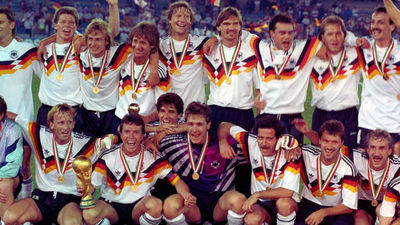
Champion: West Germany (second title)
Runner-up: Netherlands
Third place: Poland
Golden Ball: Johan Cruyff (Netherlands)
Golden Boot: Grzegorz Lato (Poland) — 7 goals
Best Young Player: Władysław Żmuda (Poland)
Road to the World Cup
Qualification brought shocks and geopolitical complications. England failed to qualify after a dramatic 1–1 draw with Poland at Wembley, where goalkeeper Jan Tomaszewski produced a legendary performance. The Soviet Union refused to play Chile in Santiago for political reasons and were disqualified. France, Portugal and Spain also failed to qualify, underlining a shift in European balance.
Brazil entered as a favourite on pedigree, despite missing Pelé. West Germany, European champions of 1972, were formidable at home. The Netherlands—qualified by the narrowest of margins—were the tournament’s wild card, their Total Football having dominated club competition. Poland, buoyed by Olympic success, were an underrated but dangerous counter-attacking unit.
Group stage recap
The first round mixed weather, politics and football.
Group 1 produced the Cold War’s most symbolic fixture: West Germany vs East Germany in Hamburg. East Germany shocked the hosts with Jürgen Sparwasser’s late winner, a result that reverberated far beyond sport and altered West Germany’s second-round draw.
Group 2 saw an unusual three-way tie between Yugoslavia, Brazil and Scotland. Yugoslavia topped the group after a 9–0 rout of Zaire; Brazil edged through, and Scotland exited despite not losing a game—the first team to do so.
Group 3 belonged to the Netherlands. Cruyff and his teammates dismantled opponents with a new vocabulary of movement and space.
Group 4 was dominated by Poland, who swept their matches with devastating transitional speed and clinical finishing.
Second group stage: tactical battles
The second phase condensed the tournament into two high-stakes mini-leagues.
Group A: Total Football’s showcase
The Netherlands, Brazil, East Germany and Argentina made for an intense group. The Dutch opened with a crushing 4–0 win over Argentina and followed with convincing performances over East Germany. The decisive confrontation with Brazil became a test of Dutch cohesion vs Brazilian disruption. The Netherlands held firm: Neeskens scored a sublime half-volley and Cruyff sealed a 2–0 victory with an iconic airborne volley, sending the Oranje to the final and toppling the holders.
Group B: The Water Battle of Frankfurt
West Germany faced Poland, Yugoslavia and Sweden. Poland matched West German form, setting up a decisive clash in Frankfurt. A torrential cloudburst turned the Waldstadion into a quagmire in the match remembered as the Wasserschlacht von Frankfurt—The Water Battle. Flooded turf neutralised Poland’s pace; after heroic goalkeeping from Sepp Maier and gritty play, Gerd Müller seized a chance in the 76th minute to score the winner. West Germany advanced to Munich.
Third-place playoff
Poland, the tournament’s surprise package, beat a demoralised Brazil 1–0 in Munich. Grzegorz Lato’s strike sealed the victory and the Golden Boot, confirming Poland’s emergence on the world stage.
The final in Munich
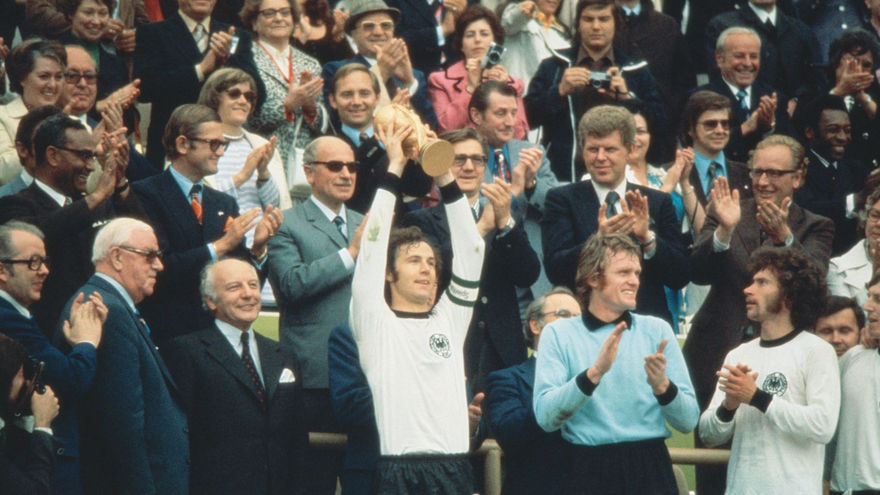
On July 7, 1974, the Olympiastadion hosted a final that remains vivid in football folklore. The Dutch opened the game in dazzling fashion: a 17-pass sequence culminated in Cruyff being fouled inside the box; Neeskens converted the penalty within 80 seconds—the fastest goal in a World Cup final. But the Oranje’s early showmanship awakened the German response. Berti Vogts tightened his marking on Cruyff; Paul Breitner equalised from the spot; and Rainer Bonhof’s cross set up Gerd Müller to score a scrappy, decisive second. West Germany withstood late Dutch pressure and won 2–1, proving that tactical structure and execution trumped aesthetic dominance on the night.
Defining moments
The Cruyff Turn: A single improvisation against Sweden that became a teaching moment for generations.
Neeskens’ early penalty: A first-minute statement in the final that stunned the stadium.
Sparwasser’s goal: East Germany’s strike over West Germany, a Cold War headline.
Mwepu Ilunga’s free-kick reaction: Zaire’s defender clearing the ball under duress—a poignant image and a reminder of the political pressures on some teams.
Müller’s winner: A low, instinctive finish that epitomised his "Der Bomber" hunger.
Standout players
Johan Cruyff (Netherlands)
Cruyff orchestrated Total Football—dropping deep, drifting wide and creating space. His influence extended beyond goals; he controlled tempo and positional logic throughout the tournament.
Franz Beckenbauer (West Germany)
Beckenbauer perfected the modern libero—sweeping behind the defence and initiating attacks. His leadership after the East Germany upset was decisive in restoring West German focus.
Grzegorz Lato (Poland)
Lato’s pace and finishing earned him the Golden Boot. He led a Polish side that combined athleticism with clinical transition play.
Tactical trends
1974 cemented flexibility and high-intensity pressing as central tenets of modern tactics. Total Football relied on interchangeable roles within a dynamic 4-3-3, an aggressive high press and coordinated offside traps. West Germany countered with a balanced asymmetric system—Beckenbauer sweeping, man-marking specialists like Berti Vogts, and midfielders who could win the ball and launch vertical transitions. The era signalled the obsolescence of rigid formations in favour of adaptable, space-oriented play.
Records and statistics
Top scorers: Grzegorz Lato (7), Johan Neeskens (5), Gerd Müller (4), Johnny Rep (4), Andrzej Szarmach (4).
First-minute penalty: Neeskens’ penalty in the final is the fastest in World Cup final history.
Müller's World Cup record: Gerd Müller’s tally of 14 World Cup goals set a long-standing benchmark later broken by Ronaldo in 2006.
Notable moment: The tournament saw one of the first red-card incidents under modern disciplinary systems (Carlos Caszely).
Legacy
The 1974 World Cup’s tactical DNA endures. Total Football inspired later revolutions—Arrigo Sacchi’s Milan, Pep Guardiola’s positional play and the modern pressing game all trace roots back to the Netherlands’ ideas. West Germany’s victory validated psychological resilience and tactical pragmatism, traits that would persist in German teams for decades.
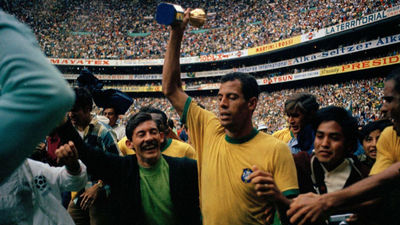
The tournament also introduced the new FIFA World Cup Trophy (designed by Silvio Gazzaniga), replacing the Jules Rimet trophy retired by Brazil after 1970. 1974 remains a turning point: a showcase of football as both art and engineered performance.
Why 1974 is remembered
1974 ranks with the great World Cups because it offered both aesthetic innovation and competitive substance. It was the moment football demonstrated that beauty and structure are not mutually exclusive: Total Football expanded the sport’s vocabulary, while German efficiency underlined the value of discipline and results.
Conclusion
The 1974 FIFA World Cup redefined modern football. Johan Cruyff and the Netherlands revealed what the game could aspire to; Franz Beckenbauer and West Germany showed how to turn aspiration into victory. The tournament rewired coaching philosophies and left a legacy still visible in contemporary tactics—where fluidity meets structure, and art meets efficiency.
FAQs
What is Total Football and how did it affect the 1974 World Cup?
Total Football is a system of interchangeable positions and high pressing pioneered by the Netherlands; in 1974 it showcased spatial fluidity and tactical pressing that influenced modern coaching.
Who won the 1974 World Cup and who were the key players?
West Germany won, beating the Netherlands 2–1 in the final. Key figures included Johan Cruyff, Franz Beckenbauer and Grzegorz Lato (Golden Boot).
What was the Wasserschlacht von Frankfurt?
The "Water Battle of Frankfurt" was a torrentially delayed second-round match between West Germany and Poland, played on a flooded pitch that neutralised Poland’s speed and helped Germany win 1–0.
Why is the Cruyff Turn significant?
The Cruyff Turn, first seen in 1974, is a feint that changed how players evade markers; it became a staple skill taught worldwide and symbolised the creativity of Total Football.
What tactical legacy did the 1974 World Cup leave?
1974 validated flexibility, high-intensity pressing and positional interchange. Its ideas fed future tactical revolutions like Sacchi’s Milan and Guardiola’s positional play.
Also Read |