
The 1978 FIFA World Cup in Argentina remains one of football’s most politically charged and visually spectacular tournaments. Staged under General Jorge Videla’s military junta, the event doubled as a lavish propaganda exercise for a regime that seized power in 1976. For many Argentines it was an escape from repression; for the government it was an attempt to project normality to a skeptical world.
On the pitch, the game was evolving. The utopian Total Football of the early 1970s had been tempered by growing physicality, tactical discipline, and commercial pressures. Johan Cruyff’s absence—he declined to travel to South America—left a void at the top of the sport. Still, Argentina 1978 delivered moments of theatrical brilliance: stadiums carpeted in papelitos, César Luis Menotti’s tactical vision, Mario Kempes’ predatory instincts, and controversies that continue to reverberate.
Tournament snapshot
Host nation: Argentina
Teams: 16
Format: Two group stages—four groups of four, then two second-round groups of four. Second-round winners advanced to the Final; runners-up played for third place.
Champion: Argentina (first title)
Runner-up: Netherlands
Third place: Brazil
Golden Ball & Golden Boot: Mario Kempes (Argentina) — 6 goals
Best Young Player: Antonio Cabrini (Italy)
Road to the World Cup
Qualification exposed shifting balances in world football. The Soviet Union were absent after refusing to play Chile in a playoff, and other traditional teams—including England and Yugoslavia—missed out. West Germany arrived as defending champions but without Franz Beckenbauer’s on-field authority. Brazil and Argentina were among the favorites, while a young Italy under Enzo Bearzot offered tactical solidity and youthful promise.
César Luis Menotti’s Argentina came in with a clear identity: la nuestra, a fluid, expressive football that rejected the old anti-fútbol. Meanwhile, Brazil’s Cláudio Coutinho hoped his Seleção’s athleticism and technical quality would prevail. The tournament’s stage was set for a clash of styles and political theatre.
First group stage
The opening round produced surprises and early storylines.
Group 1 (Argentina, Italy, France, Hungary) was a heavyweight slugfest. Italy emerged top after a 1–0 win over Argentina in Buenos Aires—Roberto Bettega and Paolo Rossi combining for the decisive move—forcing the hosts into a trickier second-round route.
Tunisia made history in Group 2 by beating Mexico 3–1—the first-ever World Cup victory for an African nation. West Germany, meanwhile, produced uneven displays.
Brazil struggled for coherence in Group 3, scraping through with draws against Sweden and Spain and a narrow win over Austria, who unexpectedly topped the group.
Peru stood out in Group 4. Teófilo Cubillas led a dazzling Peruvian side that beat Scotland 3–1 and held the Netherlands to a goalless draw.
Second group stage: rising stakes
The second group stage replaced traditional knockout rounds and delivered high-stakes drama.
Group A: Netherlands, West Germany, Italy, Austria
The Dutch hit top form. Arie Haan’s thunderbolt from distance and aggressive attacking play dismantled Austria 5–1, and the Oranje’s intelligence and creativity carried them past West Germany and Italy. In a memorable game against Italy, Haan’s long-range strike—an audacious 40-yard attempt—helped secure the Dutch place in the final.
Group B: Argentina, Brazil, Poland, Peru — the Rosario controversy
Group B unfolded as a tense South American battleground. Menotti reinvented Mario Kempes’ role—dropping him slightly deeper to exploit spaces—which paid immediate dividends when Kempes scored twice in a 2–0 win over Poland.
Argentina vs Brazil in Rosario was a brutal, scoreless affair. Because Brazil played earlier and beat Poland 3–1, Argentina knew they needed a massive win against Peru to reach the final. What followed—a 6–0 victory for Argentina—remains the tournament’s most contentious moment. Peru, who had dazzled in the first round, were overwhelmed. Kempes and Leopoldo Luque both scored braces. Rumours of political pressure, economic deals and other irregularities circulated for decades; no conclusive proof has emerged, but the match left a lasting stain of suspicion.
Third-place playoff
Brazil faced Italy in Buenos Aires. Italy struck first through Franco Causio’s header, but Brazil’s superior athleticism and Nelinho’s spectacular curling strike swung the game. Brazil won 2–1 and left Argentina unbeaten, albeit third.
The final at the Monumental
On June 25, 1978, the Estadio Monumental became a wall of sound and paper. A pre-match protest over René van de Kerkhof’s plaster cast misfired as psychological games delayed the kickoff and unsettled the Dutch.
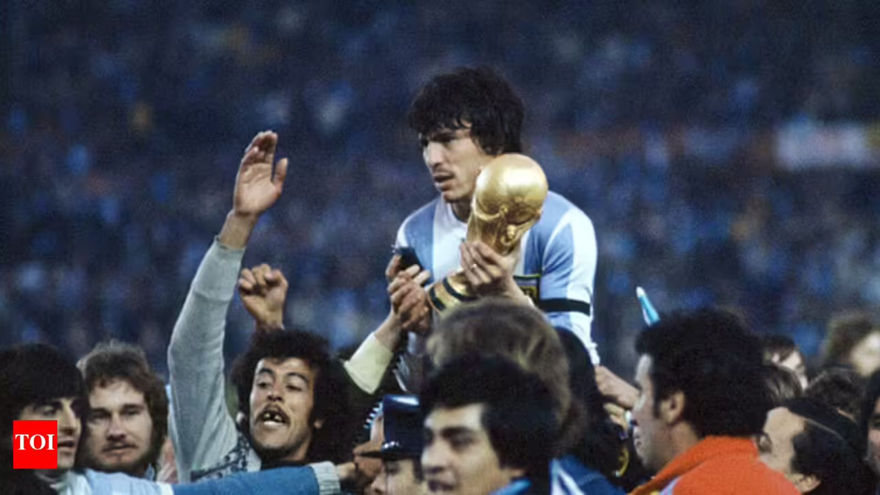
The game itself was a tight, physical encounter. Kempes put Argentina ahead in the 38th minute, finishing from close range. Dick Nanninga pulled the Netherlands level in the 82nd minute, silencing the crowd. Rob Rensenbrink’s shot that struck the post in the final seconds remains one of football’s great narrow misses. In extra time, Kempes scored again—after a slaloming run—and Daniel Bertoni sealed the 3–1 victory. When captain Daniel Passarella lifted the trophy, Buenos Aires erupted in a mix of joy, relief and, for some, unease.
Defining moments
The papelitos: The stadiums’ confetti storms became an iconic image of the tournament.
Arie Haan’s long-range strikes: Moments of technique and audacity that punctured organized defences.
The Rosario 6–0: Argentina’s rout of Peru remains the most controversial result of the tournament.
Rensenbrink’s post: A single inch of wood that denied the Netherlands the title.
Clive Thomas’s whistle: In Brazil–Sweden, the referee ended play mid-corner; Zico’s subsequent header was disallowed, an anecdote of officiating oddity.
Standout players
Mario Kempes (Argentina)
Kempes began slowly but exploded in the latter stages. Repositioned slightly deeper by Menotti, he combined late runs with power and poaching instincts to finish top scorer and tourney MVP.
Teófilo Cubillas (Peru)
Even with Peru’s second-round collapse, Cubillas’ creative mastery and free-kick technique shone. He finished with five goals and remained a global midfield model.
Ruud Krol (Netherlands)
With Cruyff absent, Krol assumed tactical leadership, adopting a ball-playing libero role and supplying composure and range from the back.
Tactical trends
The 1978 World Cup institutionalised athleticism and structural flexibility. Total Football’s radical fluidity was refined into more disciplined systems. Menotti’s Argentina usually operated in a 4-3-3 that could morph into a 4-3-1-2, relying on Passarella’s leadership, the industrious midfield of Ardiles and Gallego, and Kempes’ movement. The tournament also spotlighted the rise of overlapping full-backs—players like Nelinho and Antonio Cabrini used wide defensive positions as attacking platforms, foreshadowing the modern wing-back.
Records and statistics
Top scorers: Mario Kempes (6), Teófilo Cubillas (5), Rob Rensenbrink (5), Leopoldo Luque (4), Hans Krankl (4).
1000th World Cup goal: Rob Rensenbrink (penalty vs Scotland).
First African victory: Tunisia’s 3–1 win over Mexico.
Undefeated non-champions: Brazil finished third without losing in seven games.
Legacy
The 1978 World Cup is inseparable from its political context. Sportingly, it confirmed South America’s tactical and organizational maturity and launched stars who would shape global football—Passarella, Ardiles and Kempes among them. Politically, the tournament granted Argentina’s junta a moment of international legitimacy, even as domestic repression continued. Many players later reflected on the moral complexity of celebrating under such conditions.
On the pitch, 1978 left a technical and tactical imprint: the validation of flexible formations, the tactical refinement of Total Football principles, and the increasing importance of athletic versatility. The tournament’s theatrical images and scandal-tinged episodes make it one of football’s most cinematic World Cups.
Why 1978 is remembered
Argentina 1978 is remembered for its raw atmosphere, dramatic football and uneasy politics. It does not enjoy the romantic sheen of Mexico 1970 or the tactical clarity of West Germany 1974, but its intensity is unmatched. The tournament showcased how home advantage, tactical ingenuity and a few decisive moments can define footballing history.
Conclusion
The 1978 FIFA World Cup is a masterpiece painted on imperfect canvas. It offered unforgettable football and launched national heroes, even as it served a brutal regime’s political aims. From Kempes’ thunderous runs to the sea of papelitos in Buenos Aires, 1978 remains a tournament where athletic excellence and moral ambiguity coexist—an event that reshaped the sport and left a contested, enduring legacy.
FAQs
Why is the 1978 World Cup controversial?
The tournament took place under Argentina’s military junta; the Rosario 6–0 win over Peru and allegations of political interference have fuelled long-standing controversy.
Who was the top player at Argentina 1978?
Mario Kempes won both the Golden Boot and Golden Ball, scoring six goals and starring in the final.
What was the Rosario match and why does it matter?
Argentina beat Peru 6–0 in Rosario to reach the final; the scoreline’s timing and circumstances sparked persistent allegations of impropriety, though no definitive proof has emerged.
Which tactical trends emerged from the 1978 World Cup?
The tournament validated flexible formations and athleticism, refined Total Football principles, and emphasized overlapping full-backs and positional versatility.
What permanent changes followed the 1978 World Cup?
While not as rule-changing as later tournaments, 1978 highlighted the need for clearer governance and transparency in international football and affirmed South America’s tactical credentials.
Also Read |