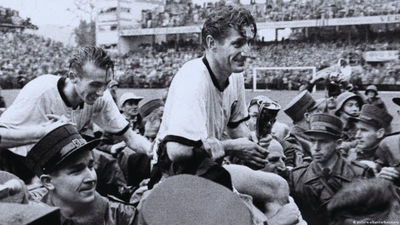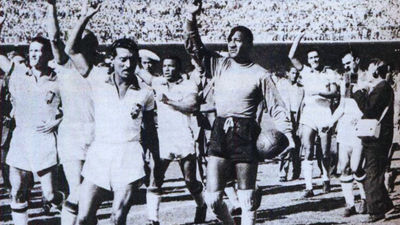

The 1958 FIFA World Cup in Sweden was the crucible in which modern international football was forged. Played across twelve Scandinavian venues in midsummer, it was the first World Cup to reach millions via live television and the tournament that transformed footballers into global icons. Against a still-fractured post‑war backdrop, Sweden 1958 rewired tactical thinking and announced a 17‑year‑old Pelé to the world — a moment that altered the sport’s demographic, aesthetic and tactical future.
Tournament snapshot
Host nation: Sweden
Teams: 16
Format: Four groups of four; tied second places were decided by a playoff where necessary, then an eight-team knockout stage (quarter-finals, semi-finals, third-place play-off, final).
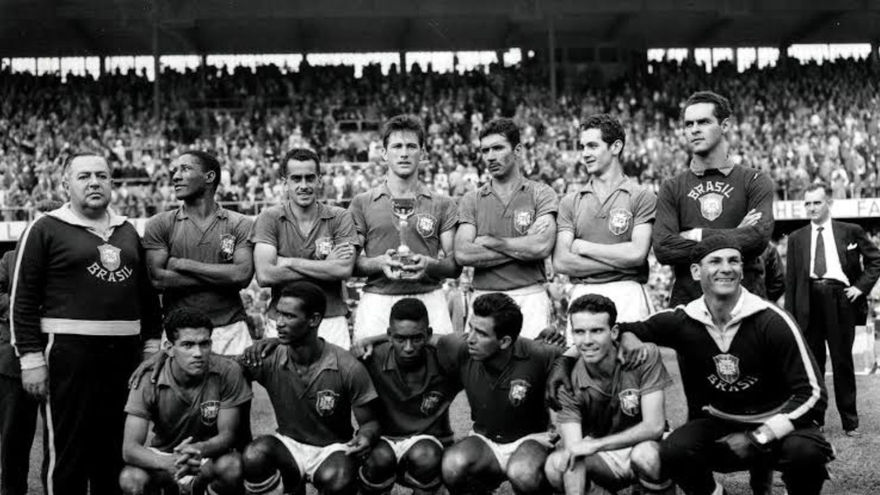
Champion: Brazil (first title)
Runner-up: Sweden
Third place: France
Golden Ball: Didi (Brazil)
Golden Boot: Just Fontaine (France) — 13 goals
Best Young Player: Pelé (Brazil)
Road to the World Cup
Qualification for Sweden 1958 produced seismic upsets and geopolitical reverberations. Italy and Uruguay—previous winners—failed to qualify, while all four Home Nations from the UK made the finals for the only time in history. Brazil arrived with a squad heavy on talent but fragile from the memory of the 1950 Maracanazo. Manager Vicente Feola prepared the side with unprecedented scientific support; quietly, a recovering 17‑year‑old named Pelé waited on the bench.
Group stage recap
The group phase rearranged expectations.
Brazil topped Group 4: after a 3–0 win over Austria and a 0–0 draw with England, Feola introduced Pelé and Garrincha for the deciding match vs the USSR. Garrincha’s blistering start created space for Vavá; Brazil won 2–0 and discovered its attacking nucleus.
France announced itself through Just Fontaine’s scoring spree, including a hat‑trick in a 7–3 win over Paraguay.
Wales progressed via a playoff, defeating Hungary and signaling the end of the Magyar golden era.
Argentina suffered a shock 6–1 defeat to Czechoslovakia, an embarrassment that defined their tournament.
Knockout stage recap
The knockout rounds are the stuff of legend.
Quarter-finals
Brazil edged past Wales 1–0 in Gothenburg when Pelé — introduced earlier in the tournament — produced a composed, inventive finish after a chest control and flick turn. Fontaine and France won comfortably; Sweden and West Germany also progressed through tight, high‑intensity matches.
Semi-finals
Brazil destroyed France 5–2 in a display that elevated Pelé to global superstardom. Pelé scored a hat‑trick in the semis, demonstrating clinical finishing and tactical intelligence. Sweden, buoyed by home support, beat West Germany to reach the final.
Third‑place play‑off
France thumped West Germany 6–3, with Just Fontaine scoring four goals and finishing the tournament with an unparalleled 13‑goal tally.
The final — coronation in the rain
On 29 June 1958, at Råsunda Stadium, Brazil came from behind to beat Sweden 5–2. Didi’s calm leadership steadied the side after Sweden’s early goal. Garrincha’s wing play and Vavá’s clinical finishing turned the game before Pelé’s two moments of genius — a volley and a looping late header — sealed the result. The young Pelé wept with relief and pride; Brazil had finally won the World Cup on European soil.
Defining moments
Pelé’s semi‑final hat‑trick and final brace: The teenager’s sequence of decisive goals announced him on the biggest stage.
Just Fontaine’s 13 goals: A single‑tournament record that still stands.
Garrincha’s early destruction of the Soviet defence: Three minutes of wide‑man wizardry that helped unlock Brazil’s tactical template.
Didi’s control and psychological calm: His composure after Sweden’s early goal in the final steadied Brazil and defined modern deep‑lying playmaking.
Marcos Coll’s Olympic goal: A unique direct corner for Colombia vs the USSR in a 4–4 draw.
Best players of the tournament
Didi (Brazil) — The cerebral deep‑lying playmaker whose control and invention powered Brazil’s tempo and the “folha seca” free‑kick technique.
Pelé (Brazil) — A 17‑year‑old whose hat‑trick in the semis and two goals in the final established him as the sport’s emergent icon.
Just Fontaine (France) — His 13 goals across six matches remain the single‑tournament benchmark.
Tactical trends
Sweden 1958 marked the death knell of rigid WM systems and the rise of fluid, multi‑role structures. Brazil’s asymmetric 4‑2‑4 shifted to a defensive 4‑3‑3 shape when out of possession, with Zagallo and others dropping mid‑phase to deny opponents numerical superiority. Overlapping full‑backs, positional rotation and the false‑movement of forwards became tactical norms, forcing European teams to adapt zonal principles over strict man‑marking.
Records and statistics
Top scorers: Just Fontaine (13), Pelé (6), Helmut Rahn (6), Vavá (5).
Youngest champion: Pelé (17 years, 249 days).
Unique feats: Fontaine’s 13 goals (single‑tournament record); Marcos Coll’s direct corner goal (only one in World Cup history).
Legacy
The 1958 World Cup transformed football’s cultural and commercial footprint. Brazil’s victory erased the trauma of 1950 and stamped the nation as the sport’s cultural home.
Tactically, the tournament validated fluid attacking structures and positional interchange. Televised coverage created global football celebrities and accelerated the commercialisation and media expansion that define the modern game.
Why 1958 is remembered
Sweden 1958 is remembered as the birth of modern football aesthetics: technical brilliance, tactical innovation and the arrival of Pelé. It combined dramatic storytelling with a tactical template that influenced generations of coaches and players.
Conclusion
The 1958 World Cup was the tournament that announced a new era. Brazil’s blend of structure and artistry, Didi’s intelligence, Garrincha’s flair and Pelé’s meteoric rise produced a sporting and cultural landmark. From Fontaine’s record to Pelé’s tears, Sweden 1958 reshaped the game and remains a reference point for footballing greatness.
FAQs
Why is the 1958 World Cup significant?
It marked the birth of modern international football aesthetics, showcased Pelé’s breakthrough and introduced tactical fluidity that influenced future systems.
Who scored the most goals at Sweden 1958?
Just Fontaine scored 13 goals — the most ever in a single World Cup tournament.
How old was Pelé when he won the World Cup?
Pelé was 17 years and 249 days old, the youngest player to win a World Cup.
What tactical innovation came from Brazil in 1958?
Brazil’s dynamic 4‑2‑4 that shifted into a 4‑3‑3 in defensive phases, with positional rotation and overlapping full‑backs, became a template for modern football.
What unique goal was scored at the 1958 World Cup?
Marcos Coll of Colombia scored directly from a corner against the Soviet Union — the only Olympic (corner) goal in World Cup history.
Also Read |