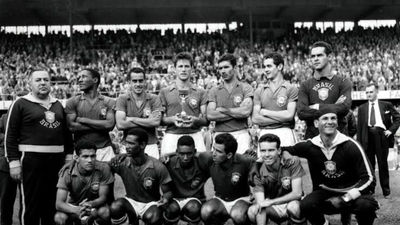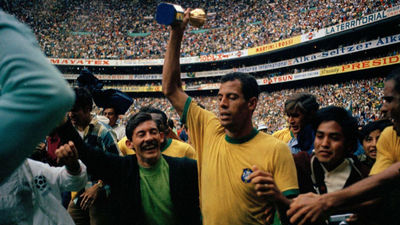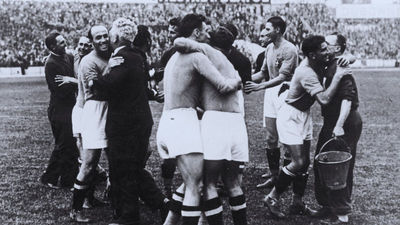

The 1962 FIFA World Cup in Chile arrived at a turbulent but transformative moment for international football. Chile had barely recovered from the Great Valdivian earthquake of 1960 when it mounted a remarkable organisational effort to host the finals. On the pitch, the game was shifting: European teams were tightening defensive structures and physicality was rising, while Brazil sought to prove its 1958 triumph was no fluke.
When Pelé went down injured early in the tournament, the story arc changed from a likely one-man coronation to a test of collective character. Brazil answered that test in the most unlikely way: Garrincha, the mercurial wide forward, assumed the creative burden and led his country to the second of back-to-back World Cup titles. Chile 1962 became a tournament where grit and improvisation coexisted, and where institutional lessons about officiating and team structure were learned the hard way.
Tournament snapshot
Host nation: Chile
Teams: 16
Format: Four groups of four; top two advanced to a single-elimination eight-team knockout bracket (quarter-finals, semi-finals, third-place play-off, final). Goal average used as tiebreaker.
Champion: Brazil (2nd title)
Runner-up: Czechoslovakia
Third place: Chile
Golden Ball: Garrincha (Brazil)
Golden Boot: Six players tied on 4 goals (Garrincha, Vavá, Leonel Sánchez, Flórián Albert, Valentin Ivanov, Dražan Jerković)
Best Young Player: Flórián Albert (Hungary)
Road to the World Cup
Qualification for Chile 1962 reaffirmed the tightness of a 16-team era. Several notable nations failed to reach the finals, while regional politics and limited berths left Africa and parts of Asia underrepresented. Entering the tournament, Brazil arrived as the consensus favourite, fielding much of the side that had dazzled in 1958.
Opponents like Czechoslovakia and England were respected, and a Spain side assembled by Helenio Herrera—which included veterans such as Alfredo Di Stéfano and Ferenc Puskás—was expected to be a force. Chile, despite recent disaster, prepared to stage a dramatic home tournament under fierce local support.
Group stage recap
The group stage quickly exposed a tournament split between defensive, often violent European tactics and South American flair.
Brazil topped Group 3 despite the seismic blow of Pelé tearing his hamstring in the second game. Amarildo came in for Pelé and scored crucial goals to secure Brazil’s progress.
Group 1 saw a remarkable 4–4 draw between the Soviet Union and Colombia, highlighted by Marcos Coll’s Olympic goal — the only direct corner ever scored in World Cup history.
Italy suffered shock elimination amid the notorious, brutal “Battle of Santiago” against Chile, a match that would later spur major officiating reforms.
West Germany and Yugoslavia advanced from Group 2; Hungary disappointed in a group featuring Czechoslovakia’s organized play.
Knockout stage recap
The knockout rounds balanced tactical discipline with individual heroics.
Quarter-finals
Garrincha took centre stage. Facing England in Viña del Mar, he unraveled the English left flank, opened the scoring with a header, and later produced a sublime swerving strike to cap a 3–1 win. Chile beat the Soviet Union in an emotionally charged match, and Czechoslovakia eliminated Hungary to advance.
Semi-finals
Brazil met Chile before a partisan crowd in Santiago. Garrincha scored twice as Brazil prevailed 4–2 in a match that spiralled into physical confrontation; he was sent off late but later cleared to play the final. In the other semi, Czechoslovakia outplayed Yugoslavia to set up the final rematch from the group stage.
Third-place play-off
Hosts Chile secured a dramatic 1–0 victory over Yugoslavia thanks to Eladio Rojas’ stoppage-time winner, sending the nation into delirium and granting the tournament an emotive third-place story.
The final — Brazil’s pragmatic brilliance
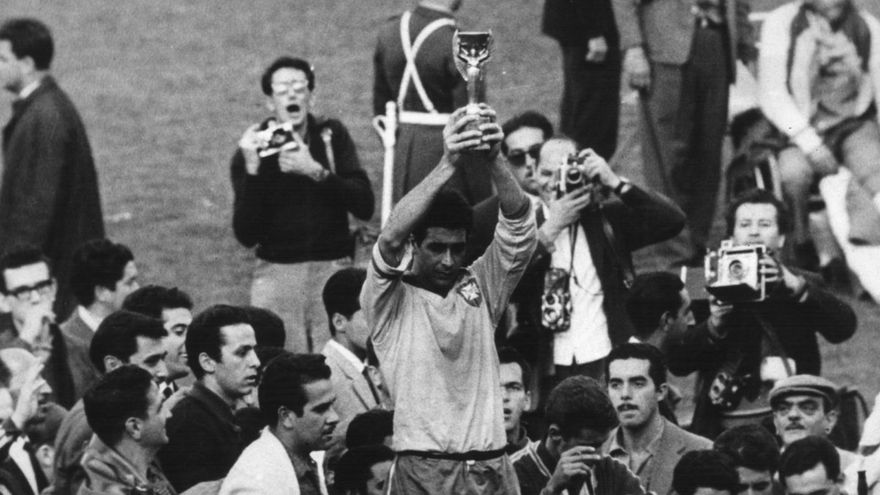
On 17 June 1962, at the Estadio Nacional, Brazil and Czechoslovakia met in a final that combined pragmatism and invention. Czechoslovakia’s Josef Masopust opened the scoring with a well-timed run, but Amarildo replied almost immediately. In the second half Zito and Vavá added goals—Vavá’s finish arriving after a fateful handling error by Czechoslovak goalkeeper Viliam Schrojf—sealing a 3–1 Brazilian victory. Without their talisman Pelé, Brazil still adapted and prevailed; Garrincha was rightly named the tournament’s best player.
Defining moments
Battle of Santiago: Chile vs Italy became the emblem of violence at the tournament and prompted later refereeing reforms, including the adoption of the card system.
Garrincha’s ascendancy: With Pelé injured, Garrincha’s creativity and courage carried Brazil through decisive knockout wins.
Amarildo’s final heroics: Stepping into Pelé’s role and scoring in the final, Amarildo provided instant redemption and tactical stability.
Marcos Coll’s Olympic goal: A direct corner against the Soviet Union — a unique World Cup moment.
The stray dog in Viña del Mar: A lighthearted anecdote during Brazil’s quarter-final that humanised a tense tournament.
Standout players
Garrincha (Brazil) — The creative engine and emotional heart of Brazil’s title defence, his dribbling and finishing defined the tournament.
Josef Masopust (Czechoslovakia) — A midfield architect whose performances earned continental and global praise.
Leonel Sánchez (Chile) — The talisman in Chile’s inspiring third-place run, noted for his scoring and leadership.
Tactical trends
Chile 1962 marked a tactical consolidation: the 4-2-4’s attacking exuberance was adapting into more balanced systems—early iterations of a 4-3-3—where a deep-lying creative midfielder and defensive cover became important. European teams increasingly used man-marking and compact mid-blocks; in response, South American sides developed adaptive off-ball movement and positional fluidity to exploit space.
Records and statistics
Top scorers: Six players shared the lead with 4 goals (including Garrincha and Vavá).
Fastest and unique feats: Marcos Coll’s direct corner goal stood as a singular World Cup record.
Golden Ball: Garrincha was awarded the tournament’s best-player honour for his decisive influence.
Legacy
The 1962 World Cup left several legacies. Brazil proved it was more than Pelé—that a well-constructed team with a deep reservoir of creativity could adapt and win. For Chile, the tournament was a poignant national achievement after the earthquake. Officiating reforms were accelerated by the tournament’s violent episodes, contributing to the later adoption of yellow and red cards and more disciplined refereeing standards.
Chile 1962 occupies a distinctive place in World Cup history: a tournament of hardship, improvisation, and institutional learning, where Garrincha’s genius helped Brazil become the last nation to win consecutive men’s World Cups.
FAQs
Who was the best player at the 1962 World Cup?
Garrincha was awarded the Golden Ball for his decisive performances that carried Brazil after Pelé’s injury.
How did Pelé’s injury affect the 1962 World Cup?
Pelé’s hamstring tear early in the tournament removed Brazil’s talisman, forcing tactical adjustments and creating space for Garrincha and Amarildo to step up.
What was the Battle of Santiago?
Chile vs Italy in the group stage became notorious for extreme violence and poor officiating, prompting debates that eventually led to refereeing reforms.
Who scored the only Olympic goal in World Cup history?
Marcos Coll of Colombia scored directly from a corner against the Soviet Union in a 4–4 draw—the only direct corner goal in World Cup history.
What tactical trends emerged from the 1962 World Cup?
The tournament accelerated a move from 4-2-4 attacking systems to more balanced formations (early 4-3-3 variants), and emphasised defensive compactness and man-marking.
Also Read |